Upgrading to a new AI model based solely on public scores can hide subtle problems in your application. This post explains why rigorous, context-specific testing is vital before deploying any new model, even if it seems 'better' on paper.
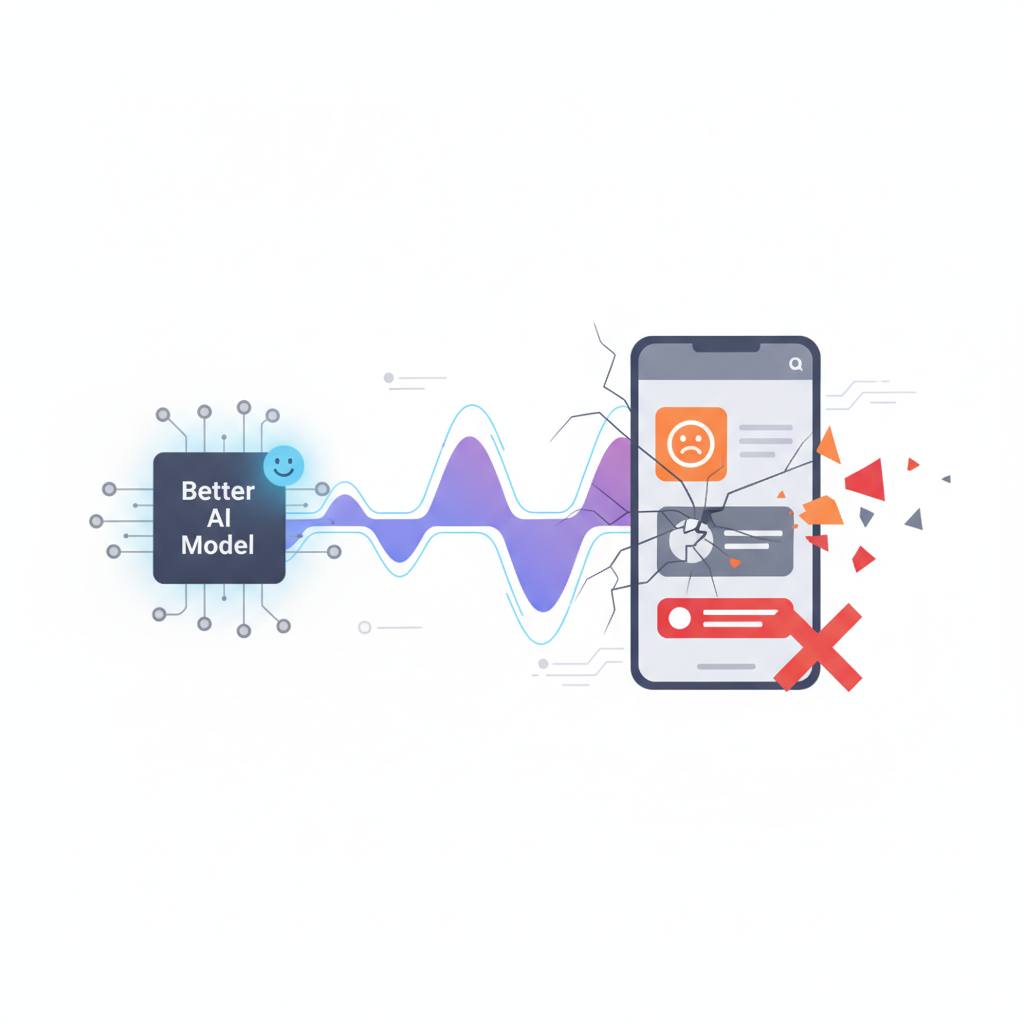
Imagine your favorite app uses a super-smart AI helper behind the scenes, like a language model that understands what you type. Suddenly, the company that provides this AI releases a new, 'improved' version. It scores higher on all the tests, and everyone says it's faster and better. So, the engineers simply swap out the old model ID for the new one, run a quick check, and everything seems fine. They ship it.
But here's the catch, and it's a big one: what looks 'better' on general tests might not be better for *your specific app*. Think of it like this: You have an old car engine, and a new, more powerful engine comes out. On paper, it's superior. But if you just drop it into your car without checking if it fits perfectly, connects to all your existing systems, and if your car's other parts can handle the extra power, you might end up with a car that doesn't run smoothly, or even breaks down.
This is exactly the problem with upgrading AI models. The new model might be great overall, but its answers might be slightly different. Maybe it's more creative, but your app needs precise, factual responses. Or perhaps it's trained on newer data, and now gives answers that don't quite match the older context your users are used to. These subtle changes can quietly 'degrade' your system without anyone noticing right away. Users might just find the app less helpful or accurate, leading to frustration.
The challenge is that properly testing a new model in a real application takes time and effort – far more than just running a few quick requests. Engineers need to create specific tests that mimic how their users actually interact with the app. They need to compare the new model's performance against the old one using their *own* data and *their own unique situations*. Unfortunately, this crucial step is often skipped because of tight deadlines and the perceived cost of evaluation.
So, the lesson is clear: when a new AI model arrives, don't just swap. Test it rigorously within your actual application environment. Public benchmarks are a starting point, but your specific use case is the ultimate judge. Ensuring an AI model is 'safe to run in production' is a different claim than it simply 'works' generally.
But here's the catch, and it's a big one: what looks 'better' on general tests might not be better for *your specific app*. Think of it like this: You have an old car engine, and a new, more powerful engine comes out. On paper, it's superior. But if you just drop it into your car without checking if it fits perfectly, connects to all your existing systems, and if your car's other parts can handle the extra power, you might end up with a car that doesn't run smoothly, or even breaks down.
This is exactly the problem with upgrading AI models. The new model might be great overall, but its answers might be slightly different. Maybe it's more creative, but your app needs precise, factual responses. Or perhaps it's trained on newer data, and now gives answers that don't quite match the older context your users are used to. These subtle changes can quietly 'degrade' your system without anyone noticing right away. Users might just find the app less helpful or accurate, leading to frustration.
The challenge is that properly testing a new model in a real application takes time and effort – far more than just running a few quick requests. Engineers need to create specific tests that mimic how their users actually interact with the app. They need to compare the new model's performance against the old one using their *own* data and *their own unique situations*. Unfortunately, this crucial step is often skipped because of tight deadlines and the perceived cost of evaluation.
So, the lesson is clear: when a new AI model arrives, don't just swap. Test it rigorously within your actual application environment. Public benchmarks are a starting point, but your specific use case is the ultimate judge. Ensuring an AI model is 'safe to run in production' is a different claim than it simply 'works' generally.