A new project lets AI coding agents talk to developers and listen to their spoken answers, making learning more interactive and private. This local voice technology brings advanced conversational AI directly to your computer.
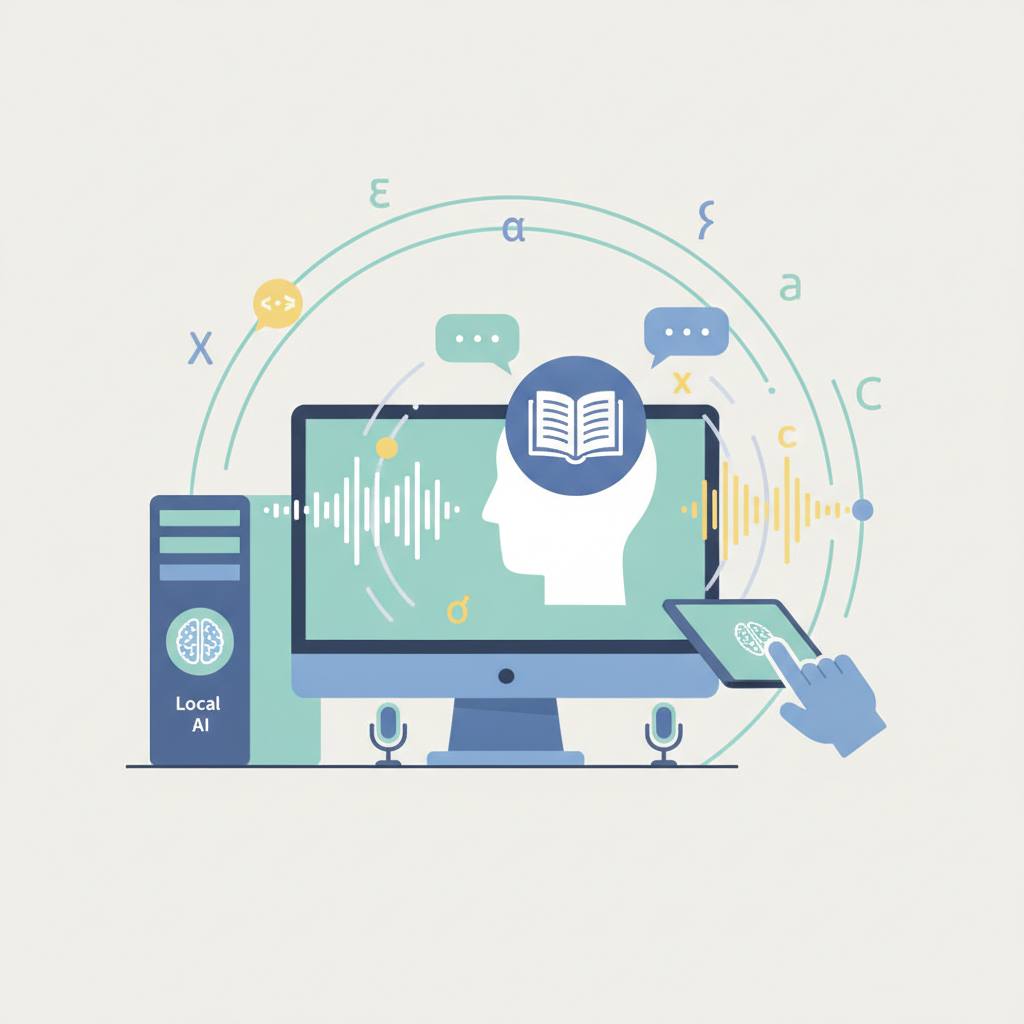
Imagine your computer isn't just a silent machine, but a learning companion that talks to you and listens to your answers! That's what a clever developer recently built: a system called 'Socra' that allows their AI coding agent to ask questions out loud and listen to their spoken responses. This isn't science fiction; it's real technology making learning more interactive and private.
The core idea here is simple yet powerful: how can computers talk and listen? There are two main technologies involved:
1. **Text-to-Speech (TTS):** This is the technology that lets a computer convert written text into spoken words. It's like when some apps read an email or an article aloud to you. In the case of 'Socra,' the AI agent uses TTS to ask the developer questions.
2. **Speech-to-Text (STT):** This is the opposite technology, where the computer listens to your human voice and converts it into written text that it can understand and process. Think of the voice commands you give your smartphone, or how your voice assistant turns your speech into text. This is what 'Socra' uses to listen to the developer's answers.
What's particularly exciting about the 'Socra' project is that it runs 'locally.' This means that all the text-to-speech and speech-to-text processing happens right on your own computer, not over the internet on distant servers. Why is this important?
* **Privacy:** Your voice data never leaves your device, keeping your conversations and thoughts confidential.
* **Cost:** There are no fees for using these voice technologies because the models involved are free and open-source.
* **Speed:** Since everything is processed on your machine, there's no network delay, making the conversation feel incredibly fast and seamless, as if you're talking to someone right next to you.
For learning, this technology transforms your device into a personal tutor who can test your understanding in a natural way. Instead of typing, you can speak and vocalize your thoughts. This helps to solidify information better and reveals if you truly grasp a subject or not. This concept can be used not just for learning to code, but also for mastering a new language or reviewing any study material. It's a step towards a future where interactive learning with AI becomes an everyday part of our lives.