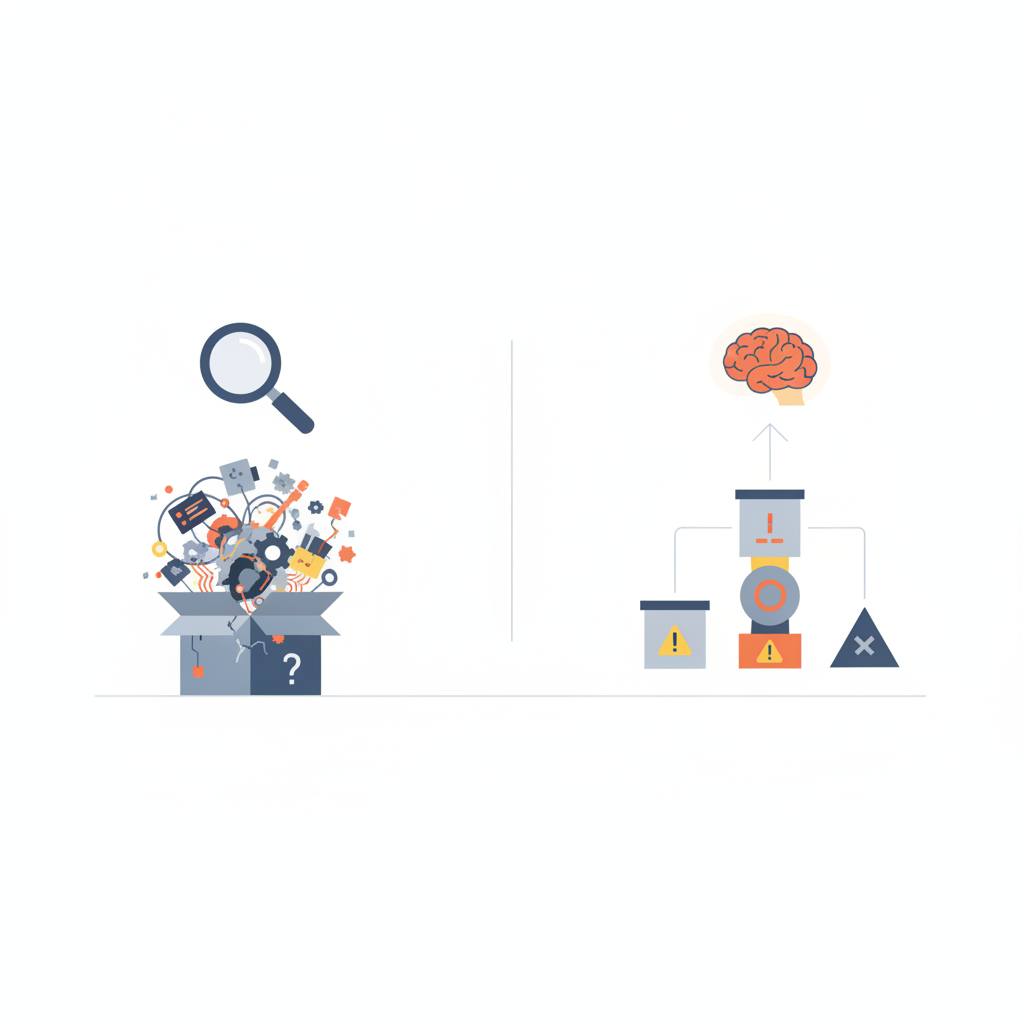
Modern applications need to process constantly changing information, but traditional ways of building software often struggle with this challenge. This leads to unnecessary complexity and tangled code, reducing app efficiency.
Hello from WondTech! Ever wondered why building apps that show live updates (like a chat or stock prices) feels harder than simple ones? A recent article highlights this challenge, specifically with something called 'Clean Architecture.'
What is Clean Architecture? It's like organizing your app into neat boxes: one for showing things (UI), one for rules (logic), one for getting data (repositories), and one for talking to databases (data sources). This is excellent for keeping things tidy and flexible, especially for apps that just ask for data once (like a typical website loading a page).
However, modern apps often need to react instantly to changes – new messages, sensor readings, or stock price updates. Imagine constantly getting tiny drips of water from many different taps instead of one big bucket. Traditional Clean Architecture, designed for the 'bucket' approach, starts to struggle here.
Problem 1: The 'Anemic Lasagna.' Sometimes, when fetching data, your request has to travel through *all* those neat boxes, even if each box just passes it along without doing anything new. It's like sending a simple message through a long chain of people, where everyone just repeats it. You end up with lots of files and code that don't add real value, merely forwarding.
Problem 2: 'Stream & Microtask Spaghetti.' Now, picture those many 'water drips' (live data streams). You need to combine them, filter them, and ensure they all arrive and are processed correctly without breaking anything. Trying to manage multiple streams of data coming in at different times, canceling them when they're not needed, and making sure everything is in sync can turn your code into a confusing, tangled mess, like a bowl of spaghetti.
Conclusion: While Clean Architecture is valuable, understanding its limits with real-time data helps developers find better ways to build responsive, efficient apps that truly shine in today's connected world.
What is Clean Architecture? It's like organizing your app into neat boxes: one for showing things (UI), one for rules (logic), one for getting data (repositories), and one for talking to databases (data sources). This is excellent for keeping things tidy and flexible, especially for apps that just ask for data once (like a typical website loading a page).
However, modern apps often need to react instantly to changes – new messages, sensor readings, or stock price updates. Imagine constantly getting tiny drips of water from many different taps instead of one big bucket. Traditional Clean Architecture, designed for the 'bucket' approach, starts to struggle here.
Problem 1: The 'Anemic Lasagna.' Sometimes, when fetching data, your request has to travel through *all* those neat boxes, even if each box just passes it along without doing anything new. It's like sending a simple message through a long chain of people, where everyone just repeats it. You end up with lots of files and code that don't add real value, merely forwarding.
Problem 2: 'Stream & Microtask Spaghetti.' Now, picture those many 'water drips' (live data streams). You need to combine them, filter them, and ensure they all arrive and are processed correctly without breaking anything. Trying to manage multiple streams of data coming in at different times, canceling them when they're not needed, and making sure everything is in sync can turn your code into a confusing, tangled mess, like a bowl of spaghetti.
Conclusion: While Clean Architecture is valuable, understanding its limits with real-time data helps developers find better ways to build responsive, efficient apps that truly shine in today's connected world.