Recent updates to «supabase-rls-check» highlight a common challenge: enabling Row Level Security (RLS) on tables created by database extensions. This post explains why understanding database ownership is key to securing your data effectively.
Have you heard about the recent update to «supabase-rls-check»? It's a tool that helps developers manage database security, and its latest versions (0.6.1-0.6.3) fixed a tricky problem involving «Row Level Security» and database «extensions». This update highlights an important lesson in how databases protect your data.
Imagine a large library where not everyone is allowed to see every book. Some books are only for librarians, others for specific researchers, and general books for everyone. In databases, «Row Level Security» or RLS works similarly. It's a powerful feature that lets you control *who* can see or modify *which specific rows* of data in a table. Instead of just saying, 'You can access this entire «Users» table,' RLS allows you to say, 'You can only see your *own* user profile, and administrators can see all profiles.' This is crucial for privacy and security, especially with sensitive information.
Now, databases like PostgreSQL can get extra features through «extensions». Think of these as adding specialized apps to your database. For example, PostGIS is an extension that adds advanced geographical data capabilities. When you add an extension, it often creates its own tables to store its data. Here's where the problem arises: the *extension itself* (or the database superuser who installed it) is the official «owner» of these new tables.
When a developer tries to enable RLS on one of these extension-owned tables – perhaps because they want to secure geographical data created by PostGIS – the database might refuse, saying something like, 'ERROR: must be owner of table.' This isn't a bug; it's a security measure. The database prevents unauthorized users (even a project owner who didn't *create* the extension's tables directly) from altering fundamental security settings on objects they don't explicitly own. It's like trying to put a new lock on a door that belongs to the library, but you're not the head librarian.
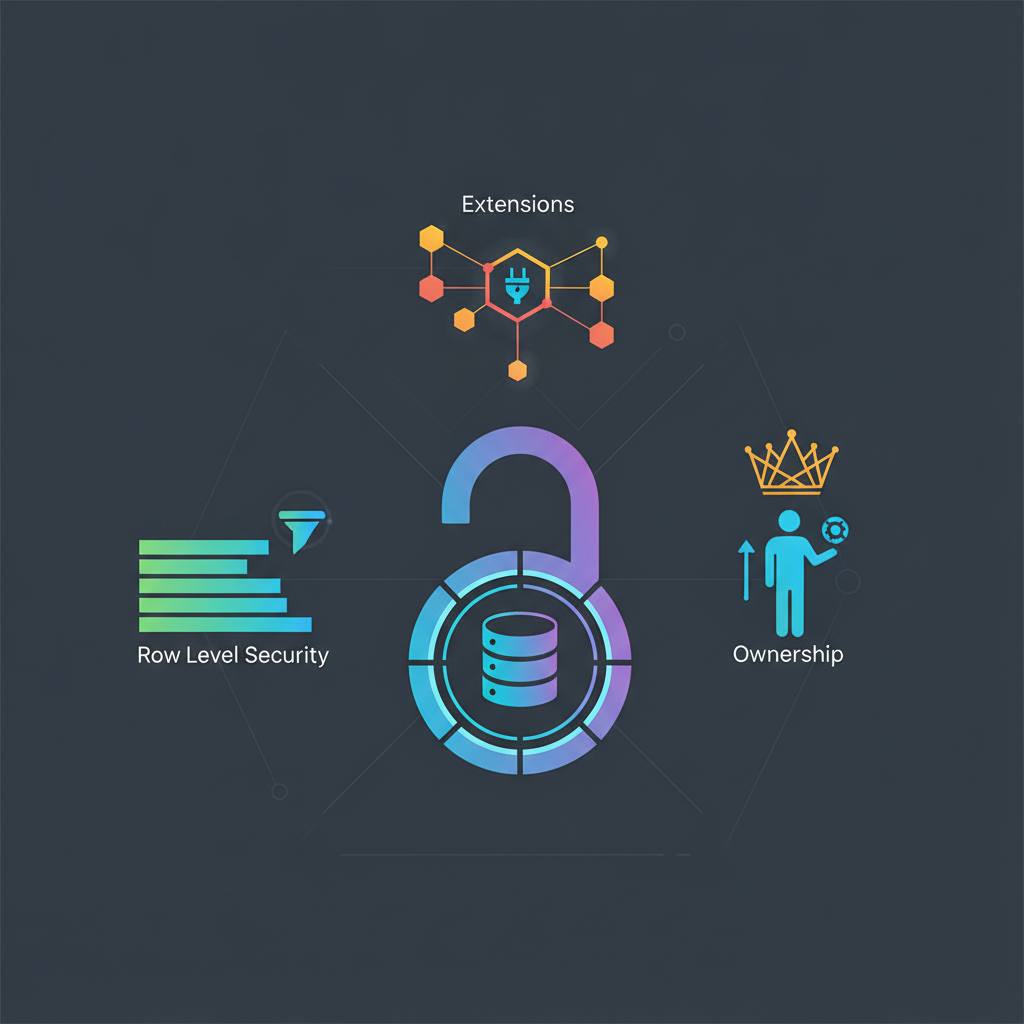
The «supabase-rls-check» tool's update specifically learned to identify these extension-owned tables. By checking internal database records, it can now tell developers, 'Hey, this table belongs to an extension, that's why you can't enable RLS directly on it.' This helps developers understand the database's inner workings and avoid hitting a wall. The core lesson here is that while Row Level Security is essential for fine-grained data control, understanding database ownership and how extensions interact with it is equally vital for secure and smooth database management.
Imagine a large library where not everyone is allowed to see every book. Some books are only for librarians, others for specific researchers, and general books for everyone. In databases, «Row Level Security» or RLS works similarly. It's a powerful feature that lets you control *who* can see or modify *which specific rows* of data in a table. Instead of just saying, 'You can access this entire «Users» table,' RLS allows you to say, 'You can only see your *own* user profile, and administrators can see all profiles.' This is crucial for privacy and security, especially with sensitive information.
Now, databases like PostgreSQL can get extra features through «extensions». Think of these as adding specialized apps to your database. For example, PostGIS is an extension that adds advanced geographical data capabilities. When you add an extension, it often creates its own tables to store its data. Here's where the problem arises: the *extension itself* (or the database superuser who installed it) is the official «owner» of these new tables.
When a developer tries to enable RLS on one of these extension-owned tables – perhaps because they want to secure geographical data created by PostGIS – the database might refuse, saying something like, 'ERROR: must be owner of table.' This isn't a bug; it's a security measure. The database prevents unauthorized users (even a project owner who didn't *create* the extension's tables directly) from altering fundamental security settings on objects they don't explicitly own. It's like trying to put a new lock on a door that belongs to the library, but you're not the head librarian.
The «supabase-rls-check» tool's update specifically learned to identify these extension-owned tables. By checking internal database records, it can now tell developers, 'Hey, this table belongs to an extension, that's why you can't enable RLS directly on it.' This helps developers understand the database's inner workings and avoid hitting a wall. The core lesson here is that while Row Level Security is essential for fine-grained data control, understanding database ownership and how extensions interact with it is equally vital for secure and smooth database management.