This article simplifies the concept of the «control plane» and «data plane»—a fundamental design principle in complex systems like AI gateways—explaining how they efficiently work in tandem.
Ever wondered how complex technology systems, like the AI gateways we’ve heard about recently, manage so many rules and handle vast amounts of data all at once? It’s like having a 'brain' and 'muscles' working together to ensure everything runs smoothly. This is the core idea behind the «control plane» and «data plane» concept.
Let’s start with a simple analogy. Imagine a large city with a sophisticated traffic system.
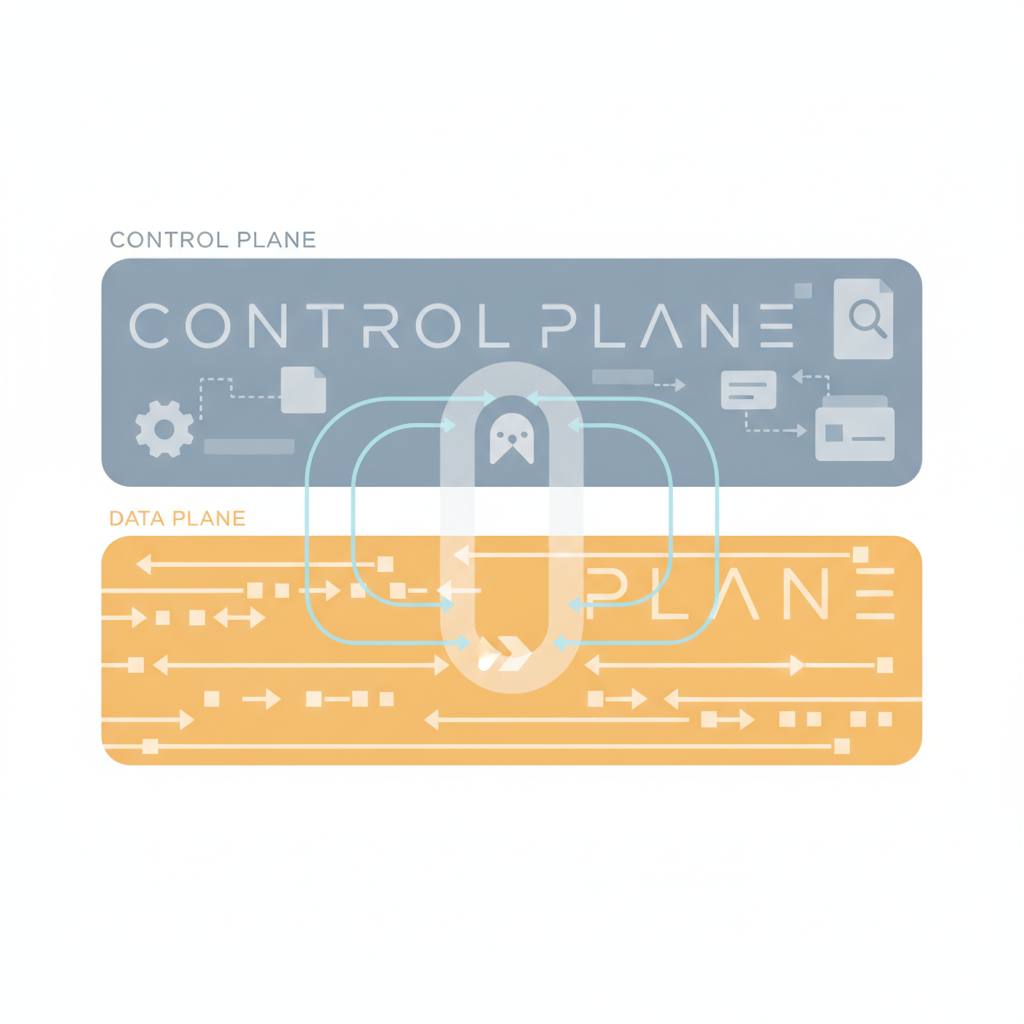
The «control plane» is like the traffic engineers and city planners. Their job is to make decisions: setting speed limits, timing traffic lights, determining street directions, and even planning new road constructions. They don't personally drive every car, but they establish the rules and instructions that ensure traffic flows safely and efficiently. They decide *how* things should happen.
The «data plane», on the other hand, is the actual roads, the cars moving on them, and the traffic lights in operation. This is where the real work happens. Cars (your data) travel from one place to another, following the signals and rules set by the traffic engineers (the control plane). It’s executing *what* needs to happen.
In the world of technology, especially with AI systems and network gateways, this principle works similarly.
The «control plane» is where you configure settings and rules. Here, you define who can access AI models, what budget is allocated, how your requests are routed, and security policies. It's responsible for *making decisions* and *configuring the system*.
In contrast, the «data plane» is the actual path for your requests and responses. When you send a query to an AI model through a gateway, that query (the data) travels through the «data plane». This plane follows the instructions and rules established by the «control plane» to ensure your request reaches the correct model and gets the appropriate response.
The benefit of this separation is clear. If something goes wrong with the «control plane» (for example, if the engineers are busy planning a major project), the «data plane» can continue operating based on existing rules, ensuring service continuity. It also allows for updating rules or adding new features without interrupting the actual data flow. This design makes systems more stable, faster, and easier to manage and scale. It's not a new invention for AI; it's a proven design pattern used in networking and software systems for years.