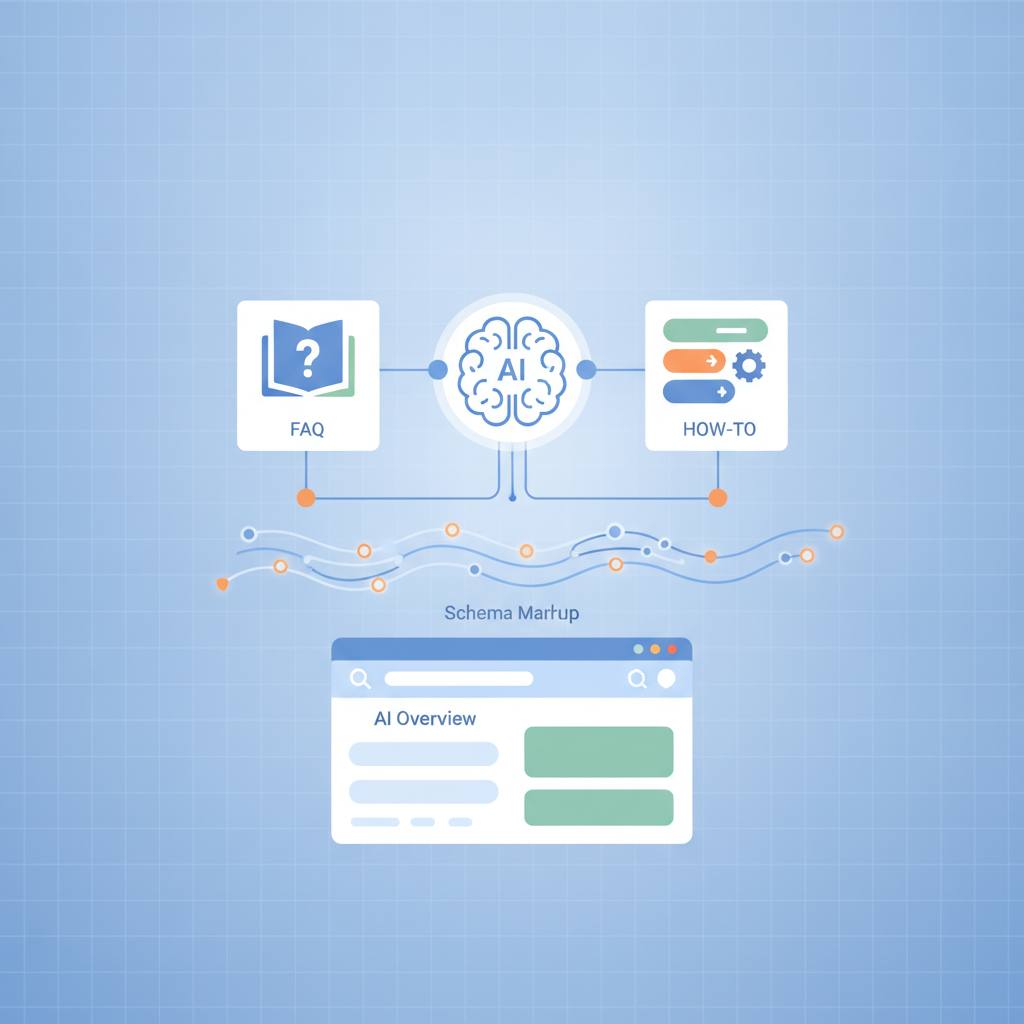
Many think adding Schema is enough for AI Overviews, but it's crucial that your JSON-LD accurately mirrors the visible HTML content. Mismatches or JavaScript-loaded Schema can confuse AI, making proper indexing and content consistency vital for correct citation.
Many of us hear about 'doing schema FAQ' and then simply paste a block of JSON-LD, thinking they've finished the SEO part for AI Overviews. But the reality is often quite different. So, what does this mean for you?
We frequently find that while Google's Rich Results Test might report validity, the questions on the page are verbose, the answers within the schema differ significantly from what readers see, or the entire block is only injected after JavaScript runs. In such cases, schema doesn't help AI extract information correctly; it merely adds a layer of potentially conflicting data. This doesn't serve your goal of performing well on AI-powered search engines.
These tips focus on two widely used schema types for service pages and how-to guides: FAQPage and HowTo. The objective isn't merely 'getting onto AI Overviews using schema,' but rather making the Q&A segments and step-by-step instructions on your page machine-readable and perfectly consistent with the original HTML content.
According to Google's guidance on AI features in Search, a page wishing to appear as a source in AI Overviews and AI Mode must first qualify for display on Google Search, meaning it must be indexed and have a snippet. Schema does not replace this fundamental step. Remember that many AI bots only read the initial HTML returned, so content (and JSON-LD) that only appears after JavaScript runs is often overlooked.
An FAQPage schema is appropriate when your page contains a block of genuinely asked user questions (like price, scope, commitments, timing), with each question having a distinct answer. The HTML heading should be the question, and the paragraph immediately following it should be the concise answer, before any further explanation. Your corresponding JSON-LD must precisely mirror this structure and content. This exact match between what the user sees and what the machine reads is key to enabling AI to effectively understand and cite your content.