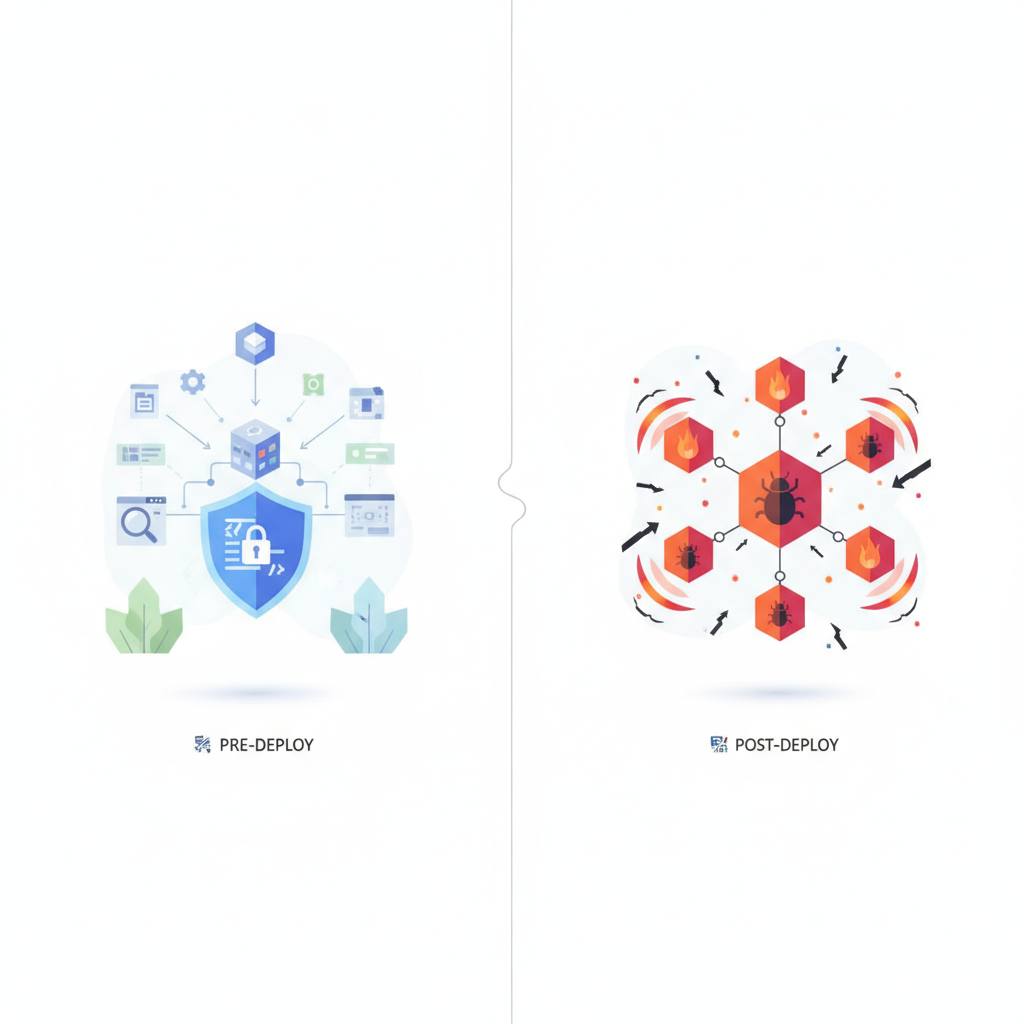
Web3 security isn't a one-size-fits-all problem; the challenges change drastically before and after a contract goes live. Understanding these distinct issues is key to keeping your digital assets safe.
Hey WondTech readers, ever wondered why we still hear about hacks despite all the security audits in Web3? Well, Web3 security isn't one problem – it's actually two completely different challenges, and understanding this distinction is crucial for protecting your digital assets. When we talk about Web3 security, there are two main phases: pre-deployment and post-deployment. Before any smart contract goes live on the blockchain, the primary focus is on the code itself. Is the code written correctly and securely? This is where issues like reentrancy bugs, integer overflow/underflow errors, or access control flaws can exist, waiting for an attacker to exploit them. A clear example of this is the $197M Euler Finance exploit. This wasn't an external attack; it was a flaw in the code, specifically the 'donateToReserves()' function, which went unnoticed by three audit firms for seven months in production. Pre-deploy tools, ranging from extensive manual audits by experts (costing $100k-$300k) to quick AI-assisted scanners that analyze code in under a minute, are designed to catch these subtle code-level issues *before* any funds are put at risk. They ensure the underlying code is sound before launch. But once that smart contract is live on the blockchain, the game changes entirely. Pre-deployment audit tools become irrelevant. Here, the threat shifts from «is the code broken?» to «is this token a scam?» or «can it be manipulated externally?» The $625M Ronin Bridge hack is a stark example of a post-deployment problem. It wasn't due to a code bug but rather a social engineering attack targeting validator keys. This means even if the code itself is flawless, human vulnerabilities or operational mechanics can be the weak point. That's why, once deployed, continuous monitoring of the live contract is absolutely critical to address these evolving threats. The bottom line is there's no single solution that covers everything in Web3 security. You need different strategies and tools for each distinct stage to effectively safeguard your assets.