A new test reveals how AI agents build business websites across platforms like WordPress.com, Storyblok, Sanity, and Webflow, highlighting significant workflow differences despite a shared standard.
Hey WondTech readers! Ever wondered how an AI agent could build a complete business website? A fascinating new study has pitted major web platforms like WordPress.com, Storyblok, Sanity, and Webflow against each other to see just that. This means for you, our tech-savvy audience, a clearer understanding of how these powerful tools operate behind the scenes and what to expect when using AI for your next web project on these different platforms.
The challenge was straightforward: create a five-page website for «Din Dee», a ceramic studio that teaches pottery and sells handmade crafts. The required pages included a Home page (introducing the studio and showing class photos), a Product & Service page (listing courses and items for sale with prices), an About Us page (telling the founder's story and work philosophy), a Contact Us page (with address, map, phone, and a message form), and a Blog for class updates.
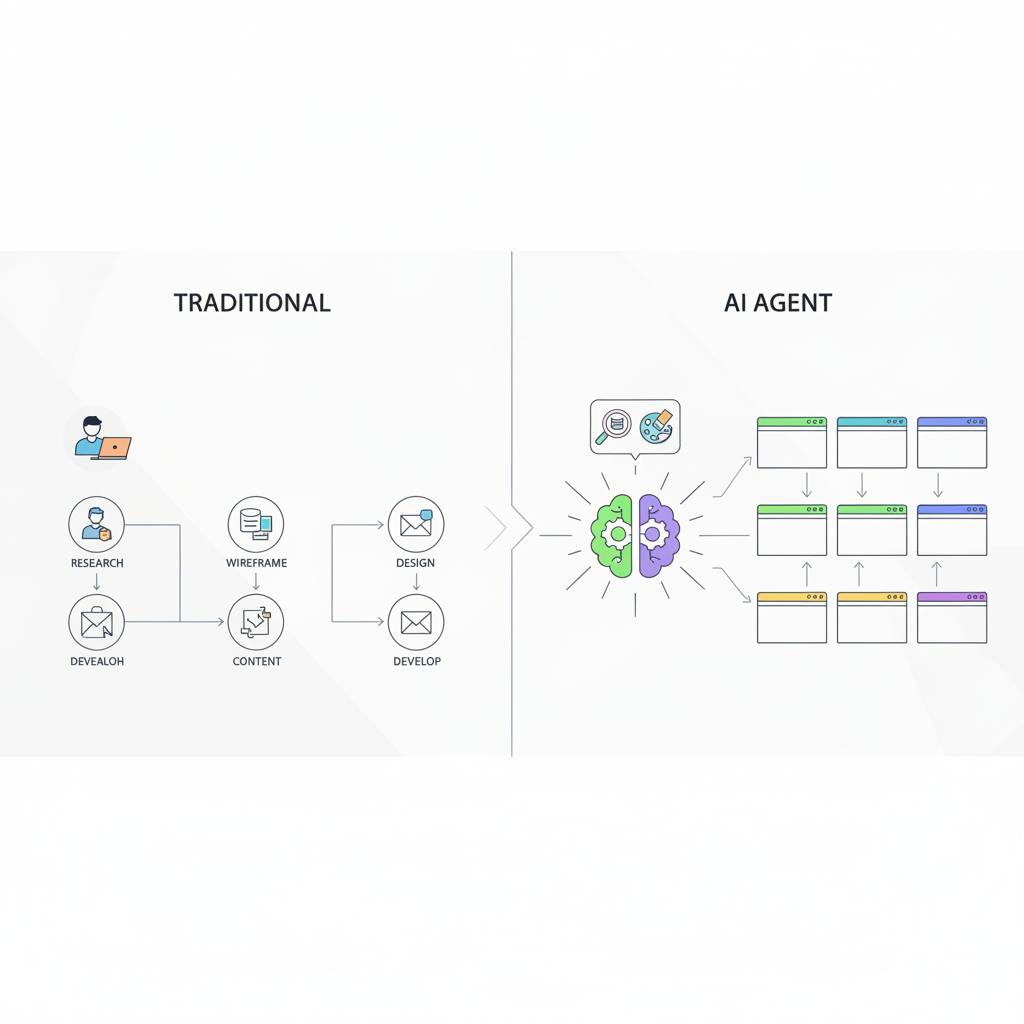
Even though all four systems adhere to the same MCP standard, allowing AI agents to call tools via a unified protocol, their actual execution paths diverged significantly. The core reason lies in the unique 'welcome message' each platform presents to the AI agent upon connection, leading to vastly different operational sequences. Take WordPress.com, for instance: its AI agent primarily relied on a central tool called 'wpcom-mcp-content-authoring'. All operations were accessed through three main actions: 'list' to see available tools, 'describe' to understand data formats, and 'execute' to perform tasks. For an optimal start, the agent on WordPress.com first called a companion tool named 'wpcom-mcp-site-editor-context'. This crucial step provides vital information like the current theme's colors and fonts ('theme.presets') and the types of blocks allowed on the site ('blocks.allowed'), efficiently guiding the agent's subsequent actions.
Each case study concludes with an estimated number of AI agent calls and specific cautionary notes for that platform, emphasizing that these counts are estimations from documentation, not actual run-time measurements. This offers valuable insight into how differently platforms approach intelligent automation.
The challenge was straightforward: create a five-page website for «Din Dee», a ceramic studio that teaches pottery and sells handmade crafts. The required pages included a Home page (introducing the studio and showing class photos), a Product & Service page (listing courses and items for sale with prices), an About Us page (telling the founder's story and work philosophy), a Contact Us page (with address, map, phone, and a message form), and a Blog for class updates.
Even though all four systems adhere to the same MCP standard, allowing AI agents to call tools via a unified protocol, their actual execution paths diverged significantly. The core reason lies in the unique 'welcome message' each platform presents to the AI agent upon connection, leading to vastly different operational sequences. Take WordPress.com, for instance: its AI agent primarily relied on a central tool called 'wpcom-mcp-content-authoring'. All operations were accessed through three main actions: 'list' to see available tools, 'describe' to understand data formats, and 'execute' to perform tasks. For an optimal start, the agent on WordPress.com first called a companion tool named 'wpcom-mcp-site-editor-context'. This crucial step provides vital information like the current theme's colors and fonts ('theme.presets') and the types of blocks allowed on the site ('blocks.allowed'), efficiently guiding the agent's subsequent actions.
Each case study concludes with an estimated number of AI agent calls and specific cautionary notes for that platform, emphasizing that these counts are estimations from documentation, not actual run-time measurements. This offers valuable insight into how differently platforms approach intelligent automation.