If your large Laravel application is feeling messy, Laramod offers a smart solution to organize your project into clear, manageable modules, making development smoother.
Have you ever worked on a Laravel application that started small but grew into a huge project, only to find your 'app/Http/Controllers' folder overflowing with dozens of different files? This is a very common scenario. Initially, Laravel organizes code by what it is: controllers here, models there, migrations somewhere else. This is perfect for small projects, but as your application scales, things can get complicated. You end up with features like billing, a blog, and a support desk all intermingled, with the only shared element among a feature's files being a prefix in their names.
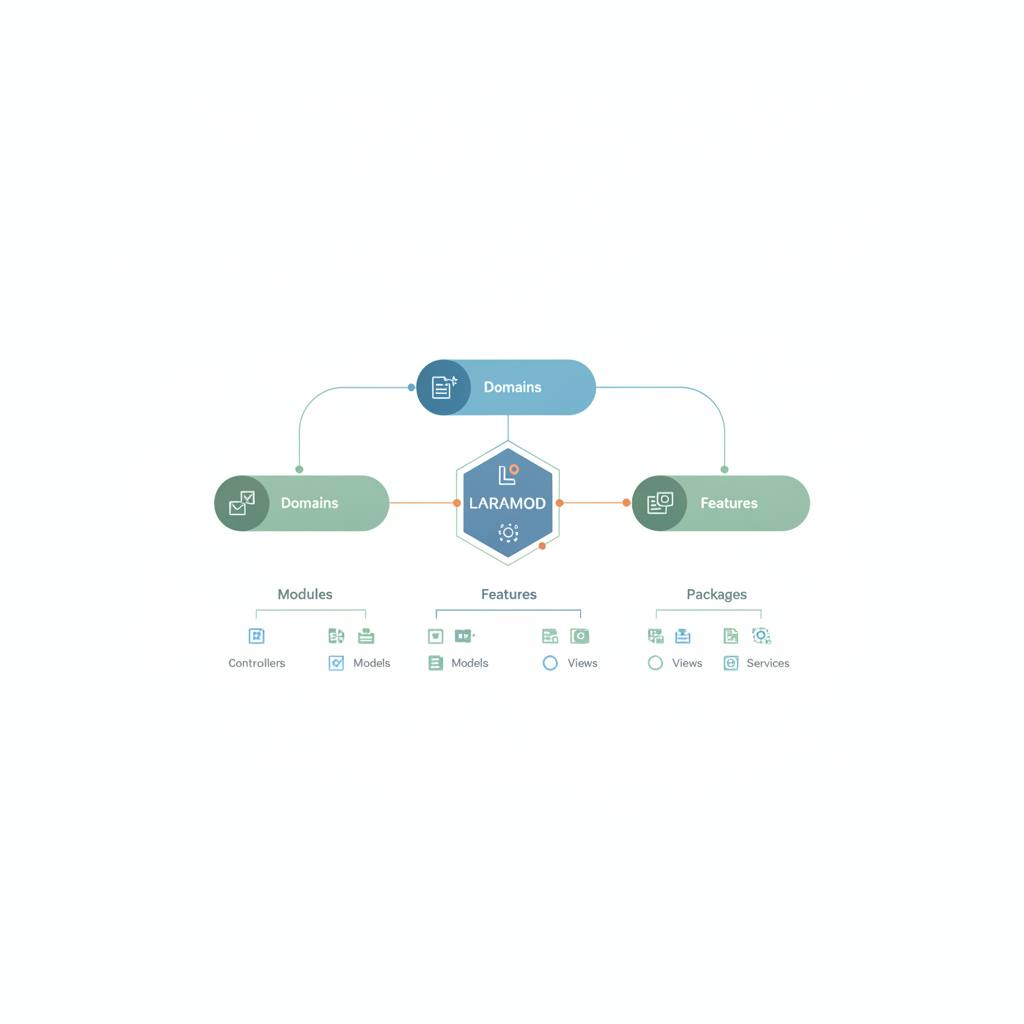
This is where Laramod steps in to offer a different way of thinking, which means a more organized and comfortable working environment for you. Instead of sorting code by type, Laramod helps you organize it by what the code is for. Imagine all the files a blog feature needs—its routes, controllers, models, migrations, views, and tests—all grouped together in its own single directory. That's the idea behind a module.
What does this mean for you as a developer? It means you can understand an entire feature just by looking at one directory. You can hand this directory over to a colleague, delete it, or move it into a separate package with complete ease. Essentially, all the parts Laravel needs to build these modules are already there; Laramod simply provides a logical agreement on how to organize these tools.
Laramod's creator wanted a simple yet effective solution that met key requirements: seeing all modules and their order in one file, understanding what each module contributes by opening just one class, and avoiding the need to rebuild or clear anything when code doesn't show up. Importantly, modules in Laramod are just directories of ordinary Laravel code, not small packages with their own 'composer.json' files. This ensures that Composer-installed modules work exactly like those you've created in your own repository.
Laramod fills a gap that many developers working on large projects have felt. It provides a solution inspired by successful modular systems like Django's 'apps,' but focuses on simplicity within Laravel. Now you can plug in new modules with just one line, and interact with their code as easily as if it were a natural part of your project, making large Laravel application management less complex and more productive.
This is where Laramod steps in to offer a different way of thinking, which means a more organized and comfortable working environment for you. Instead of sorting code by type, Laramod helps you organize it by what the code is for. Imagine all the files a blog feature needs—its routes, controllers, models, migrations, views, and tests—all grouped together in its own single directory. That's the idea behind a module.
What does this mean for you as a developer? It means you can understand an entire feature just by looking at one directory. You can hand this directory over to a colleague, delete it, or move it into a separate package with complete ease. Essentially, all the parts Laravel needs to build these modules are already there; Laramod simply provides a logical agreement on how to organize these tools.
Laramod's creator wanted a simple yet effective solution that met key requirements: seeing all modules and their order in one file, understanding what each module contributes by opening just one class, and avoiding the need to rebuild or clear anything when code doesn't show up. Importantly, modules in Laramod are just directories of ordinary Laravel code, not small packages with their own 'composer.json' files. This ensures that Composer-installed modules work exactly like those you've created in your own repository.
Laramod fills a gap that many developers working on large projects have felt. It provides a solution inspired by successful modular systems like Django's 'apps,' but focuses on simplicity within Laravel. Now you can plug in new modules with just one line, and interact with their code as easily as if it were a natural part of your project, making large Laravel application management less complex and more productive.