Recent tech advancements suggest mobile devices will handle more complex tasks locally, while cloud computing moves towards ultimate specialization and flexibility. We anticipate a seamless blend of on-device intelligence and efficient, powerful cloud services.
The latest tech news paints a clear picture of computing's next phase. On one hand, we see the relentless march of mobile hardware. Xiaomi's upcoming 18 Pro series, powered by the new Snapdragon 8 Elite Gen 6 Pro, signals that our pocket devices are gaining immense processing muscle. This isn't just about faster apps; it's about enabling sophisticated on-device intelligence. Expect your smartphone to handle more complex AI tasks locally, from advanced image processing to real-time language translation, with greater speed and without constant cloud reliance. This shift will enhance privacy, reduce latency, and improve user experience, especially in areas with limited connectivity.
Simultaneously, the cloud continues its evolution, focusing on specialization and efficiency. AMD's Instinct MI300X, with its dedicated matrix cores and supporting developer tools, exemplifies the push for specialized hardware tailored for high-demand computations like AI model training. This means cloud providers will increasingly offer highly optimized, purpose-built infrastructure for specific workloads, moving beyond general-purpose computing. The availability of powerful tools to manage and leverage these specialized units will accelerate innovation in areas like scientific research, machine learning, and data analytics.
Adding another layer of flexibility, AWS Lambda Managed Instances are blurring the lines between traditional virtual machines and serverless functions. By allowing Lambda to run on user-controlled EC2 capacity, developers gain unprecedented control over resources, cost, and performance. This move signals a future where cloud deployment strategies are more fluid and hybrid. Businesses will be able to precisely fine-tune their infrastructure, combining the scalability of serverless with the cost-efficiency and customization of dedicated instances. This flexibility will drive more optimized architectures, reducing waste and improving overall system resilience.
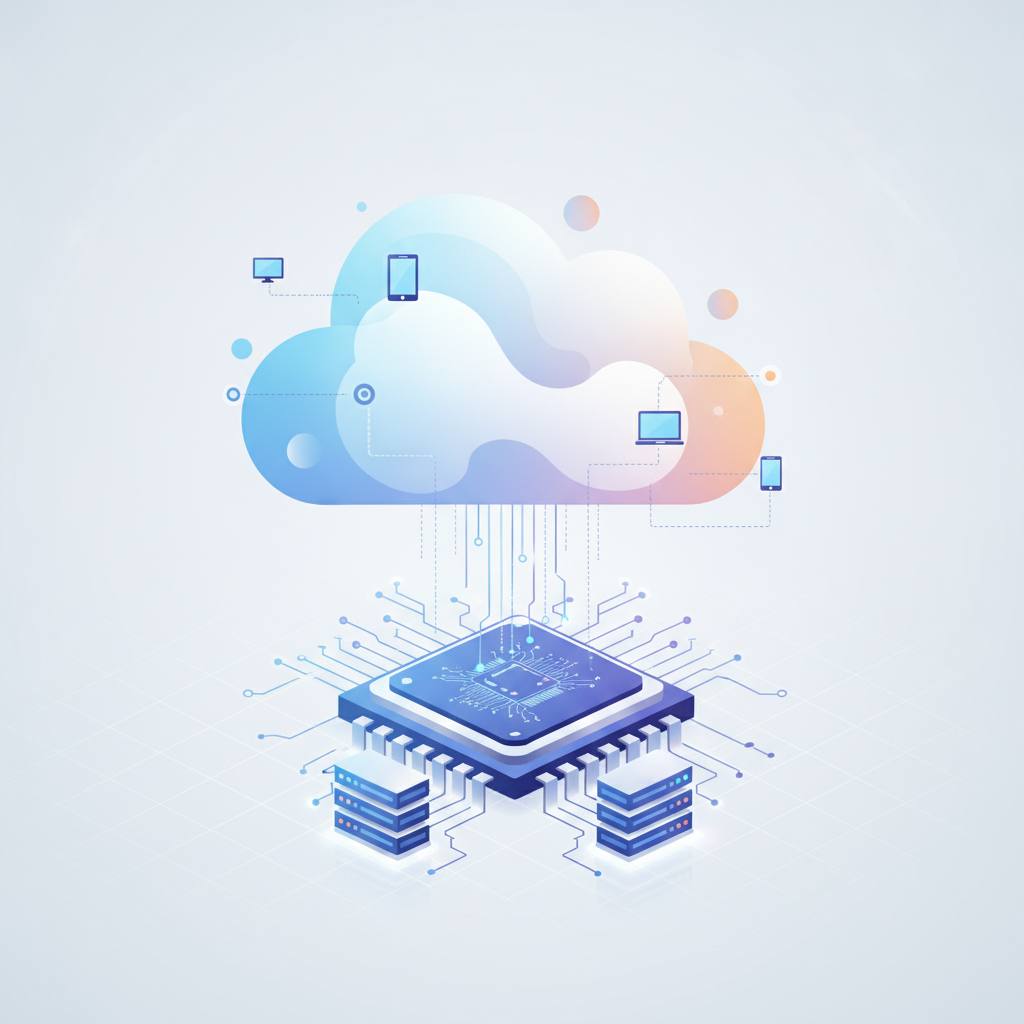
Together, these trends point to a future where computing is truly distributed and intelligent. Our personal devices will act as powerful local hubs, handling immediate, private computations. The cloud will serve as an incredibly potent, specialized backend for massive, complex, and shared tasks, managed with ever-increasing precision and cost-effectiveness. This synergy promises faster, smarter, and more adaptable digital experiences across the board.
Simultaneously, the cloud continues its evolution, focusing on specialization and efficiency. AMD's Instinct MI300X, with its dedicated matrix cores and supporting developer tools, exemplifies the push for specialized hardware tailored for high-demand computations like AI model training. This means cloud providers will increasingly offer highly optimized, purpose-built infrastructure for specific workloads, moving beyond general-purpose computing. The availability of powerful tools to manage and leverage these specialized units will accelerate innovation in areas like scientific research, machine learning, and data analytics.
Adding another layer of flexibility, AWS Lambda Managed Instances are blurring the lines between traditional virtual machines and serverless functions. By allowing Lambda to run on user-controlled EC2 capacity, developers gain unprecedented control over resources, cost, and performance. This move signals a future where cloud deployment strategies are more fluid and hybrid. Businesses will be able to precisely fine-tune their infrastructure, combining the scalability of serverless with the cost-efficiency and customization of dedicated instances. This flexibility will drive more optimized architectures, reducing waste and improving overall system resilience.
Together, these trends point to a future where computing is truly distributed and intelligent. Our personal devices will act as powerful local hubs, handling immediate, private computations. The cloud will serve as an incredibly potent, specialized backend for massive, complex, and shared tasks, managed with ever-increasing precision and cost-effectiveness. This synergy promises faster, smarter, and more adaptable digital experiences across the board.