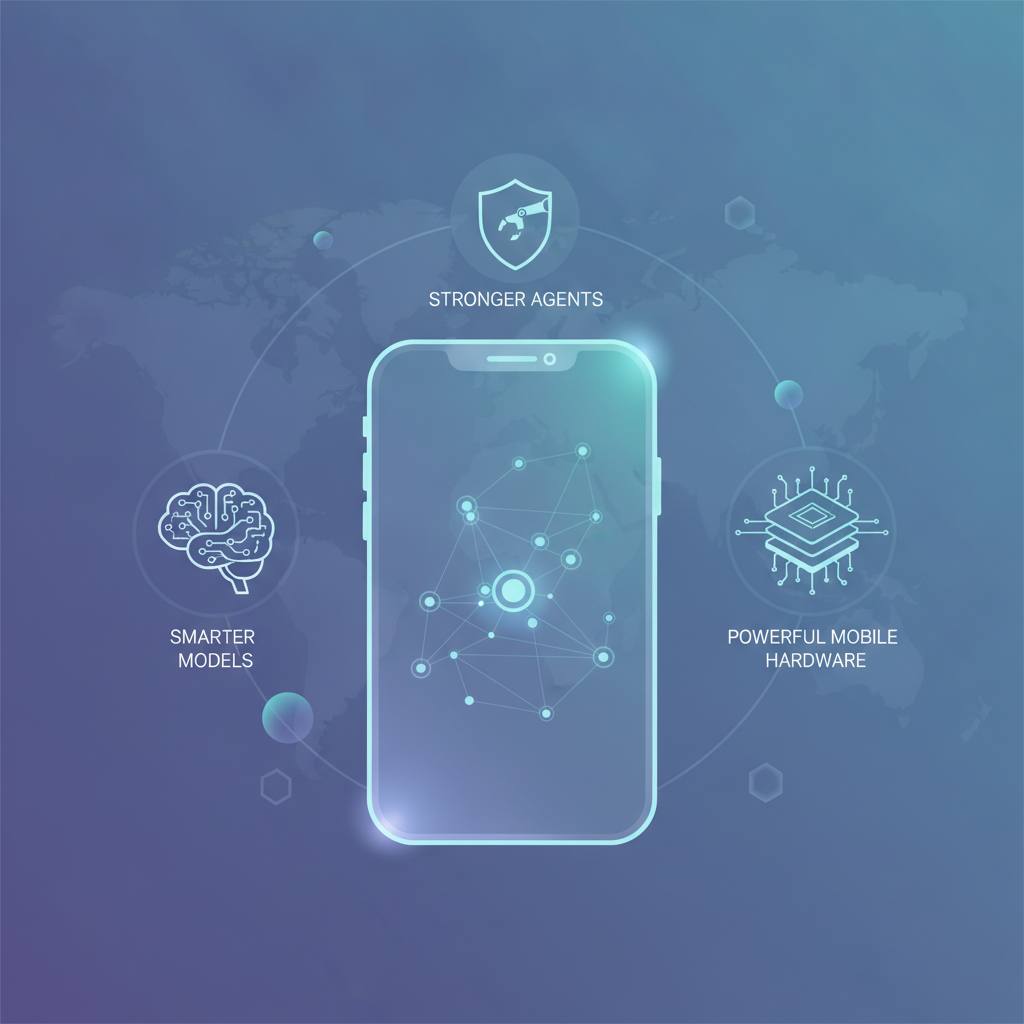
The next wave of tech innovation brings AI models that are more efficient and persistent, paired with powerful mobile hardware. This combination will make advanced AI truly practical on our personal devices, moving sophisticated tasks from the cloud to our pockets.
The latest developments paint a clear picture of where technology is headed: toward more capable and independent AI running right on our devices. Take Qwen3.8-Flash-Next, for instance. Its focus isn't just on raw power but on efficiency, using a sparse Mixture-of-Experts approach. This means advanced AI models can perform complex tasks with less of the model active at any given time, making them faster and less demanding on resources. This shift is vital for bringing sophisticated AI out of the data center and onto everyday hardware.
Parallel to this, Google's Gemini 3.8 Flash shows us another key direction. Instead of just bigger context windows, the emphasis is on making the model 'stick with difficult tasks for longer.' This isn't about isolated cleverness; it's about persistence and reliability in real-world scenarios where AI agents need to follow through on multi-step instructions without getting sidetracked or giving up. This capability transforms AI from a helpful tool into a dependable partner for more intricate workflows.
On the hardware front, devices like the Xiaomi Pad 9 Pro Max showcase the perfect environment for these evolving AI capabilities. With its custom Xring O3 chip, a large, high-resolution screen, and an enormous 12,000 mAh battery, it's built to handle demanding computational loads locally. This isn't just about entertainment; it's about providing the robust, power-efficient platform needed for running advanced, persistent AI directly on the device.
WondTech predicts these three trends will converge rapidly. We're moving beyond AI that primarily relies on constant cloud connectivity. Instead, expect to see your next generation of tablets and even smartphones housing powerful, efficient AI models that can tackle complex agent workflows. This means faster, more private, and significantly more reliable on-device AI. Your personal devices will become truly intelligent companions, capable of managing intricate tasks without needing to constantly talk to a server or quickly draining their battery. The future points to increasingly autonomous and capable AI experiences, right in the palm of your hand.