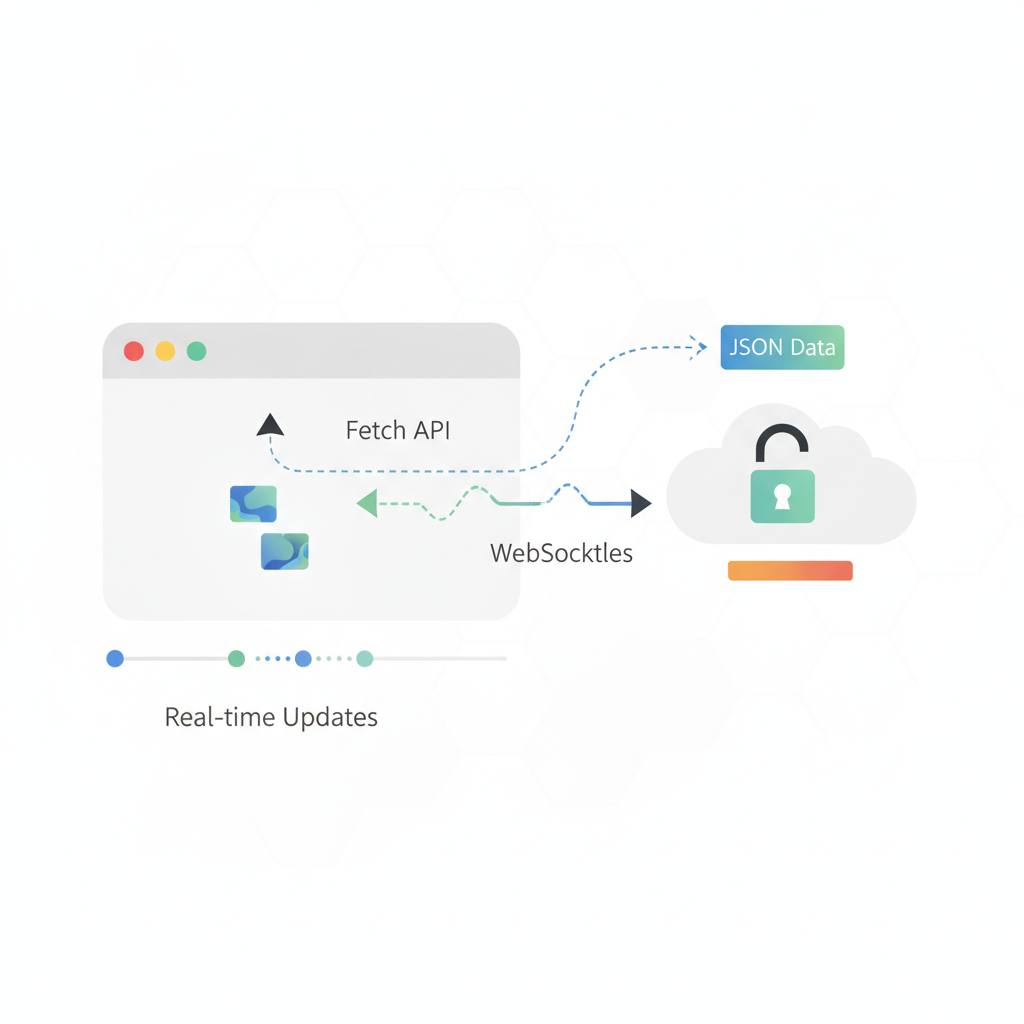
Modern web applications rely on powerful tools like the Fetch API and WebSockets to deliver faster, more interactive experiences. These technologies handle network communication and background tasks, making your favorite sites quicker and more reliable.
Ever wonder why some websites feel incredibly fast and responsive, while others lag? It's often thanks to powerful tools called Web APIs working behind the scenes. These browser-provided interfaces, like the Fetch API, WebSockets, and Service Workers, are what make modern web applications so interactive and reliable.
What does this mean for you? Simply put, these technologies make your online experience much smoother. When you visit a website, these APIs help it load data quickly, update information in real-time, and even work better offline.
Let's talk about the Fetch API first. This is the modern way websites get information from servers, replacing an older method. Think of it like a smarter, faster messenger. When you want to see new posts on a social media feed or check product details on a shopping site, the Fetch API is often at work. It allows the website to ask for data (like images or text) without freezing the page you're looking at. This means you can keep browsing smoothly while new content loads in the background, making websites feel much more responsive. It handles common tasks like sending your login details or fetching a list of users, all using a cleaner and more efficient approach.
Then there are WebSockets. Imagine you're in a live chat or playing an online game. You need instant updates, right? WebSockets create a persistent, direct line of communication between your browser and the server. Unlike the usual 'request and response' where your browser asks for something and the server replies, WebSockets allow both sides to send messages back and forth at any time. This 'two-way street' is perfect for anything requiring real-time updates, like watching a live sports score, getting instant notifications, or participating in a video call. It significantly reduces delays, ensuring you get the latest information almost instantly.
The news item also mentions Service Workers. While not detailed extensively here, these are essentially scripts that run in the background, separate from the web page itself. They play a crucial role in improving reliability, especially for offline access and speeding up subsequent visits by caching data. They work hand-in-hand with tools like the Fetch API to make sure your web experience is top-notch, even when your internet connection isn't.
In essence, these Web APIs are the unsung heroes making the web faster, more interactive, and a joy to use. They ensure that websites can handle complex tasks and deliver rich experiences without making you wait.
What does this mean for you? Simply put, these technologies make your online experience much smoother. When you visit a website, these APIs help it load data quickly, update information in real-time, and even work better offline.
Let's talk about the Fetch API first. This is the modern way websites get information from servers, replacing an older method. Think of it like a smarter, faster messenger. When you want to see new posts on a social media feed or check product details on a shopping site, the Fetch API is often at work. It allows the website to ask for data (like images or text) without freezing the page you're looking at. This means you can keep browsing smoothly while new content loads in the background, making websites feel much more responsive. It handles common tasks like sending your login details or fetching a list of users, all using a cleaner and more efficient approach.
Then there are WebSockets. Imagine you're in a live chat or playing an online game. You need instant updates, right? WebSockets create a persistent, direct line of communication between your browser and the server. Unlike the usual 'request and response' where your browser asks for something and the server replies, WebSockets allow both sides to send messages back and forth at any time. This 'two-way street' is perfect for anything requiring real-time updates, like watching a live sports score, getting instant notifications, or participating in a video call. It significantly reduces delays, ensuring you get the latest information almost instantly.
The news item also mentions Service Workers. While not detailed extensively here, these are essentially scripts that run in the background, separate from the web page itself. They play a crucial role in improving reliability, especially for offline access and speeding up subsequent visits by caching data. They work hand-in-hand with tools like the Fetch API to make sure your web experience is top-notch, even when your internet connection isn't.
In essence, these Web APIs are the unsung heroes making the web faster, more interactive, and a joy to use. They ensure that websites can handle complex tasks and deliver rich experiences without making you wait.