A developer has found a clever way to keep AI-generated web tool designs consistent. Instead of locking down every detail, focusing on core visual identity elements ensures a unified experience without stifling creativity.
Ever noticed how AI-generated web tool designs can drift and become inconsistent? It seems developers have found a smart solution to this problem, and this means we're about to see more consistent and beautiful web tools, even those crafted by AI.
The big challenge with using AI agents to mass-produce web tools was that the design just wouldn't stay put. Even with the same instructions, colors, spacing, and component shapes would subtly change with each new generation. Imagine managing over 600 tools across five different regions, and each one looks slightly off from its siblings! This was a real headache needing a fix.
Initially, one developer tackled this by trying to 'lock' each tool's UI design using JSON definitions. The idea was straightforward: define everything—from labels to inputs and outputs—as values in a JSON file, and then have the system render it through a fixed pipeline. This method did succeed in preventing drift. Whatever was in the JSON rendered perfectly, so generation-to-generation design drift was gone. However, the end result was disappointing. The screens came out lifeless, looking exactly like a 'spreadsheet'! Straight lines everywhere, not a curve in sight. Every value sat in its own little cell. The cause was structural: the expressive ceiling of this method was limited by what the renderer could implement. To add rounded corners or gradients, you'd have to constantly 'fatten' the JSON schema and the renderer, which is essentially like reinventing HTML and CSS. The mechanism that killed the drift also killed expressiveness.
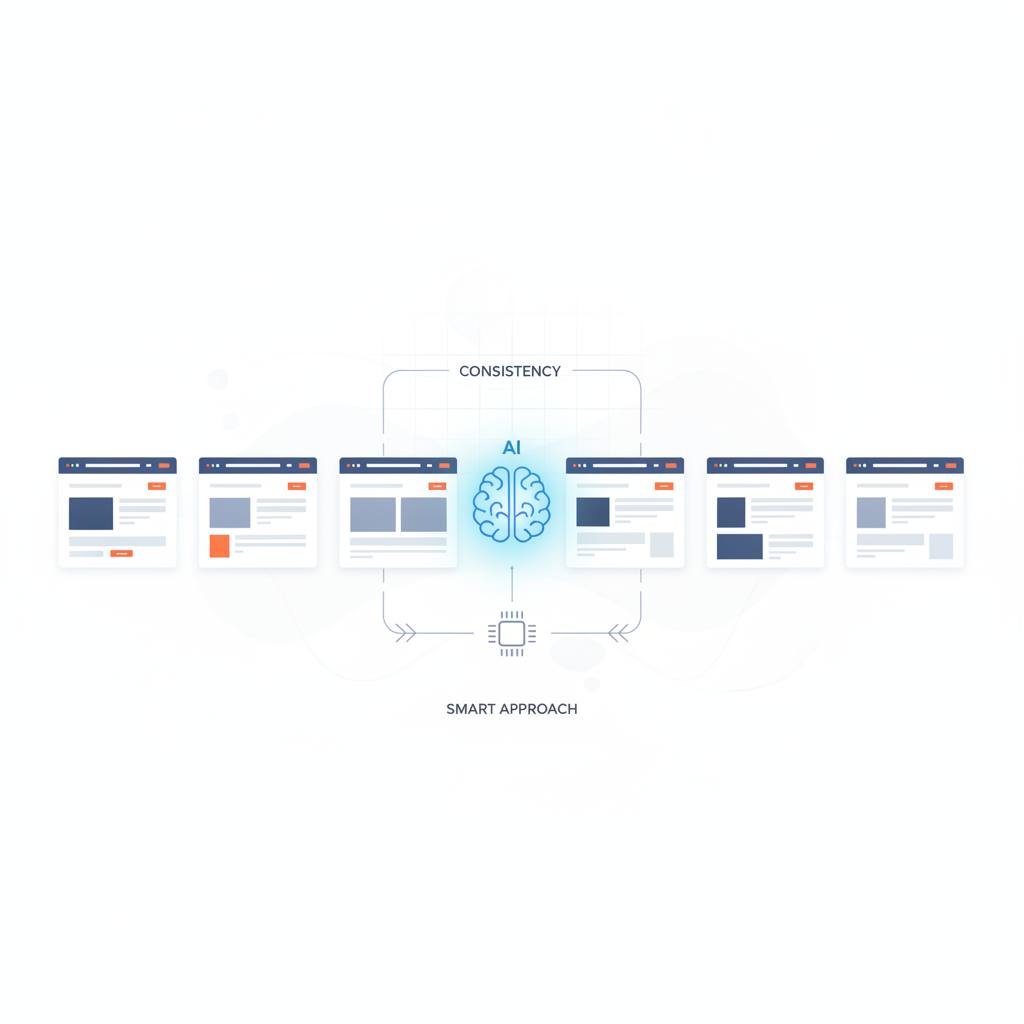
Following this experience, the policy changed. Instead of locking the entire structure and layout, they decided to lock only the 'identity.' What this means is focusing on the core elements that make a brand consistent: the system of colors, typography, border radii, and spacing. Practically, a CSS variables file became the canonical source for this identity, with every tool using only these variables. Alongside this, a 'living UI kit' was created – a real, runnable reference implementation you could open in a browser. This defines what a project's card, button, or input looks like as ready-to-use HTML, not just a theoretical spec. The instruction to the AI shifted from 'render exactly this JSON' to 'use this kit's parts and variables; compose the layout freely.'
The result? Each tool can optimize its layout freely, while the brand remains cohesive and unified. This is a clever solution that maintains a consistent overall look without stifling creativity. And for us, it means we get the benefit of AI's production speed without sacrificing the aesthetic quality and consistent experience we all love in web tools.
The big challenge with using AI agents to mass-produce web tools was that the design just wouldn't stay put. Even with the same instructions, colors, spacing, and component shapes would subtly change with each new generation. Imagine managing over 600 tools across five different regions, and each one looks slightly off from its siblings! This was a real headache needing a fix.
Initially, one developer tackled this by trying to 'lock' each tool's UI design using JSON definitions. The idea was straightforward: define everything—from labels to inputs and outputs—as values in a JSON file, and then have the system render it through a fixed pipeline. This method did succeed in preventing drift. Whatever was in the JSON rendered perfectly, so generation-to-generation design drift was gone. However, the end result was disappointing. The screens came out lifeless, looking exactly like a 'spreadsheet'! Straight lines everywhere, not a curve in sight. Every value sat in its own little cell. The cause was structural: the expressive ceiling of this method was limited by what the renderer could implement. To add rounded corners or gradients, you'd have to constantly 'fatten' the JSON schema and the renderer, which is essentially like reinventing HTML and CSS. The mechanism that killed the drift also killed expressiveness.
Following this experience, the policy changed. Instead of locking the entire structure and layout, they decided to lock only the 'identity.' What this means is focusing on the core elements that make a brand consistent: the system of colors, typography, border radii, and spacing. Practically, a CSS variables file became the canonical source for this identity, with every tool using only these variables. Alongside this, a 'living UI kit' was created – a real, runnable reference implementation you could open in a browser. This defines what a project's card, button, or input looks like as ready-to-use HTML, not just a theoretical spec. The instruction to the AI shifted from 'render exactly this JSON' to 'use this kit's parts and variables; compose the layout freely.'
The result? Each tool can optimize its layout freely, while the brand remains cohesive and unified. This is a clever solution that maintains a consistent overall look without stifling creativity. And for us, it means we get the benefit of AI's production speed without sacrificing the aesthetic quality and consistent experience we all love in web tools.