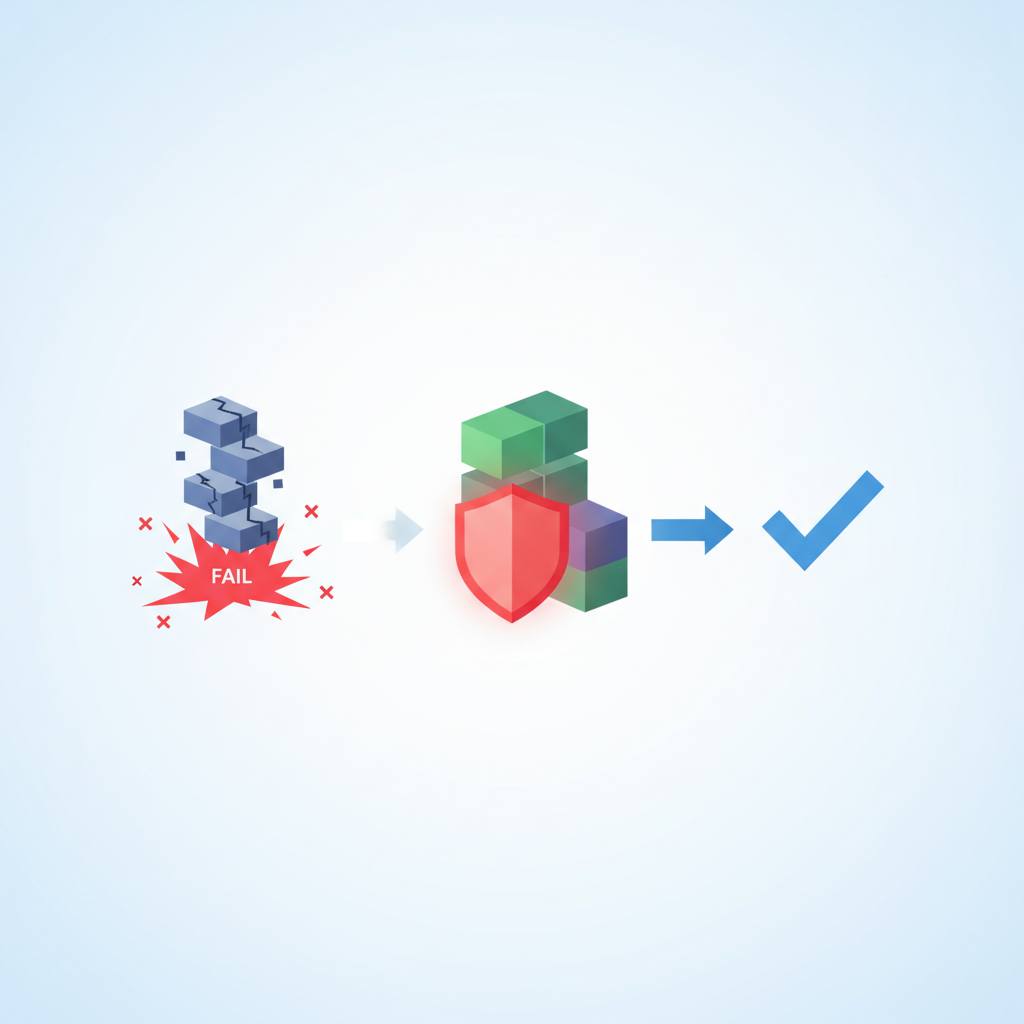
A developer shares their frustrating experience running a demanding 7GB AI model, revealing how their development environment, despite advanced safety features, prevents the task from completing. It highlights a common trap where your essential coding tool becomes the biggest hurdle to heavy-duty work.
Hey fellow developers, have you ever found yourself in a bizarre situation where your system's safety mechanisms protect your machine so well that they completely prevent you from getting any actual work done? That’s exactly what happened to one developer recently, and their story sheds light on a common dilemma in the programming world.
Our developer was attempting to run an automated video pipeline using a massive AI image model called FLUX, a 12-billion-parameter beast. This model demands roughly 7GB of memory to operate, even after being quantized down to 4-bit. Because their machine, a 16GB M4 Mac, had previously frozen during similar heavy tasks, the developer had implemented strict safety protocols. First, a «pre-flight gate» that stops any process from starting if free memory drops below 50%. Second, a «watchdog» system that automatically kills the generation process if free memory dangerously dips mid-generation, all to prevent the machine from freezing.
And guess what? These safety mechanisms worked flawlessly! In one instance, the gate allowed the process to start because free memory was at 51%. However, the moment generation began, free memory instantly plummeted from 51% to 7%. The watchdog immediately stepped in and killed the process. The outcome? The machine was fine, the safety net was perfect, but zero images were produced. The machine was fully protected, yet utterly unproductive.
Initially, the developer thought the problem was the output size, so they tried shrinking it. But the exact same scenario unfolded: a rapid memory slide and then the process being killed. This led to a stark realization: the culprit wasn't the output size, but the massive 7GB weights of the model loading into memory upfront, regardless of how small the picture was.
Upon checking actual memory usage, the developer found their machine was using 13GB of physical memory at idle, with only 2.7GB truly free. To make matters worse, their development environment alone (editor plus its resident processes) consumed about 3GB. Adding a 7GB model on top of that existing load, it was no surprise that memory overflowed.
This brings us to the classic advice: «Close your editor before running heavy stages.» Great advice, right? The problem is, the automated video generation process the developer was trying to run lives and operates *inside* that very editor. Closing it would simply kill the task they were trying to accomplish. A perfect deadlock.
What does this mean for you? It means you might face similar memory challenges, especially when working with large AI models or intensive computing tasks. The solution might not always be just a hardware upgrade, but a deep understanding of how your software and tools consume resources. Sometimes, the very tool you rely on becomes your biggest bottleneck. Always look at the real numbers, not just 'vibes,' and uncover where your memory is truly going.
Our developer was attempting to run an automated video pipeline using a massive AI image model called FLUX, a 12-billion-parameter beast. This model demands roughly 7GB of memory to operate, even after being quantized down to 4-bit. Because their machine, a 16GB M4 Mac, had previously frozen during similar heavy tasks, the developer had implemented strict safety protocols. First, a «pre-flight gate» that stops any process from starting if free memory drops below 50%. Second, a «watchdog» system that automatically kills the generation process if free memory dangerously dips mid-generation, all to prevent the machine from freezing.
And guess what? These safety mechanisms worked flawlessly! In one instance, the gate allowed the process to start because free memory was at 51%. However, the moment generation began, free memory instantly plummeted from 51% to 7%. The watchdog immediately stepped in and killed the process. The outcome? The machine was fine, the safety net was perfect, but zero images were produced. The machine was fully protected, yet utterly unproductive.
Initially, the developer thought the problem was the output size, so they tried shrinking it. But the exact same scenario unfolded: a rapid memory slide and then the process being killed. This led to a stark realization: the culprit wasn't the output size, but the massive 7GB weights of the model loading into memory upfront, regardless of how small the picture was.
Upon checking actual memory usage, the developer found their machine was using 13GB of physical memory at idle, with only 2.7GB truly free. To make matters worse, their development environment alone (editor plus its resident processes) consumed about 3GB. Adding a 7GB model on top of that existing load, it was no surprise that memory overflowed.
This brings us to the classic advice: «Close your editor before running heavy stages.» Great advice, right? The problem is, the automated video generation process the developer was trying to run lives and operates *inside* that very editor. Closing it would simply kill the task they were trying to accomplish. A perfect deadlock.
What does this mean for you? It means you might face similar memory challenges, especially when working with large AI models or intensive computing tasks. The solution might not always be just a hardware upgrade, but a deep understanding of how your software and tools consume resources. Sometimes, the very tool you rely on becomes your biggest bottleneck. Always look at the real numbers, not just 'vibes,' and uncover where your memory is truly going.