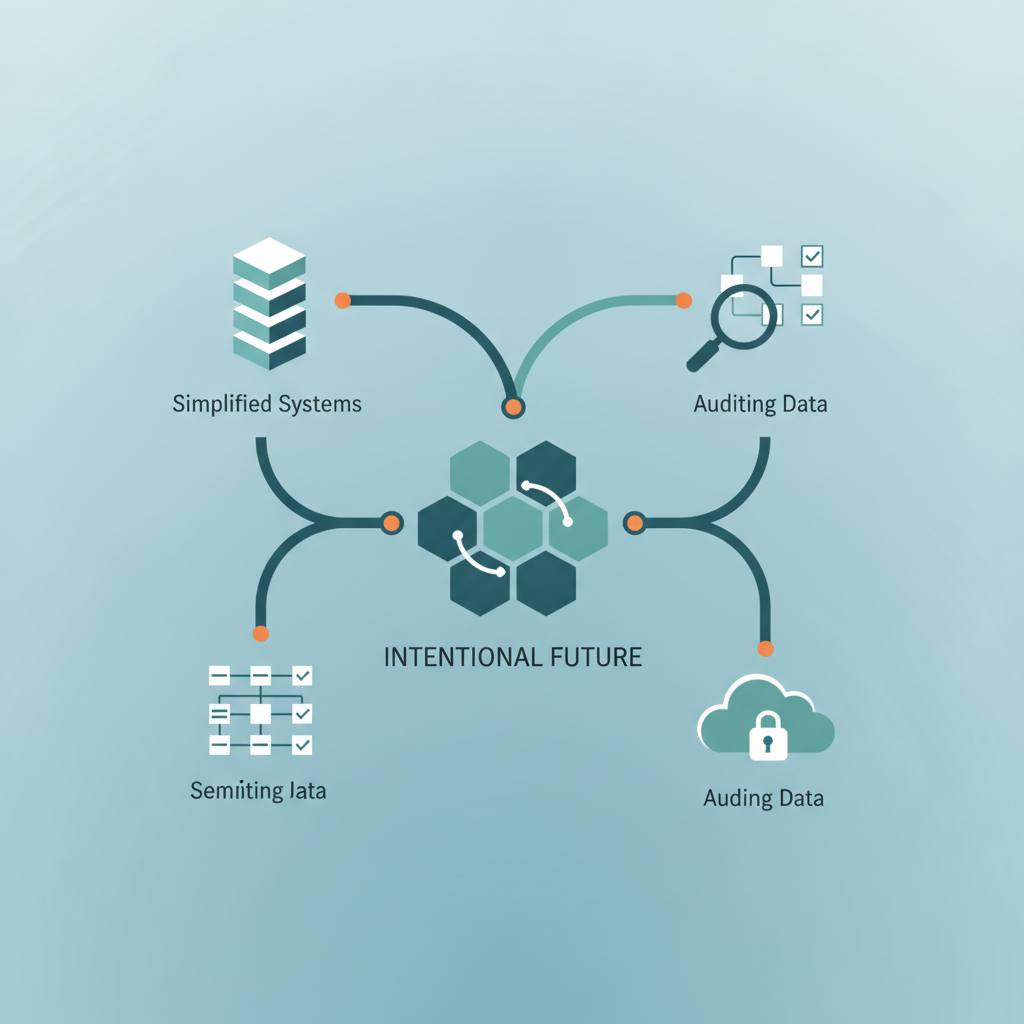
Distributed systems are simplifying by leveraging existing databases, while precise data store selection is becoming more critical. An unwavering focus on data integrity and immutable audit logs will become a standard practice in software development.
Welcome to the WondTech blog, where we explore the future of technology. Recent significant developments in programming are clearly shaping what's next. We see two main trends emerging strongly.
First, distributed systems are moving towards remarkable simplification. What once required a complex stack of technologies like Kafka or RabbitMQ is now becoming possible using existing relational databases. The new Spring Batch DB Cluster Partitioning release perfectly illustrates this. The ability to run partitioned jobs across multiple JVM nodes, coordinated entirely through your existing database, means reducing reliance on costly and complex additional tools. We expect this philosophy to continue spreading, as developers seek ways to achieve scalability and resilience without adding new layers of infrastructure complexity. This will mean a shift towards leveraging the core capabilities of existing systems in more innovative and efficient ways. This approach reduces operational costs and makes distributed systems accessible to larger teams.
Second, the importance of precise data storage choices is growing. It's no longer acceptable to simply say, 'Just use Redis' for any key-value store. Our recent article clearly highlights that this field is vast and diverse. The future will demand a critical need for engineers to understand the nuances between different types of data stores and to accurately choose the most suitable one based on actual project requirements, whether it's access speed, data durability, or usage patterns. This means system design expertise will not be limited to knowing popular tools but will require a deeper understanding of the performance and reliability trade-offs for each storage option.
Third, the software industry is heading towards a strong focus on data integrity and auditing. The story of the append-only audit log, which uncovered accounting bugs, demonstrates the immense value of immutable data. This isn't just a solution to a specific problem; it's a design principle becoming increasingly vital. We predict that the practice of building systems with immutable audit logs will become standard, especially in applications requiring high accuracy and process tracking. This ensures transparency, guards against future errors, and helps build more reliable and auditable systems. This feature will be crucial in fields like finance, healthcare, and any sector reliant on precise data.
In summary, we are moving towards building smarter systems that rely on well-thought-out infrastructure decisions. We will see simpler, more integrated distributed systems, more precise data store choices, and an unwavering focus on data integrity and auditability. This future promises more efficient, reliable, and cost-effective software development.
First, distributed systems are moving towards remarkable simplification. What once required a complex stack of technologies like Kafka or RabbitMQ is now becoming possible using existing relational databases. The new Spring Batch DB Cluster Partitioning release perfectly illustrates this. The ability to run partitioned jobs across multiple JVM nodes, coordinated entirely through your existing database, means reducing reliance on costly and complex additional tools. We expect this philosophy to continue spreading, as developers seek ways to achieve scalability and resilience without adding new layers of infrastructure complexity. This will mean a shift towards leveraging the core capabilities of existing systems in more innovative and efficient ways. This approach reduces operational costs and makes distributed systems accessible to larger teams.
Second, the importance of precise data storage choices is growing. It's no longer acceptable to simply say, 'Just use Redis' for any key-value store. Our recent article clearly highlights that this field is vast and diverse. The future will demand a critical need for engineers to understand the nuances between different types of data stores and to accurately choose the most suitable one based on actual project requirements, whether it's access speed, data durability, or usage patterns. This means system design expertise will not be limited to knowing popular tools but will require a deeper understanding of the performance and reliability trade-offs for each storage option.
Third, the software industry is heading towards a strong focus on data integrity and auditing. The story of the append-only audit log, which uncovered accounting bugs, demonstrates the immense value of immutable data. This isn't just a solution to a specific problem; it's a design principle becoming increasingly vital. We predict that the practice of building systems with immutable audit logs will become standard, especially in applications requiring high accuracy and process tracking. This ensures transparency, guards against future errors, and helps build more reliable and auditable systems. This feature will be crucial in fields like finance, healthcare, and any sector reliant on precise data.
In summary, we are moving towards building smarter systems that rely on well-thought-out infrastructure decisions. We will see simpler, more integrated distributed systems, more precise data store choices, and an unwavering focus on data integrity and auditability. This future promises more efficient, reliable, and cost-effective software development.