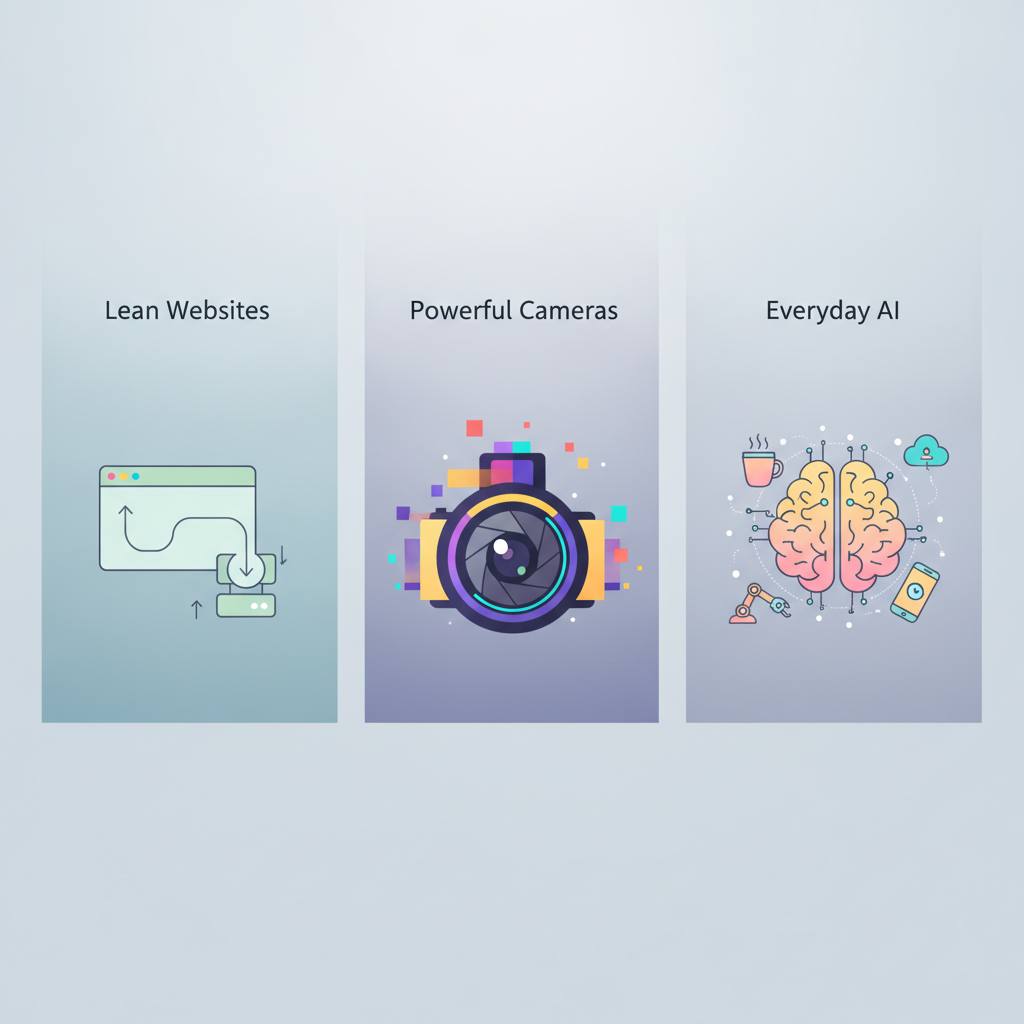
We're seeing a push for leaner, faster websites for marketing, while mobile cameras continue their impressive leap. Meanwhile, AI development is becoming more accessible for everyone.
It's becoming clear that 'more tech' isn't always 'better tech,' especially for common web needs. We're seeing a strong pushback against over-engineering simple marketing websites with complex frameworks like React or Next.js. Developers might ship beautifully engineered sites, but if they load 400KB of JavaScript just for a basic hero section, clients quickly notice high bounce rates and poor performance scores. This isn't a technical fault by the developer, but a mismatch between tool and task. Expect a definite shift towards leaner, faster solutions for static content. Simple HTML, CSS, and plain JavaScript, or efficient static site generators, will make a comeback for marketing pages, prioritizing user experience and quick load times over sophisticated build processes. The focus will be on delivering a snappy, enjoyable experience that keeps visitors engaged and search engines happy.
Meanwhile, the race for mobile photography dominance continues its rapid pace. Leaks about devices like the Oppo Find X10 Ultra, with its rumored 200MP periscope telephoto camera and large sensor, show us where things are heading. Manufacturers aren't just adding more megapixels; they're integrating advanced optics and bigger sensors into incredibly thin devices. This push aims to bring near-professional photography capabilities into our pockets. Expect even more sophisticated computational photography features, allowing phones to capture stunning detail and low-light performance that once required dedicated cameras. This innovation will keep mobile phones at the forefront of casual and semi-professional content creation.
Finally, the world of Artificial Intelligence is becoming incredibly approachable, moving beyond the exclusive domain of deep learning experts. We're seeing a surge in beginner-friendly projects using Python and accessible libraries like scikit-learn, pandas, or even APIs from OpenAI and Hugging Face. This means more developers, without needing years of specialized training, can start building practical AI features. Expect AI to become a standard tool in every developer's kit, not just a niche specialization. It will be integrated into everyday applications, from simple web UIs to sophisticated data analysis, making intelligent features commonplace and easier to implement. The future points to technology that's both efficient where simplicity is key, and powerful yet remarkably accessible where advanced capabilities are needed.
Meanwhile, the race for mobile photography dominance continues its rapid pace. Leaks about devices like the Oppo Find X10 Ultra, with its rumored 200MP periscope telephoto camera and large sensor, show us where things are heading. Manufacturers aren't just adding more megapixels; they're integrating advanced optics and bigger sensors into incredibly thin devices. This push aims to bring near-professional photography capabilities into our pockets. Expect even more sophisticated computational photography features, allowing phones to capture stunning detail and low-light performance that once required dedicated cameras. This innovation will keep mobile phones at the forefront of casual and semi-professional content creation.
Finally, the world of Artificial Intelligence is becoming incredibly approachable, moving beyond the exclusive domain of deep learning experts. We're seeing a surge in beginner-friendly projects using Python and accessible libraries like scikit-learn, pandas, or even APIs from OpenAI and Hugging Face. This means more developers, without needing years of specialized training, can start building practical AI features. Expect AI to become a standard tool in every developer's kit, not just a niche specialization. It will be integrated into everyday applications, from simple web UIs to sophisticated data analysis, making intelligent features commonplace and easier to implement. The future points to technology that's both efficient where simplicity is key, and powerful yet remarkably accessible where advanced capabilities are needed.