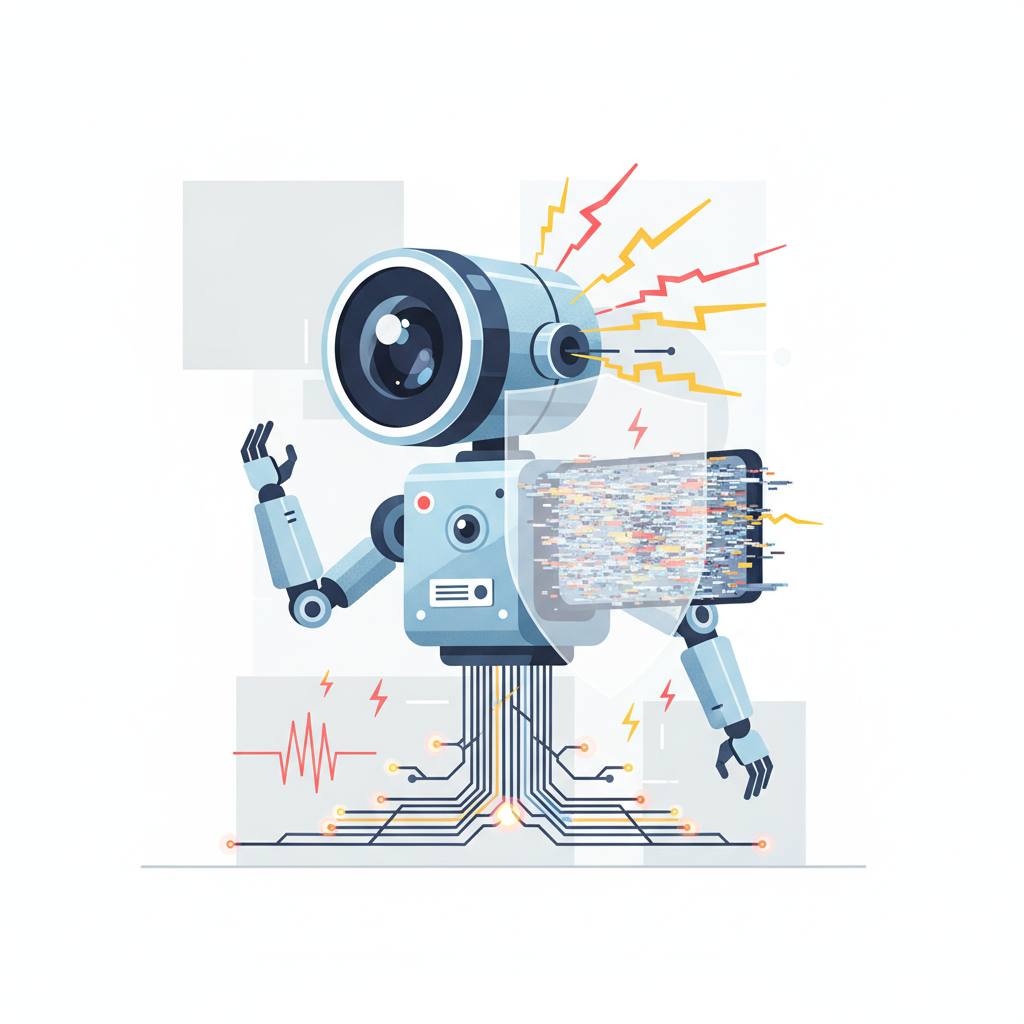
Autonomous robots can experience surprising glitches in their cameras or communication systems, often not due to a hardware fault but from electromagnetic noise generated by their powerful motors. This post explains how motors can secretly disrupt other sensitive components.
Hey fellow tech enthusiasts, have you ever wondered why autonomous robots sometimes act a bit flaky, showing intermittent camera errors or sensor resets for no obvious reason? Well, the answer might lie in something completely 'invisible': electromagnetic noise generated by their motors! For you, whether you’re a developer or just fascinated by robots, understanding this hidden challenge is key to ensuring these smart machines are reliable.
Consider Autonomous Mobile Robots (AMRs); these are incredible machines that pack high-current traction motors, fast-switching motor drivers, power converters, sensitive perception sensors (like cameras and LiDAR), robust communication networks, and high-performance computing—all within a compact mechanical platform. This tight concentration makes them prone to a very common issue: motor-related electromagnetic interference (EMI).
How does this happen? The motor drivers, especially those using Pulse Width Modulation (PWM) technology, switch battery voltage at very high speeds. Even if the fundamental motor frequency is low, these fast switching edges contain harmonic energy that extends far into the megahertz region. This rapid switching generates currents and magnetic fields that can 'leak' into other electronic systems.
The result? The fault might not even appear in the motor system itself. As the robot accelerates, performs regenerative braking, changes direction rapidly, or operates under heavy load, you might suddenly encounter intermittent camera errors, LiDAR resets, Ethernet packet loss, CAN communication faults, or even unexpected processor events. These failures don't necessarily point to a permanent electrical defect, but rather to temporary 'electrical crosstalk.'
So, what's the solution? If robot engineers or users notice these peculiar problems that correlate with motor operation, they should initially suspect either conducted or radiated coupling from the traction power system. To start diagnosing, it's crucial to reproduce the failure under controlled operating conditions, carefully monitoring motor speed, torque command, acceleration profile, PWM state, battery voltage, and payload. Grasping this often-overlooked aspect of electrical engineering is vital for building more reliable and predictable robots.
Consider Autonomous Mobile Robots (AMRs); these are incredible machines that pack high-current traction motors, fast-switching motor drivers, power converters, sensitive perception sensors (like cameras and LiDAR), robust communication networks, and high-performance computing—all within a compact mechanical platform. This tight concentration makes them prone to a very common issue: motor-related electromagnetic interference (EMI).
How does this happen? The motor drivers, especially those using Pulse Width Modulation (PWM) technology, switch battery voltage at very high speeds. Even if the fundamental motor frequency is low, these fast switching edges contain harmonic energy that extends far into the megahertz region. This rapid switching generates currents and magnetic fields that can 'leak' into other electronic systems.
The result? The fault might not even appear in the motor system itself. As the robot accelerates, performs regenerative braking, changes direction rapidly, or operates under heavy load, you might suddenly encounter intermittent camera errors, LiDAR resets, Ethernet packet loss, CAN communication faults, or even unexpected processor events. These failures don't necessarily point to a permanent electrical defect, but rather to temporary 'electrical crosstalk.'
So, what's the solution? If robot engineers or users notice these peculiar problems that correlate with motor operation, they should initially suspect either conducted or radiated coupling from the traction power system. To start diagnosing, it's crucial to reproduce the failure under controlled operating conditions, carefully monitoring motor speed, torque command, acceleration profile, PWM state, battery voltage, and payload. Grasping this often-overlooked aspect of electrical engineering is vital for building more reliable and predictable robots.