When dealing with many automated tasks simultaneously, simple systems can crash. «Queue Mode» explains how separating tasks in your system helps you handle heavy loads and significantly reduce costs.
Have you ever run an online automation system, like N8N or Zapier, and noticed it freezes or crashes when trying to do too many things at once? This is a very common problem! When your tool receives a flood of requests—maybe dozens or hundreds of 'webhooks' hitting it at the exact same moment—it might not be able to process everything immediately. It becomes like an extremely congested highway, where cars get stuck and nothing moves.
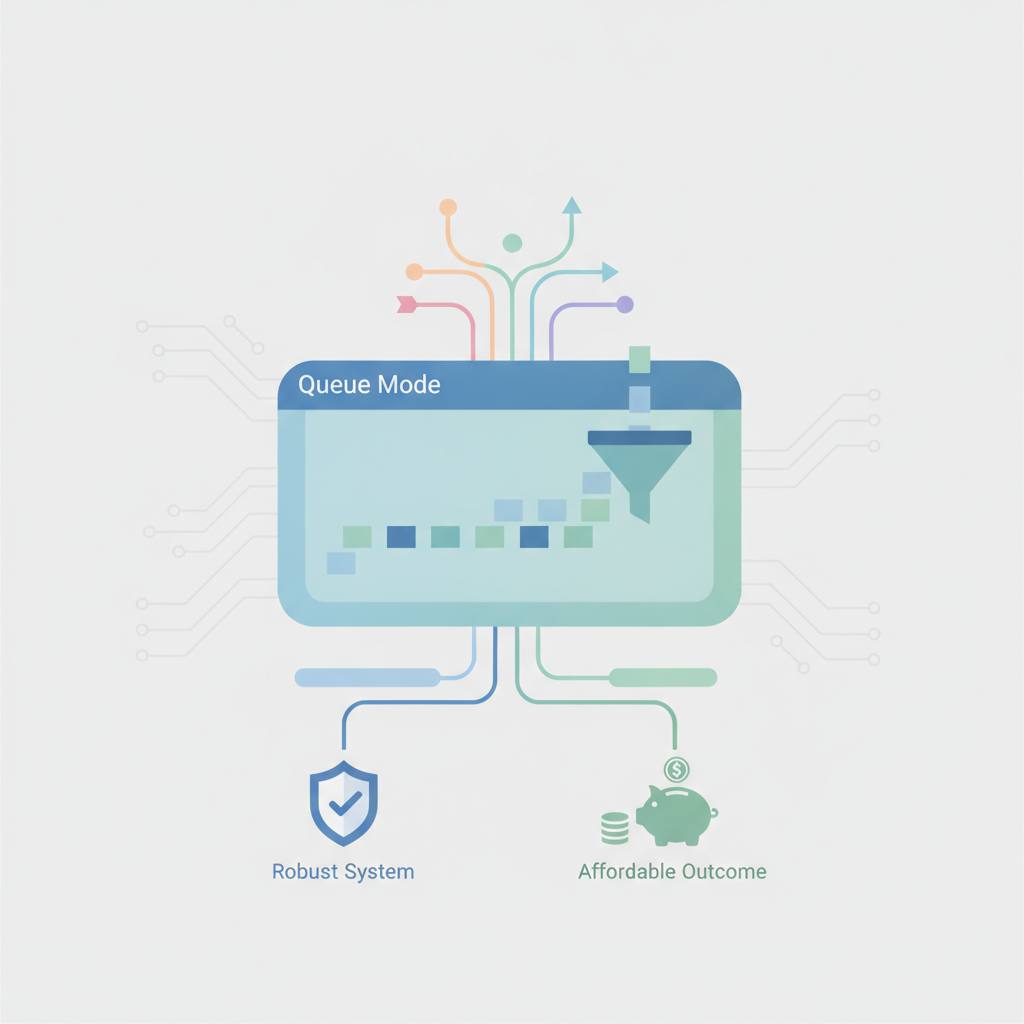
This is where a clever solution called «Queue Mode» comes into play. Imagine you're running a large, busy restaurant. If there was only one chef taking orders, cooking, and serving food, they'd quickly get overwhelmed. But what if you had a better system?
In «Queue Mode», things work differently:
1. **The Order Taker (Main Web Process):** This is like the host who greets customers and takes their orders (receives your 'webhooks'). Their only job is to quickly record orders.
2. **The Order Queue (Redis):** After taking an order, the host places it into an organized waiting line, much like a ticket system. Here, tasks wait calmly for their turn. 'Redis' is a fast, temporary storage system often used for these queues.
3. **The Recipe Book and Database (PostgreSQL):** This is where you keep all your recipes, customer information, and the status of each order (is it being prepared, ready, etc.). 'PostgreSQL' is a robust and reliable database system used for permanently storing important data.
4. **The Working Chefs (Background Workers):** These are the actual cooks. They pick one ticket from the queue at a time, prepare the meal (execute the task), and then move to the next ticket. You can easily add more chefs as more orders come in, keeping the restaurant running smoothly no matter how busy it gets.
Why is this better? Because it separates roles. The main process can continue to receive new requests without worrying about processing them, and the workers can focus on completing tasks without being overwhelmed by new incoming requests. This means your automation system can handle a very large number of tasks simultaneously without crashing.
Additionally, this solution can be much more cost-effective. Instead of paying hundreds of dollars a month for third-party services that handle everything, you can run your own «Queue Mode» setup on a simple server for a very small cost, saving thousands of dollars annually if your task volume is high. It's like owning your own restaurant instead of relying on expensive food delivery services! This concept isn't just for automation; it's a fundamental principle in building any large, reliable software system.