Have you ever noticed your server struggling even after Celery tasks finish? A common issue is that when a Celery worker shuts down, it can leave behind child processes that continue to consume resources, effectively becoming system 'zombies'.
Ever puzzled over why your server seems to chug along, even after your Celery tasks are supposed to be done? There's a tricky problem that can pop up with distributed task queues like Celery, especially when they're running in busy production environments.
The core issue is this: when a Celery worker process is told to shut down gracefully—perhaps for scaling or tidying up—it receives a termination signal (SIGTERM). You'd expect its child processes to shut down too, right? A flaw in how Python and standard systems handle signals means this shutdown message often doesn't automatically reach the smaller 'child' processes that the Celery worker might have spawned. Think of tasks like processing videos with `ffmpeg` or running a simple `sleep` command; these are the children.
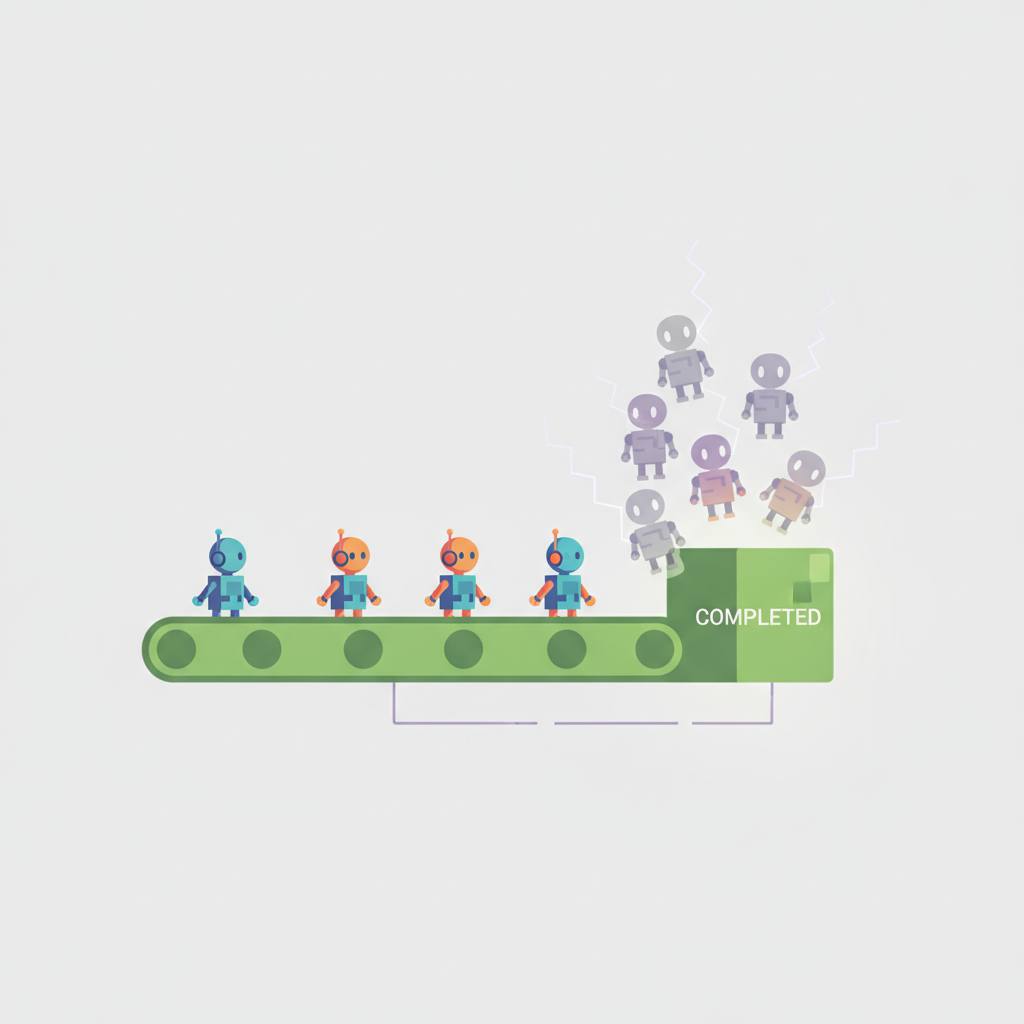
What happens next is where the 'zombie' part comes in. If the parent Celery worker closes down without telling its children to do the same, those child processes don't just vanish. Instead, they become 'orphaned.' Your operating system re-parents them to the main system process (PID 1). These orphaned processes then keep running in the background, continuing to hog valuable resources like CPU power, memory, and even database connections. Effectively, they become 'zombie' processes – alive and consuming resources, but no longer part of any active, managed task.
This leads to real headaches: poorer performance, system instability, and wasted resources.
Developers are actively addressing this. To prevent this resource leakage, smarter ways to manage these child processes are being designed. The idea is to tightly link the life of a child process to its parent worker, ensuring that when the parent goes, all its children follow. This involves using specific programming techniques, like context managers, to track and properly terminate all child tasks. Understanding this behind-the-scenes detail helps us appreciate efforts to make distributed systems more efficient, keeping those digital zombies at bay!