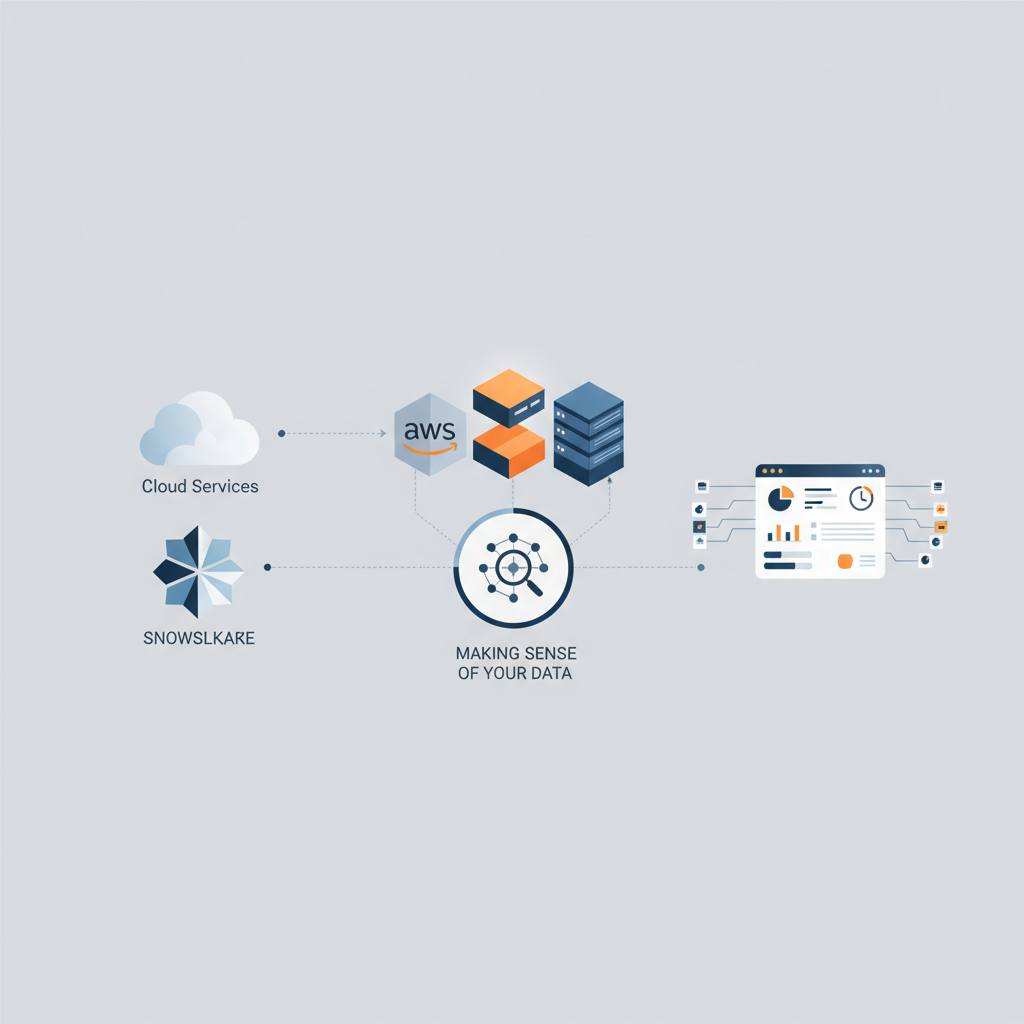
Modern businesses collect vast amounts of data, and managing it efficiently requires powerful tools. This post explains how specialized cloud services like Amazon Web Services (AWS) and Snowflake work together to store, process, and analyze this data, turning raw information into valuable insights without needing to store everything in one place.
Have you ever wondered how big companies handle all the information they collect every day? From your online shopping habits to factory sensor data, there's a flood of information. It's not just about collecting it; it's about making sense of it quickly to make smart decisions. This is where cloud services come into play, and interestingly, companies often use many of them together, like a specialized team.
Think of it like preparing a huge, complex meal. You have different steps and different experts for each.
First, you need a giant pantry to store all your ingredients – fruits, vegetables, meat, spices – just as they arrive from the market. In the world of data, this is Amazon S3 (Simple Storage Service). It's a vast, inexpensive, and highly reliable storage space on the internet where companies dump all their raw data. It doesn't care what kind of data it is; it just stores it safely.
Next, before you can cook, someone needs to clean, chop, and prepare those ingredients. This is like AWS Glue. AWS Glue is a service that acts like a team of chefs preparing your ingredients. It takes the raw data from S3, cleans it up, transforms it (maybe combining different pieces or fixing errors), and gets it ready for use. This process is often called ETL (Extract, Transform, Load).
Finally, you need a high-tech kitchen where all the prepared ingredients are brought together, neatly organized, and ready to be cooked into delicious meals very quickly. This is where Snowflake comes in. Snowflake is like a super-efficient, specialized kitchen designed for data analysis. Once data is cleaned and prepared by Glue, it's loaded into Snowflake. Here, businesses can quickly ask complex questions, run reports, and uncover trends using the organized data. It's optimized for speed and allows different teams to access the insights they need.
The cool part is that S3, Glue, and Snowflake are separate services, but they work together seamlessly. Companies don't have to move all their data into one massive system; instead, they use the best tool for each job. This flexible approach allows them to build powerful 'data pipelines' that handle massive amounts of information efficiently, leading to better insights and smarter business decisions. This collaborative way of managing data is essential for building modern applications, especially those that use Artificial Intelligence.