Ever wondered why word counts differ between different software? Join us to discover how a simple task like counting words becomes a major challenge for programmers due to language complexities.
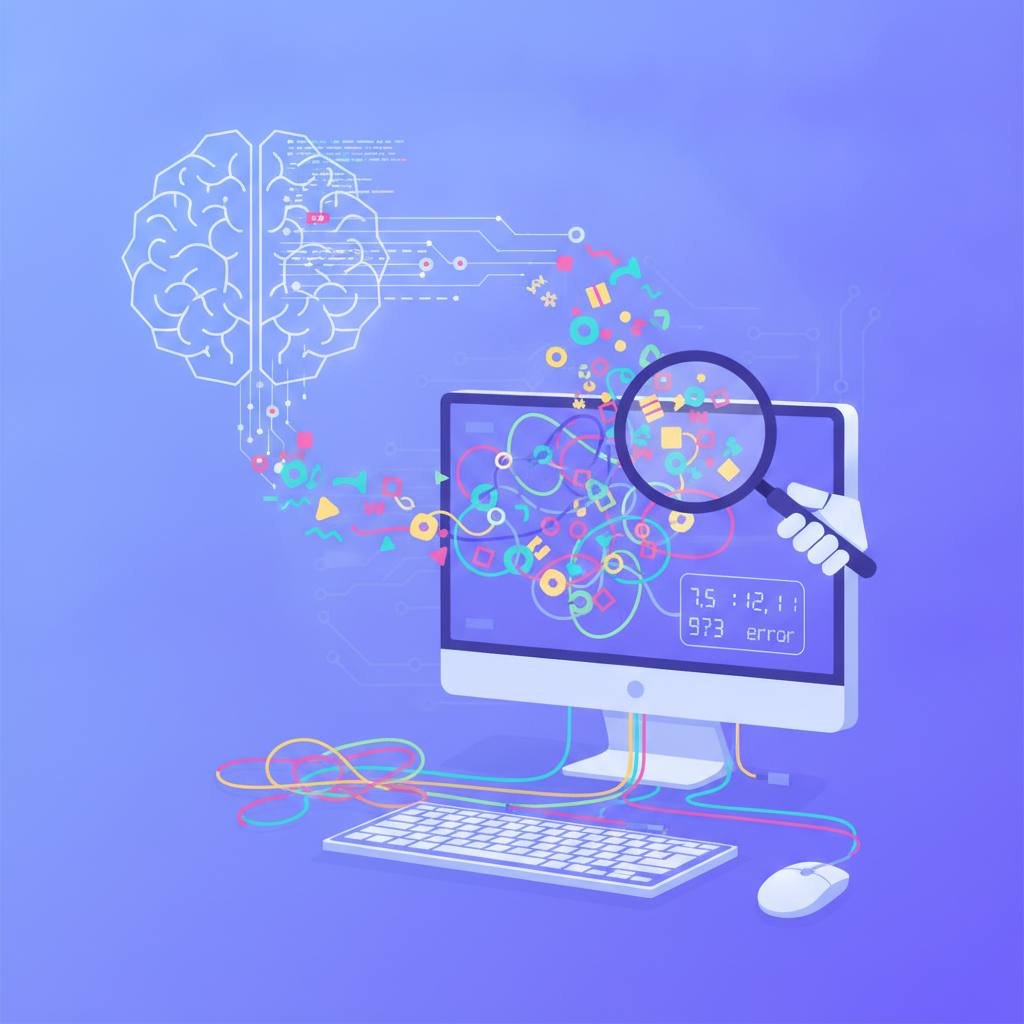
When programmers dive deep, they often find that some everyday tasks, which seem intuitive to us humans, are actually 'harder than they look.' Take counting words in a text, for instance. You might think it's straightforward: just split the text by spaces, and you're done. But, as a recent report from the programming world highlights, this naive approach is just the beginning of the problems! The real reason behind the difficulty in counting words is what's called the «segmentation problem». For us, we instinctively understand that 'don't' is one word, 'well-known' is one word, and '3.14' is one number. But a computer doesn't have this intuition; it needs a very clear set of rules to decide where a word begins and ends. The simple method of splitting text at every whitespace fails in many cases. For example: 'don't' is one word, because the apostrophe is part of the word. 'well-known' is one word, because the hyphen joins compound words. 'hello—world' is two separate words, because an em dash separates them. The number '3.14' is one word, despite the decimal point. As for emojis, they aren't counted as words at all, but they are characters. If your program only splits everything at spaces, it will count 'hello—world' as one word, which is incorrect. It might also count emojis as words, which users find confusing. The problem is that our language is full of these exceptions and precise rules that we learn naturally, but which must be explicitly programmed for a computer. Think of it like teaching a very young child how to count. If you tell them that everything they see separated by a gap is a 'thing,' they'll start counting incorrectly when, for example, they see a toy made of two parts connected by a small piece. They need more precise rules: 'This entire toy is one piece, even if it looks separate here.' Similarly, a computer needs a very detailed rulebook for every possible language scenario to count words accurately. This is why professional tools like Google Docs or Microsoft Word use very sophisticated counting systems, and it's also why building an accurate word counter is no simple task. So, the next time you see a different word count between two programs, you'll know it's not a simple error. Instead, it's a result of different 'rules' these programs follow to define what exactly constitutes a 'word.' It's a fascinating reminder that human language, even in its simplest tasks, holds immense complexities that require deep understanding to program.