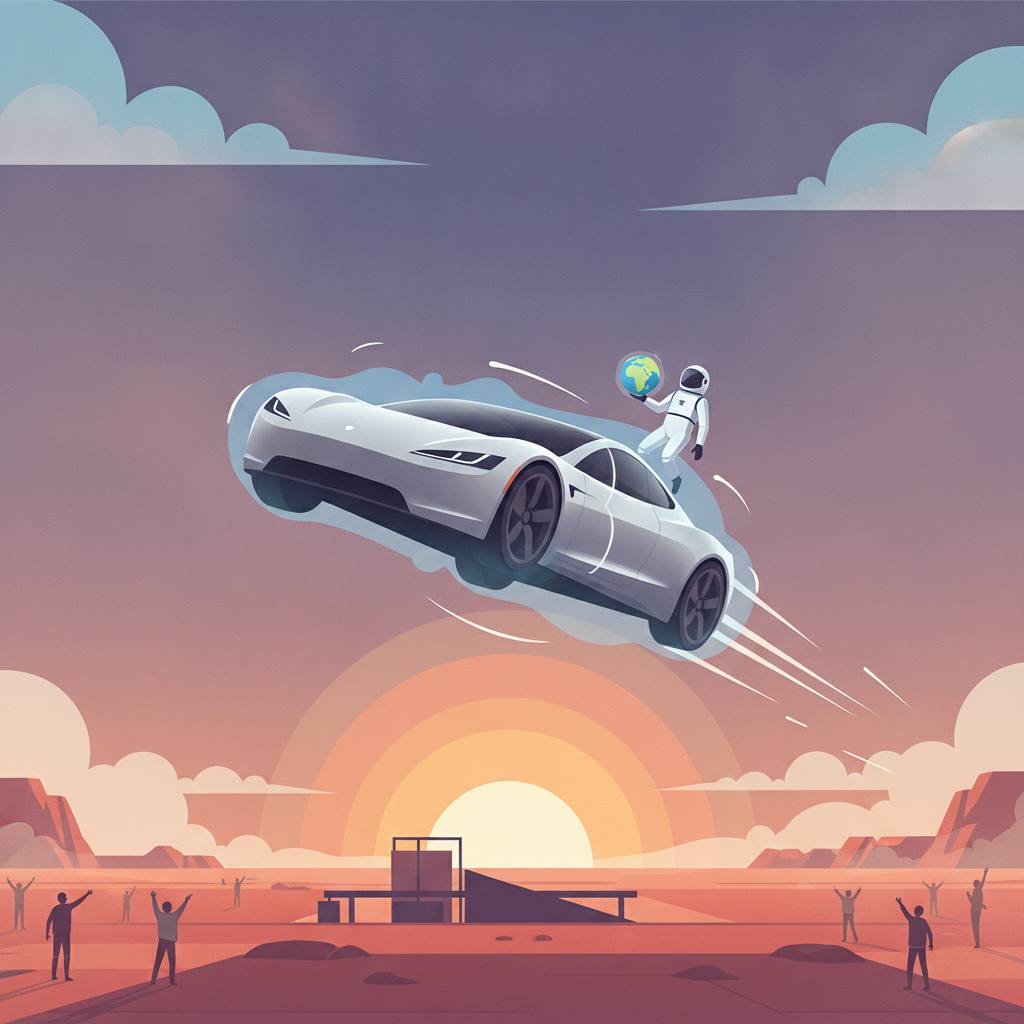
Tesla's next-generation Roadster wowed onlookers in Waco, Texas, by driving upside down, briefly flying, and hitting 60mph in under a second. However, this impressive demo felt more like a stunt show than a detailed product reveal.
Have you heard the thrilling news about the new Tesla Roadster? Well, it seems Elon Musk and his team have delivered on their promise of a 'flying' car, even if it was just for a short while! In a presentation held in Waco, Texas, Tesla showed off the next-generation Roadster supercar in a way nobody expected, and as we anticipated, it was a truly astonishing experience. Imagine this: the car drove upside down, briefly flew in the air, and even more incredibly, it hit 60mph (about 96 kilometers per hour) in under a single second! Yes, less than a second – that's a record in itself, placing it among supercars we've never seen before.
What does this mean for you and for us, as tech and car enthusiasts? Well, first, it demonstrates the incredible innovation Tesla is capable of, pushing the boundaries of what's possible. But let's be realistic, this impressive demonstration, which lasted less than 30 minutes, felt more like an amazing 'stunt show' than a reveal of a market-ready product. There was no talk about the estimated price, different trim levels and their features, or even a precise release date we could eagerly await. All those 'mundane' details that matter to us as potential buyers, or even just as interested industry followers, were completely absent from this rapid event.
It's clear that this car, if it truly enters production by the promised deadline, will require a lot of work and will come with many strict caveats and restrictions. Driving a car that flies or drives upside down on public roads seems like a very complex idea from a legal standpoint, and even concerning public safety and existing infrastructure. Elon Musk promised the Roadster would go into production by 2028, which gives us plenty of time to imagine what the limitations of such revolutionary technology might look like, and what challenges it will face before becoming a reality on the roads.
So, while we celebrate these astonishing and unique engineering feats, it's important to remember that we're still years away from seeing anything like this on our daily commutes. It's all about the spectacle and the promise of an exciting future right now, and perhaps a future full of challenges and questions about how these supercar features could be integrated into a practical, everyday vehicle. Let's wait and see what 2028 brings regarding the flying Tesla Roadster.