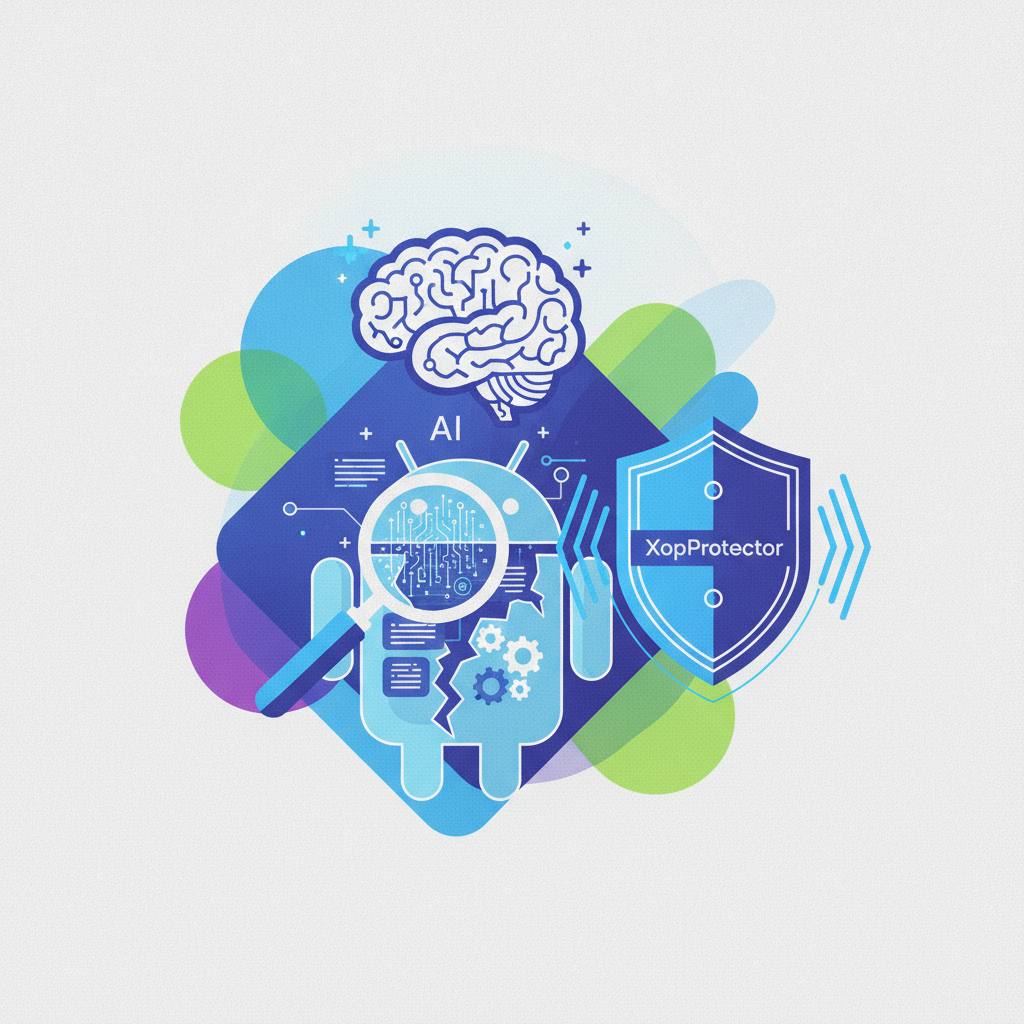
AI-driven tools like REA are making it much easier and faster to understand the hidden logic inside Android apps. This news highlights how XopProtector offers advanced protection for your app's core business logic against these new AI threats.
There's big news in the tech world that could change how we protect our Android apps: AI is now making reverse engineering incredibly simple. A new AI-driven framework called REA (Reverse Engineer Anything) claims it can quickly dissect almost any app. So, what does this mean for you, the Android developer?
In short, it means the secrets of your app's core functions, its 'business logic', are more vulnerable than ever. Historically, understanding an app's inner workings took experienced human reverse engineers days or even weeks. They'd manually go through code, trace connections, and debug. But with tools like REA, combining large language models with existing analysis tools like JADX and Ghidra, much of this process is now automated and lightning fast.
Imagine this: an AI can take your app, decompile it, and then quickly analyze the code to understand its structure and how it makes decisions. The biggest strength of AI here isn't just reading the code; it's inferring the actual meaning behind it. Even if you use basic code obfuscation – changing method names from 'checkPermission' to 'a' – AI can still figure out what that code does by looking at its inputs, outputs, and how it fits into the rest of the app. This is a significant leap from traditional methods.
So, how do we protect our intellectual property in this new era? The answer isn't to give up on protection, but to step up our game beyond simple obfuscation. This is where solutions like XopProtector come in. It promises an extra layer of defense specifically designed to counter these advanced AI-assisted reverse-engineering techniques. In a world where AI can quickly uncover your app's secrets, having robust protection that goes beyond the basics is no longer an option – it's a necessity.
In short, it means the secrets of your app's core functions, its 'business logic', are more vulnerable than ever. Historically, understanding an app's inner workings took experienced human reverse engineers days or even weeks. They'd manually go through code, trace connections, and debug. But with tools like REA, combining large language models with existing analysis tools like JADX and Ghidra, much of this process is now automated and lightning fast.
Imagine this: an AI can take your app, decompile it, and then quickly analyze the code to understand its structure and how it makes decisions. The biggest strength of AI here isn't just reading the code; it's inferring the actual meaning behind it. Even if you use basic code obfuscation – changing method names from 'checkPermission' to 'a' – AI can still figure out what that code does by looking at its inputs, outputs, and how it fits into the rest of the app. This is a significant leap from traditional methods.
So, how do we protect our intellectual property in this new era? The answer isn't to give up on protection, but to step up our game beyond simple obfuscation. This is where solutions like XopProtector come in. It promises an extra layer of defense specifically designed to counter these advanced AI-assisted reverse-engineering techniques. In a world where AI can quickly uncover your app's secrets, having robust protection that goes beyond the basics is no longer an option – it's a necessity.