Developers often confuse DeepSeek's API with OpenAI's /responses API, leading to missed features like DeepSeek's unique 'reasoning_content'. Understanding the subtle differences, even in 'compatible' systems, is crucial for getting the most out of AI tools.
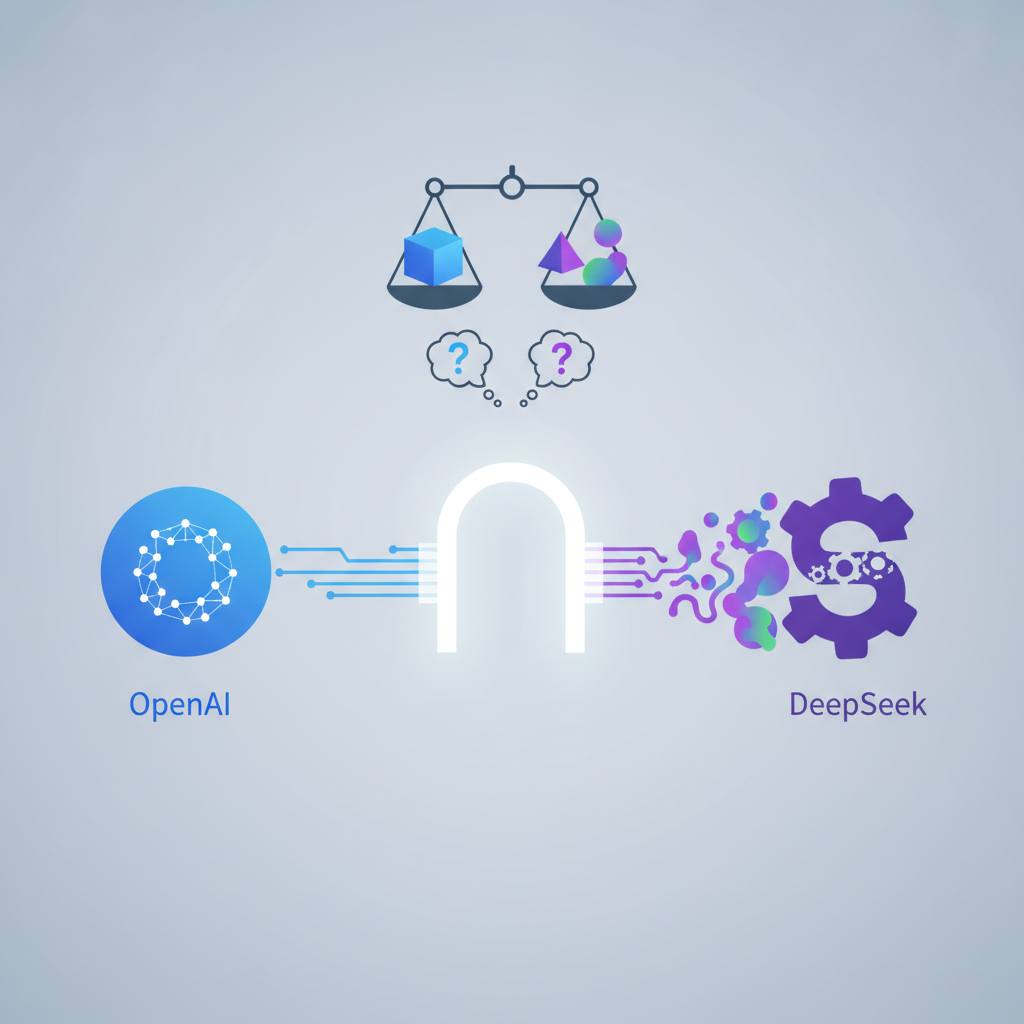
Have you ever tried to plug your phone charger into a socket, only to find it doesn't quite fit, even though it's the 'right kind' of plug? That's a bit like what happens when developers assume one AI model's API is exactly the same as another, even if they are described as 'compatible.' A recent observation in the developer community highlights this with DeepSeek's AI models and OpenAI's APIs. What is an API? Imagine you're at a restaurant. You don't go into the kitchen yourself; you tell the waiter (the API) what you want (your request). The waiter takes your order, the kitchen prepares it, and then the waiter brings you your meal (the API's response). Different restaurants (different AI services) might have different menus (different functionalities) or even deliver the food in different kinds of plates (different response formats). DeepSeek's AI models are often called 'OpenAI-compatible' at the 'Chat Completions' level. This means you can often ask them questions and get answers in a similar way to how you'd interact with OpenAI's chat models. Think of it like using the same type of fuel (gasoline) in different car brands. Both cars run, but their dashboards and special features might be very different. The core issue here is that 'compatible' doesn't always mean 'identical.' While DeepSeek and OpenAI might share similar request formats for basic chat, DeepSeek's API has its own unique features. Specifically, DeepSeek's newer models (like V4 Flash and V4 Pro) provide an important field called 'reasoning_content' within their responses. This field offers insights into *how* the AI arrived at its answer – its 'thinking process.' Many developers, used to OpenAI's structure, might write code that only looks for the main message content. By doing so, they completely miss out on DeepSeek's valuable 'reasoning_content.' It's like buying a fancy car with a special 'eco mode' button but never pressing it because your old car didn't have one. You're getting less than the full experience. The lesson here is simple but vital: Always read the documentation for *each specific tool* you use. Even if two services claim to be 'compatible,' their specific response structures, available fields, and even the exact 'endpoints' (the specific web address you send your request to, like /chat/completions versus /responses) can differ significantly. By understanding these nuances, you ensure your applications fully utilize the power of each AI model, rather than accidentally ignoring important outputs. Don't assume; always verify!