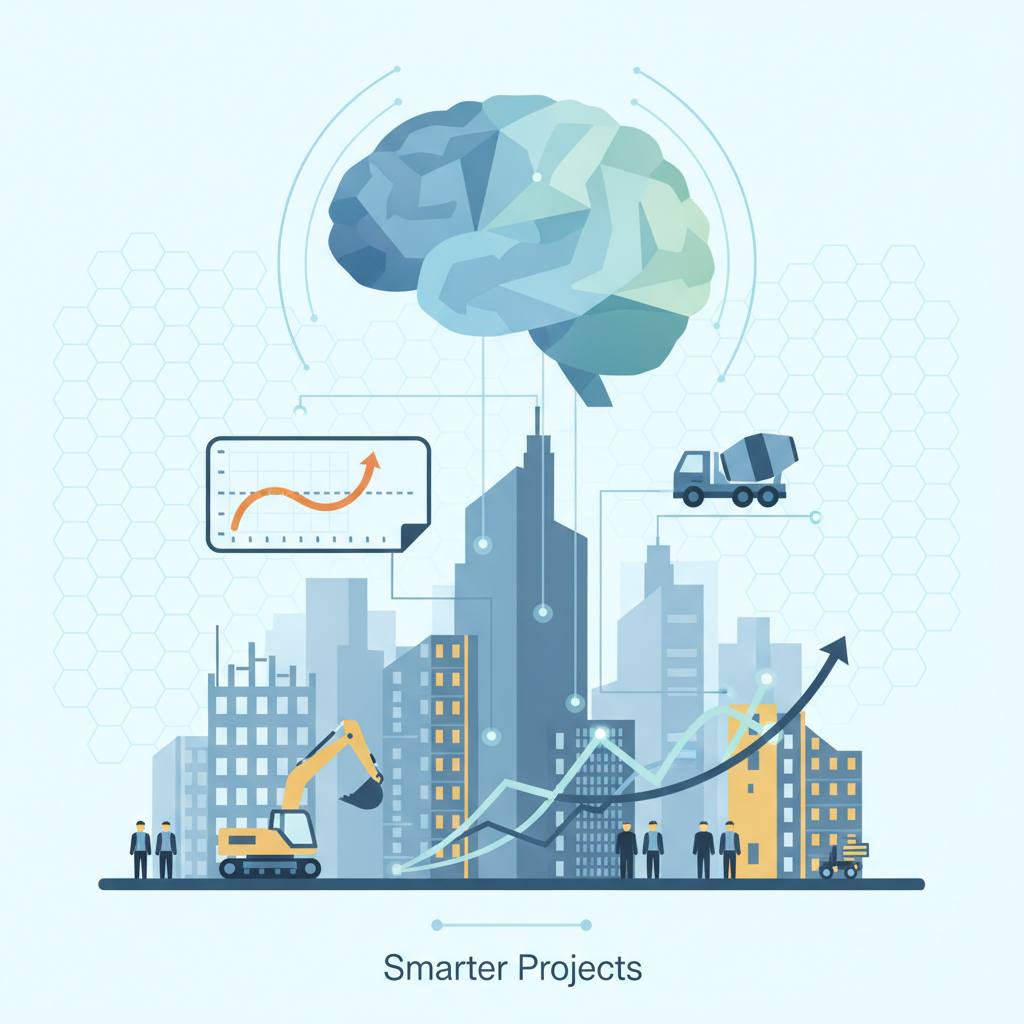
A groundbreaking AI system is now designed to forecast construction project delays much earlier than before. This means project managers can prevent costly slips by connecting previously scattered data, leading to more efficient and predictable building.
Imagine a huge construction project running smoothly, free from unwelcome surprises. That's the promise of a new AI system specifically designed to forecast construction schedule delays long before they occur. What does this mean for you? It means an end to much of the budget and timeline headaches, and the beginning of smarter, more efficient, and more profitable building projects.
In the world of construction, delays often emerge too late. A slowdown on site might start today, but project managers might only discover it a week later, after it has already cost significant money and effort. The core problem is that crucial information already exists, but it's scattered across dozens of different places: from crane logs and complex scheduling software like Primavera P6, to Excel spreadsheets tracking concrete, truck GPS, and even cameras at site gates. This data doesn't communicate with each other, making the full picture blurry.
This new system offers an innovative solution to this challenge. Instead of manually trying to link all these sources, the system gathers all data through clever 'adapters' that act as a bridge between different systems. Whether it's data from a remote sensor, a software system, or even a paper document, it passes through these adapters and is then sent to a single central backbone, ensuring all information arrives with the same accuracy and speed. Imagine every piece of construction information—about cranes, trucks, workers, permits, and even concrete quality—being transformed into digital 'objects' that the system can understand and process.
For example, if a specific 'concrete pour' is identified as delayed, the system can instantly trace everything connected to it. Were cranes idle? Were delivery trucks late? What's the status of permits in that zone? Is there an issue with precast units? It can even analyze worker schedules and their impact. This comprehensive data linking allows for problems to be detected at their very earliest stages, before they escalate into costly catastrophes. What's even better is that the engineering design of this system, including its object model, is freely available for everyone to use and develop under a CC BY 4.0 license, encouraging further innovation in the field. This system represents a significant step towards a future where construction sites are smarter and less prone to unpleasant surprises.
In the world of construction, delays often emerge too late. A slowdown on site might start today, but project managers might only discover it a week later, after it has already cost significant money and effort. The core problem is that crucial information already exists, but it's scattered across dozens of different places: from crane logs and complex scheduling software like Primavera P6, to Excel spreadsheets tracking concrete, truck GPS, and even cameras at site gates. This data doesn't communicate with each other, making the full picture blurry.
This new system offers an innovative solution to this challenge. Instead of manually trying to link all these sources, the system gathers all data through clever 'adapters' that act as a bridge between different systems. Whether it's data from a remote sensor, a software system, or even a paper document, it passes through these adapters and is then sent to a single central backbone, ensuring all information arrives with the same accuracy and speed. Imagine every piece of construction information—about cranes, trucks, workers, permits, and even concrete quality—being transformed into digital 'objects' that the system can understand and process.
For example, if a specific 'concrete pour' is identified as delayed, the system can instantly trace everything connected to it. Were cranes idle? Were delivery trucks late? What's the status of permits in that zone? Is there an issue with precast units? It can even analyze worker schedules and their impact. This comprehensive data linking allows for problems to be detected at their very earliest stages, before they escalate into costly catastrophes. What's even better is that the engineering design of this system, including its object model, is freely available for everyone to use and develop under a CC BY 4.0 license, encouraging further innovation in the field. This system represents a significant step towards a future where construction sites are smarter and less prone to unpleasant surprises.