As financial services become deeply integrated into our digital lives and software systems grow more complex, we predict a surging demand for reliable external verification and simpler, safer coding solutions to ensure trust.
Today's news highlights three vital threads intertwining to shape the future of technology. First, we see the challenges of safely handling complex code, like that for managing asynchronous tasks in Unity applications. This underscores that building stable, reliable digital systems isn't trivial and requires improved tools and processes to avoid potential pitfalls. The more complex our applications become, the more crucial it is to simplify these foundational operations for developers.
Second, Total Wireless’s integration of Western Union’s global money transfer services into its mobile plans reflects a clear trend: critical financial services are becoming seamlessly embedded into our everyday products. This development brings convenience right to our fingertips, but it also raises the stakes for security and trust. When our mobile phones become our gateway to global payments, any glitch or security vulnerability can have severe consequences. This places increasing pressure on companies to deliver not just convenience but also absolute assurance.
Finally, the discussion on verifying agent provenance reminds us that we cannot always trust the green checkmarks systems issue for themselves. As agents and automated systems become more prevalent, there's a critical need for external, independent verification mechanisms. It’s not enough for a company to say, «we’ve checked ourselves»; consumers and businesses alike will demand clear, unbiased evidence of security and reliability, especially when financial transactions or autonomous decision-making systems are involved.
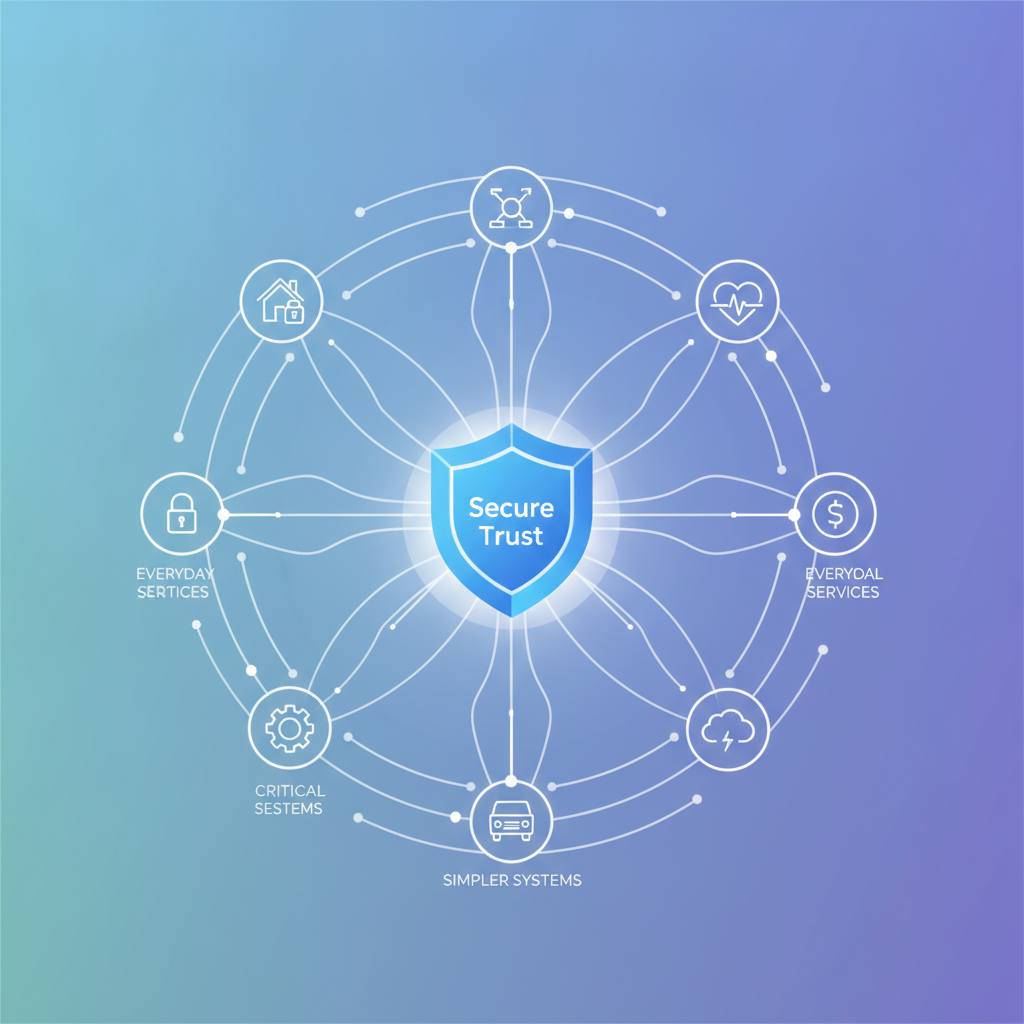
Our WondTech prediction is that these trends will drive innovation towards technology solutions centered on achieving «assured trust». We will see an an evolution in programming tools that make handling complex operations safer and easier for developers, reducing the likelihood of errors. Concurrently, as critical services continue to integrate, independent, third-party verification of security and integrity will become a fundamental standard, not just an added feature. The future will be about transparent, reliable systems where we are not just told to trust, but shown how and why we can trust.
Second, Total Wireless’s integration of Western Union’s global money transfer services into its mobile plans reflects a clear trend: critical financial services are becoming seamlessly embedded into our everyday products. This development brings convenience right to our fingertips, but it also raises the stakes for security and trust. When our mobile phones become our gateway to global payments, any glitch or security vulnerability can have severe consequences. This places increasing pressure on companies to deliver not just convenience but also absolute assurance.
Finally, the discussion on verifying agent provenance reminds us that we cannot always trust the green checkmarks systems issue for themselves. As agents and automated systems become more prevalent, there's a critical need for external, independent verification mechanisms. It’s not enough for a company to say, «we’ve checked ourselves»; consumers and businesses alike will demand clear, unbiased evidence of security and reliability, especially when financial transactions or autonomous decision-making systems are involved.
Our WondTech prediction is that these trends will drive innovation towards technology solutions centered on achieving «assured trust». We will see an an evolution in programming tools that make handling complex operations safer and easier for developers, reducing the likelihood of errors. Concurrently, as critical services continue to integrate, independent, third-party verification of security and integrity will become a fundamental standard, not just an added feature. The future will be about transparent, reliable systems where we are not just told to trust, but shown how and why we can trust.