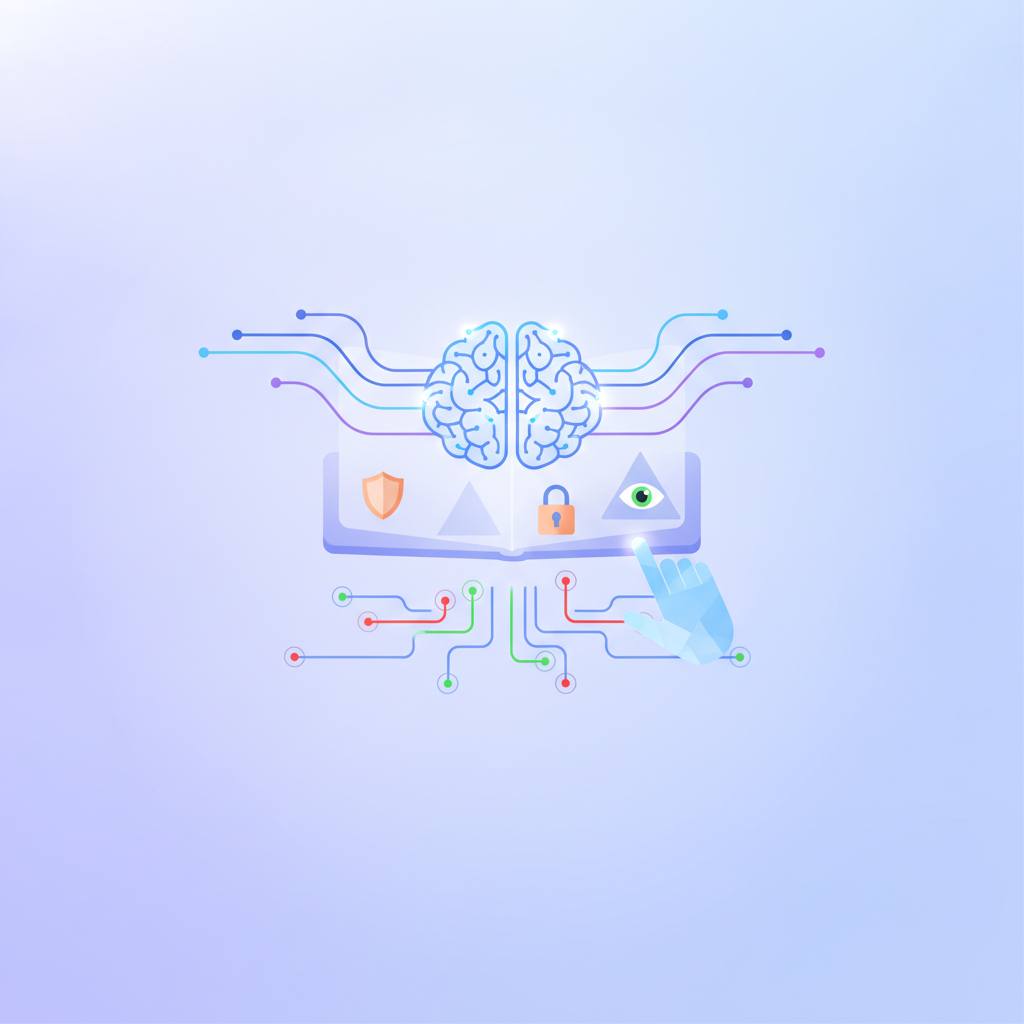
An AI system recently prevented a major trading loss by not following its own 'confident' advice. This happened because it learned to understand the deeper *meaning* of its internal thoughts, not just the final decision.
Let's start with an exciting piece of news from the world of crypto trading. An AI-driven trading system was milliseconds away from executing a very risky trade. The Large Language Model (LLM) powering the system had given a clear 'PROCEED' signal. Yet, at the last moment, the system *overrode itself*! How did this happen, and why?
Normally, when an AI gives a clear signal, we expect it to be followed. But in this case, the AI did something smarter: it understood the true meaning behind its own words, not just what it explicitly said.
Imagine asking a friend if they're okay. They might say 'I'm fine,' but their tone of voice and facial expression suggest otherwise. As humans, we understand the real meaning by 'reading between the lines' or grasping subtle cues.
Just like humans, today's advanced AI systems need to understand the underlying meaning behind words. Large Language Models (LLMs) are excellent at generating text and answers, but to be truly safe and reliable, they must grasp the 'intention' or 'potential risks' within their responses. This is where 'NLP Semantic Parsing' comes in.
Simply put, semantic parsing is about teaching a computer to 'read between the lines'. Instead of just looking for keywords or direct answers like 'yes' or 'proceed,' this system analyzes the structure of a sentence and the relationships between words to understand the complete sense of the text. It looks for subtle connotations, sentiment, or precise warnings that might not be obvious in the LLM's direct output.
This allows us to build 'implicit risk control'. It means the AI doesn't just tell us what to do; it also understands the potential risks involved in that action, even if not explicitly stated. This makes AI systems much safer and smarter, especially in sensitive areas like financial trading where mistakes are costly. It ensures the AI doesn't just parrot back data but truly *understands* the situation before taking any action. By understanding deeper meaning rather than just surface-level words, we can make AI more trustworthy and secure for use in our complex world.
Normally, when an AI gives a clear signal, we expect it to be followed. But in this case, the AI did something smarter: it understood the true meaning behind its own words, not just what it explicitly said.
Imagine asking a friend if they're okay. They might say 'I'm fine,' but their tone of voice and facial expression suggest otherwise. As humans, we understand the real meaning by 'reading between the lines' or grasping subtle cues.
Just like humans, today's advanced AI systems need to understand the underlying meaning behind words. Large Language Models (LLMs) are excellent at generating text and answers, but to be truly safe and reliable, they must grasp the 'intention' or 'potential risks' within their responses. This is where 'NLP Semantic Parsing' comes in.
Simply put, semantic parsing is about teaching a computer to 'read between the lines'. Instead of just looking for keywords or direct answers like 'yes' or 'proceed,' this system analyzes the structure of a sentence and the relationships between words to understand the complete sense of the text. It looks for subtle connotations, sentiment, or precise warnings that might not be obvious in the LLM's direct output.
This allows us to build 'implicit risk control'. It means the AI doesn't just tell us what to do; it also understands the potential risks involved in that action, even if not explicitly stated. This makes AI systems much safer and smarter, especially in sensitive areas like financial trading where mistakes are costly. It ensures the AI doesn't just parrot back data but truly *understands* the situation before taking any action. By understanding deeper meaning rather than just surface-level words, we can make AI more trustworthy and secure for use in our complex world.


