A new insight reveals that simply giving AI coding agents better instructions isn't enough to guarantee code quality; the very rules governing AI behavior must also be tested. The AIDDSkeleton project offers a solution through repository-level governance.
Here at WondTech, we've recently discovered that simply giving AI coding agents better instructions isn't enough to guarantee top-notch code quality. What this means for you is that ensuring reliable AI work in programming requires a fresh approach, one that focuses on thoroughly testing the actual rules AI follows in its development process, not just the prompts it receives.
The uncomfortable truth emerged: giving an AI coding agent better instructions simply wasn't cutting it. Developers started building repository-level governance around key aspects like source-of-truth ownership, review behavior, evidence, scope, and lifecycle. While this made repositories more consistent and agents behaved better, a new challenge arose. How could they truly know these rules were responsible for the improvements? An AI agent might produce better results for many reasons—a slightly different prompt, previous conversation context leaking the answer, seeing later commits, an accidental hint, or simply the model taking a different reasoning path that day. At some point, the feeling that «this seems better» just wasn't good enough anymore.
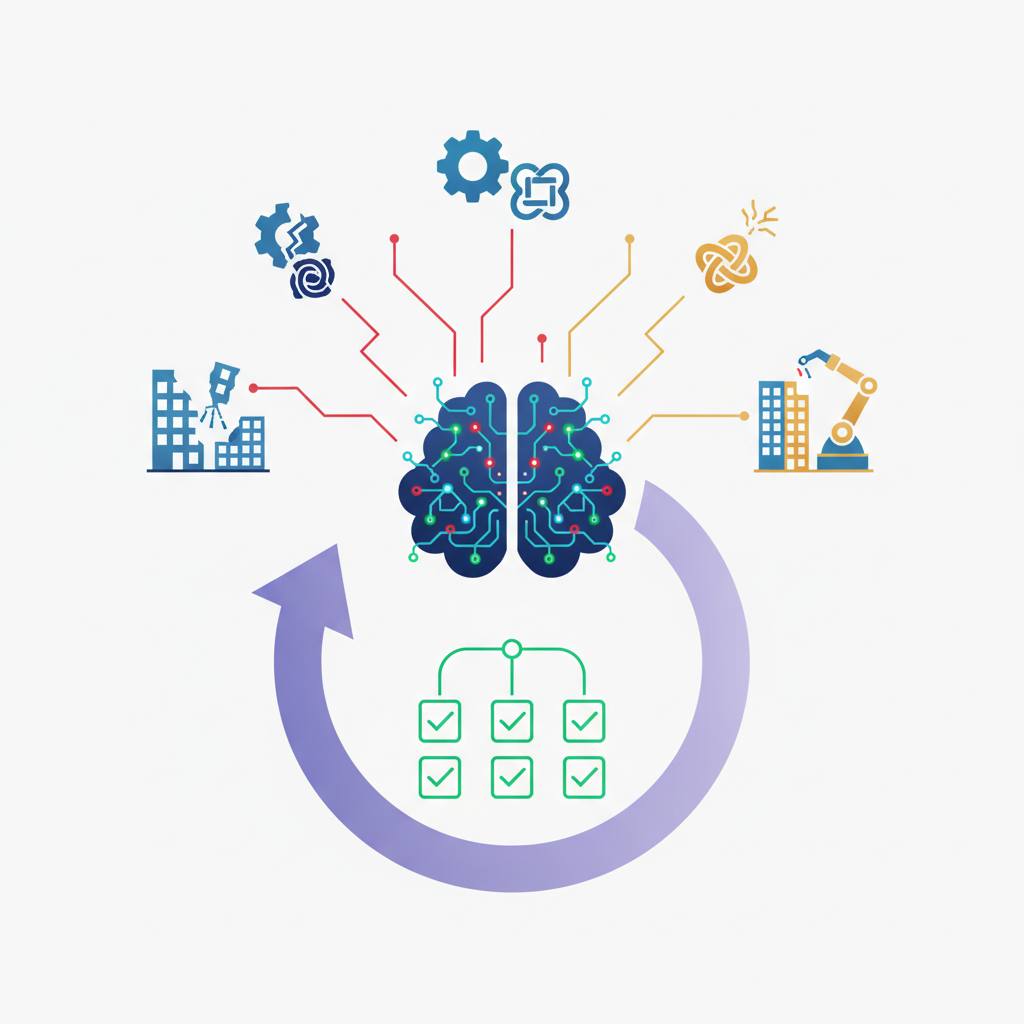
To tackle this crucial problem, the creators began regression-testing the rules themselves. This effort led to AIDDSkeleton, a repository skeleton designed for AI-driven development. Interestingly, most of its effective behavior doesn't come from traditional scripts or a framework. Instead, it stems from repository-local governance: essentially, Markdown files that tell an AI agent how to interpret project information, what counts as authority, how work moves through its lifecycle, how evidence should be treated, and how review findings should affect current work.
This creates a unique testing challenge. If you change a TypeScript function, you can easily run a test. But what exactly do you run if you change a rule written in natural language? For instance, an early but impactful change was separating two previously mixed concepts: «How serious is this finding?» and «What should we do with it now?» A review comment could be valid without automatically becoming immediate work. The governance started distinguishing between dispositions like «Accept now, Reject, Defer, Observe» and classifications such as «Blocker, In-scope deficiency, Follow-up». This crucial distinction made it harder for every interesting suggestion to silently expand the task, underscoring the vital need to rigorously test these governing rules for stable and effective AI operation.
The uncomfortable truth emerged: giving an AI coding agent better instructions simply wasn't cutting it. Developers started building repository-level governance around key aspects like source-of-truth ownership, review behavior, evidence, scope, and lifecycle. While this made repositories more consistent and agents behaved better, a new challenge arose. How could they truly know these rules were responsible for the improvements? An AI agent might produce better results for many reasons—a slightly different prompt, previous conversation context leaking the answer, seeing later commits, an accidental hint, or simply the model taking a different reasoning path that day. At some point, the feeling that «this seems better» just wasn't good enough anymore.
To tackle this crucial problem, the creators began regression-testing the rules themselves. This effort led to AIDDSkeleton, a repository skeleton designed for AI-driven development. Interestingly, most of its effective behavior doesn't come from traditional scripts or a framework. Instead, it stems from repository-local governance: essentially, Markdown files that tell an AI agent how to interpret project information, what counts as authority, how work moves through its lifecycle, how evidence should be treated, and how review findings should affect current work.
This creates a unique testing challenge. If you change a TypeScript function, you can easily run a test. But what exactly do you run if you change a rule written in natural language? For instance, an early but impactful change was separating two previously mixed concepts: «How serious is this finding?» and «What should we do with it now?» A review comment could be valid without automatically becoming immediate work. The governance started distinguishing between dispositions like «Accept now, Reject, Defer, Observe» and classifications such as «Blocker, In-scope deficiency, Follow-up». This crucial distinction made it harder for every interesting suggestion to silently expand the task, underscoring the vital need to rigorously test these governing rules for stable and effective AI operation.