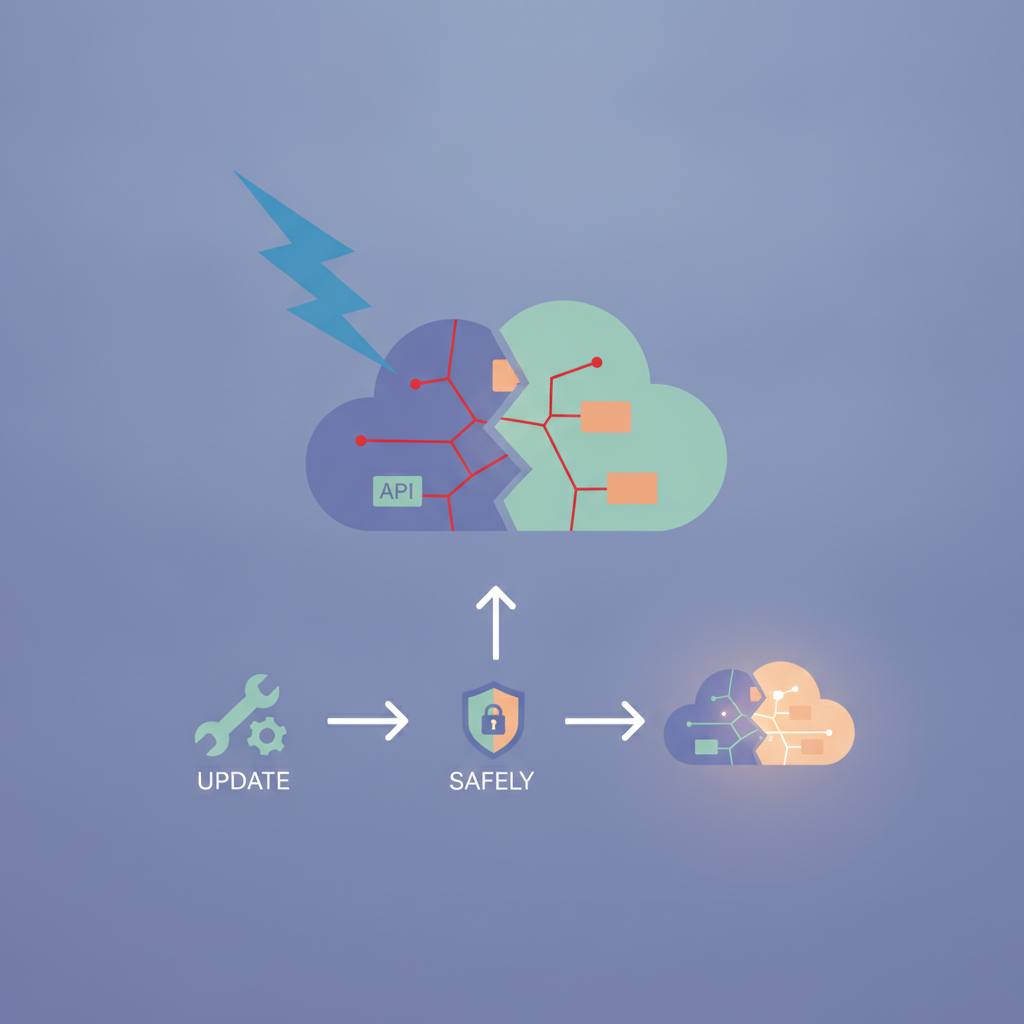
If you use MCP tools, beware: an underlying API change can unexpectedly break your tools. A safe update process is crucial to ensure your services remain uninterrupted.
Ever wonder why an MCP tool suddenly stops working, even when the server seems fine? It often comes down to a quiet change in the underlying API. Your MCP tools are only as reliable as the API they talk to.
Think of an MCP tool as a carefully written contract with an AI client. This contract defines everything: the tool's name, its purpose, what information it needs (input), what it expects back (response), and how it authenticates. Even a tiny change in the API — like renaming a field from 'id' to 'customer_id' or adding a new status option like 'pending' — can cause your tool to fail. The server might still be running, and the tool might even appear discoverable, but real calls will start breaking or returning unexpected data.
This isn't just a minor glitch; it can seriously disrupt your AI client's operations. The goal for any update should be 'boring' in the best way: existing users should never wake up to broken tools because an API route subtly changed.
So, what's the fix? When an API changes, you need a systematic approach. First, detect the API change. Then, identify which MCP tools are affected and decide if the change is compatible or 'breaking' (meaning it will definitely cause issues). You'll need to update the tool's details — things like schemas, names, descriptions, and authentication information. Crucially, test both valid and invalid calls thoroughly. Finally, publish a versioned update, always keeping a rollback path in case something goes wrong, and monitor those first production calls closely.
When you're scanning for API changes that might impact your tools, look at paths, HTTP methods, path and query parameters, request bodies, field names and types, enum values, response objects, and authentication schemes. Being proactive here can save a lot of headaches later.
Think of an MCP tool as a carefully written contract with an AI client. This contract defines everything: the tool's name, its purpose, what information it needs (input), what it expects back (response), and how it authenticates. Even a tiny change in the API — like renaming a field from 'id' to 'customer_id' or adding a new status option like 'pending' — can cause your tool to fail. The server might still be running, and the tool might even appear discoverable, but real calls will start breaking or returning unexpected data.
This isn't just a minor glitch; it can seriously disrupt your AI client's operations. The goal for any update should be 'boring' in the best way: existing users should never wake up to broken tools because an API route subtly changed.
So, what's the fix? When an API changes, you need a systematic approach. First, detect the API change. Then, identify which MCP tools are affected and decide if the change is compatible or 'breaking' (meaning it will definitely cause issues). You'll need to update the tool's details — things like schemas, names, descriptions, and authentication information. Crucially, test both valid and invalid calls thoroughly. Finally, publish a versioned update, always keeping a rollback path in case something goes wrong, and monitor those first production calls closely.
When you're scanning for API changes that might impact your tools, look at paths, HTTP methods, path and query parameters, request bodies, field names and types, enum values, response objects, and authentication schemes. Being proactive here can save a lot of headaches later.