Are you preparing for a web development interview? Discover the crucial HTML, CSS, and Bootstrap concepts you need to know to ace any technical assessment.
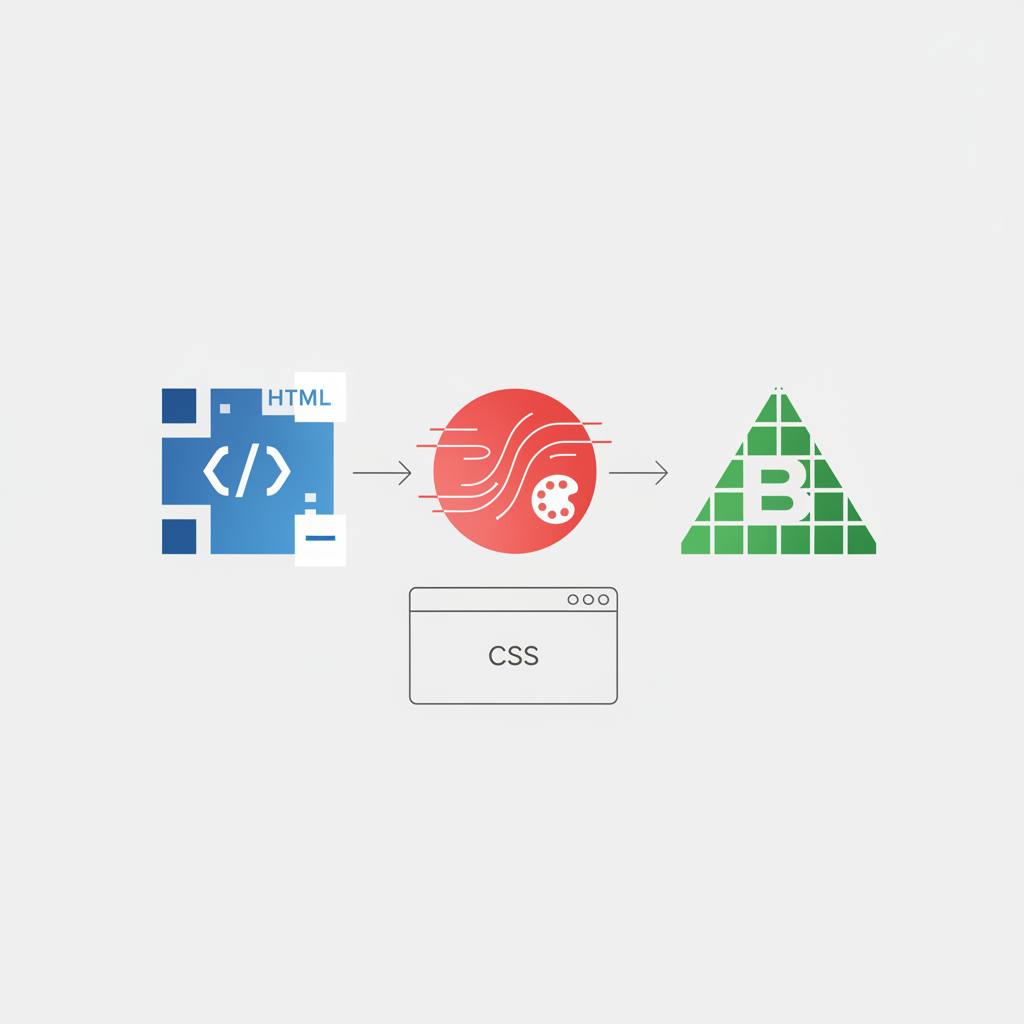
Welcome to WondTech! Are you aiming for a career in web development or simply curious about how websites are built? Here are the most important HTML, CSS, and Bootstrap concepts you'll often encounter in interviews. Understanding these fundamentals will help you build better web pages and navigate design challenges with ease.
Let's start with HTML, the HyperText Markup Language we use to create the structure of a webpage. Think of it as your website's skeleton. We use it for headings, paragraphs, images, and links. Semantic tags like <header>, <nav>, and <article> help us understand what the content is about, making code easier to read and improving accessibility and SEO. Ever wondered about the difference between <div> and <span>? Typically, a <div> starts on a new line and is a block-level element, while a <span> stays on the same line as an inline element. However, you can change their behavior using CSS.
Next up is CSS, the Cascading Style Sheets that give your website its look and feel. Do you know the difference between an ID and a Class? An ID is used for one unique element on a page, while a Class can be applied to multiple elements. In CSS, you select an ID with '#' and a Class with '.'. The CSS Box Model is a vital concept explaining how an element's size is calculated. It comprises Content → Padding → Border → Margin. Grasping this model helps you understand why an element might take up more or less space than expected. When multiple CSS rules apply to the same element, Specificity determines which rule takes priority. A simple order to remember is: Inline style > ID > Class > Element. This is especially important when you're trying to override Bootstrap's default styles.
Finally, Flexbox! This is a powerful CSS layout system that lets you arrange elements easily in rows or columns. All you need to do is add 'display: flex;' to the container. It’s incredibly useful for building navigation bars, content cards, buttons, and even for centering elements on a page. Mastering these concepts will set you on the right path to becoming a successful web developer!
Let's start with HTML, the HyperText Markup Language we use to create the structure of a webpage. Think of it as your website's skeleton. We use it for headings, paragraphs, images, and links. Semantic tags like <header>, <nav>, and <article> help us understand what the content is about, making code easier to read and improving accessibility and SEO. Ever wondered about the difference between <div> and <span>? Typically, a <div> starts on a new line and is a block-level element, while a <span> stays on the same line as an inline element. However, you can change their behavior using CSS.
Next up is CSS, the Cascading Style Sheets that give your website its look and feel. Do you know the difference between an ID and a Class? An ID is used for one unique element on a page, while a Class can be applied to multiple elements. In CSS, you select an ID with '#' and a Class with '.'. The CSS Box Model is a vital concept explaining how an element's size is calculated. It comprises Content → Padding → Border → Margin. Grasping this model helps you understand why an element might take up more or less space than expected. When multiple CSS rules apply to the same element, Specificity determines which rule takes priority. A simple order to remember is: Inline style > ID > Class > Element. This is especially important when you're trying to override Bootstrap's default styles.
Finally, Flexbox! This is a powerful CSS layout system that lets you arrange elements easily in rows or columns. All you need to do is add 'display: flex;' to the container. It’s incredibly useful for building navigation bars, content cards, buttons, and even for centering elements on a page. Mastering these concepts will set you on the right path to becoming a successful web developer!