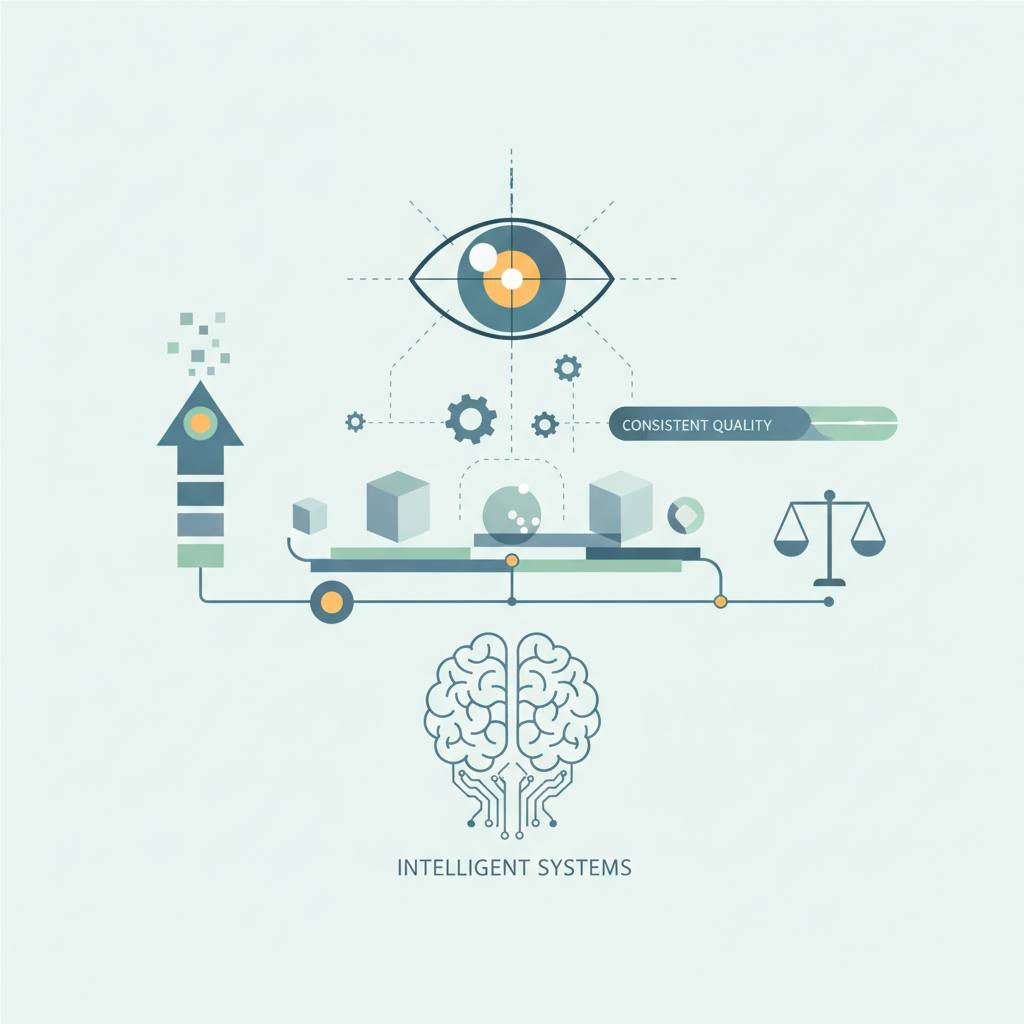
The next challenge for AI and automation isn't just generating content, but ensuring consistent quality and intelligently managing the inevitable exceptions at scale. We predict a shift towards smarter control mechanisms and enhanced human oversight tools.
Today's tech news shows a clear pattern: whether generating web interfaces with AI or automating mechanical drawings, the easy part is generating *one* output. The hard part is generating *hundreds* with consistent quality, without subtle design 'drifts' or an overwhelming 'exception queue'. This is where automation is heading next.
We predict a significant evolution in how we define and enforce consistency in AI-generated content. Simple JSON rules, while a start, are proving insufficient for scaling mass-produced web tools across multiple locales, where even minor design variations become problematic. Expect new, more declarative frameworks that allow designers and developers to embed deeper aesthetic and functional rules into AI agents. These systems will not just generate, but 'self-correct' to maintain brand identity and user experience, moving beyond mere output to guided creation that respects predefined boundaries.
Similarly, in fields like engineering design, automating CAD drawings faces a bottleneck with 'exception queues'—the unique instances that break the pattern. The future will bring intelligent exception handling. We won't just see tools that flag errors; we'll see AI-powered systems that analyze *why* a dimension is off or a hole is misplaced, classify the deviation, and even suggest approved corrective actions. This will reduce the burden on engineers, allowing them to focus on true innovations rather than sifting through minor variations.
Finally, as automation tackles greater volumes, the human role shifts to high-level oversight and refinement. This will drive demand for better tools to review and interact with these massive automated outputs. Imagine specialized displays, perhaps like TCL's Nxtpaper technology designed for extended, comfortable viewing, becoming standard for engineers and designers. These screens will facilitate detailed inspection, allowing experts to efficiently navigate and approve complex projects, ensuring the automated world remains aligned with human precision and intent. The next frontier for automation isn't just speed, but intelligent, consistent quality with smart human collaboration.
We predict a significant evolution in how we define and enforce consistency in AI-generated content. Simple JSON rules, while a start, are proving insufficient for scaling mass-produced web tools across multiple locales, where even minor design variations become problematic. Expect new, more declarative frameworks that allow designers and developers to embed deeper aesthetic and functional rules into AI agents. These systems will not just generate, but 'self-correct' to maintain brand identity and user experience, moving beyond mere output to guided creation that respects predefined boundaries.
Similarly, in fields like engineering design, automating CAD drawings faces a bottleneck with 'exception queues'—the unique instances that break the pattern. The future will bring intelligent exception handling. We won't just see tools that flag errors; we'll see AI-powered systems that analyze *why* a dimension is off or a hole is misplaced, classify the deviation, and even suggest approved corrective actions. This will reduce the burden on engineers, allowing them to focus on true innovations rather than sifting through minor variations.
Finally, as automation tackles greater volumes, the human role shifts to high-level oversight and refinement. This will drive demand for better tools to review and interact with these massive automated outputs. Imagine specialized displays, perhaps like TCL's Nxtpaper technology designed for extended, comfortable viewing, becoming standard for engineers and designers. These screens will facilitate detailed inspection, allowing experts to efficiently navigate and approve complex projects, ensuring the automated world remains aligned with human precision and intent. The next frontier for automation isn't just speed, but intelligent, consistent quality with smart human collaboration.