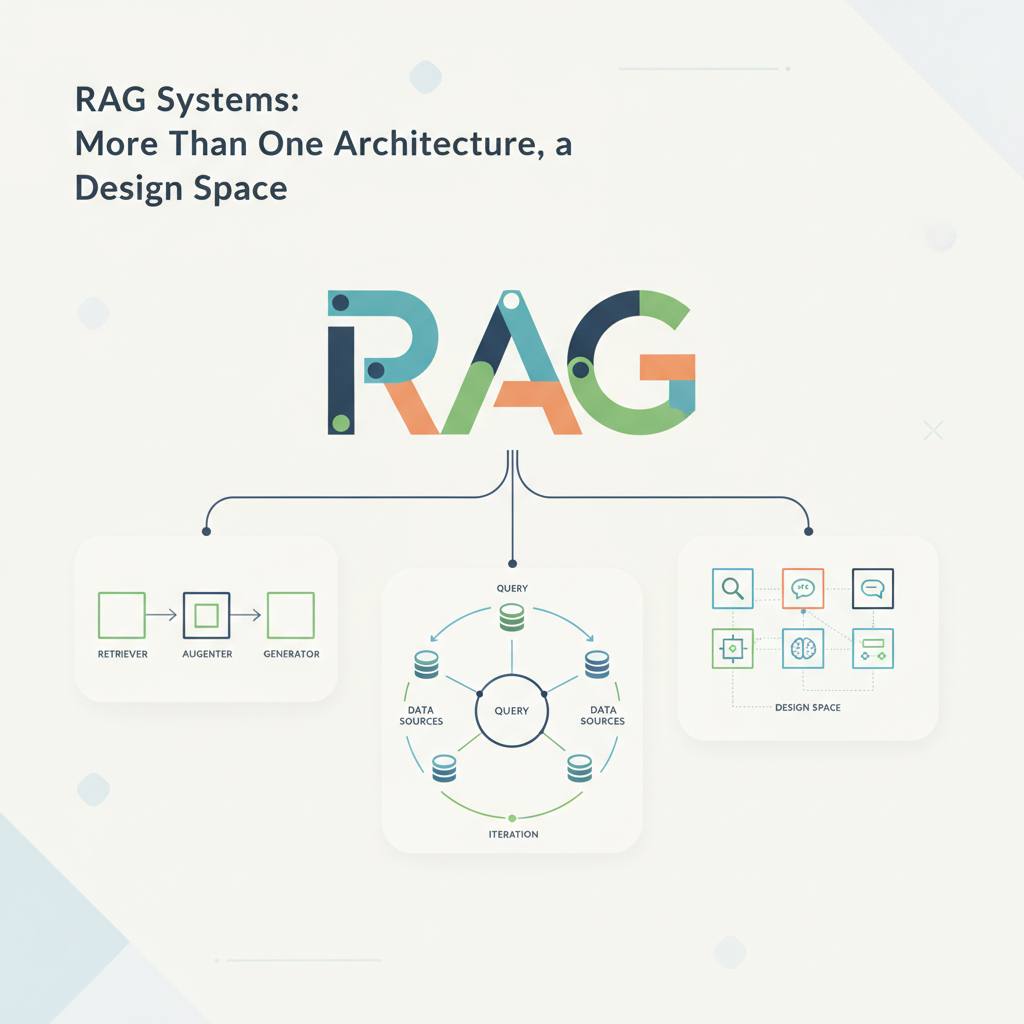
Experts have discovered that RAG (Retrieval Augmented Generation) is not a simple, single solution, but a complex design space that requires different architectures to handle real production challenges.
Ever spun up a 'chat with your docs' prototype over a weekend, only to watch it start making things up and getting confused when asked complex questions? Congrats, you've likely built Naive RAG (Retrieval Augmented Generation) — a great start, but one that runs into serious trouble in production-grade systems.
What this means for you is that understanding RAG isn't just about a simple implementation; it's a journey into exploring various architectural patterns. It’s not just 'retrieve then generate' as it might first appear. This basic model, which retrieves information, stuffs it into context, and then generates, quickly breaks down. Imagine a crucial document getting poorly split, or the system retrieving lexically similar but irrelevant information. It can struggle with multi-step questions, or even confidently cite the wrong PDF. Challenges like 'silent hallucination' or a lack of query understanding are why RAG isn't a one-size-fits-all solution.
Fortunately, to solve these issues, advanced and Modular RAG systems have emerged. Instead of a fixed chain, Modular RAG treats retrieval as a composable, routable pipeline. This involves optimizing retrieval quality both before and after the actual retrieval process, using techniques like query rewriting or re-ranking. There are eight important architectural patterns worth knowing, including: Standard RAG, Hybrid RAG, GraphRAG, CRAG, Self-RAG, Adaptive RAG, Agentic RAG, and Multi-Modal RAG.
The key is to pick the right design based on the specific 'failure mode' you're trying to solve, not just following the hype. This doesn't mean RAG is broken; it just means the naive approach is insufficient for real-world complexities. We need to choose the right solution for our needs.
What this means for you is that understanding RAG isn't just about a simple implementation; it's a journey into exploring various architectural patterns. It’s not just 'retrieve then generate' as it might first appear. This basic model, which retrieves information, stuffs it into context, and then generates, quickly breaks down. Imagine a crucial document getting poorly split, or the system retrieving lexically similar but irrelevant information. It can struggle with multi-step questions, or even confidently cite the wrong PDF. Challenges like 'silent hallucination' or a lack of query understanding are why RAG isn't a one-size-fits-all solution.
Fortunately, to solve these issues, advanced and Modular RAG systems have emerged. Instead of a fixed chain, Modular RAG treats retrieval as a composable, routable pipeline. This involves optimizing retrieval quality both before and after the actual retrieval process, using techniques like query rewriting or re-ranking. There are eight important architectural patterns worth knowing, including: Standard RAG, Hybrid RAG, GraphRAG, CRAG, Self-RAG, Adaptive RAG, Agentic RAG, and Multi-Modal RAG.
The key is to pick the right design based on the specific 'failure mode' you're trying to solve, not just following the hype. This doesn't mean RAG is broken; it just means the naive approach is insufficient for real-world complexities. We need to choose the right solution for our needs.