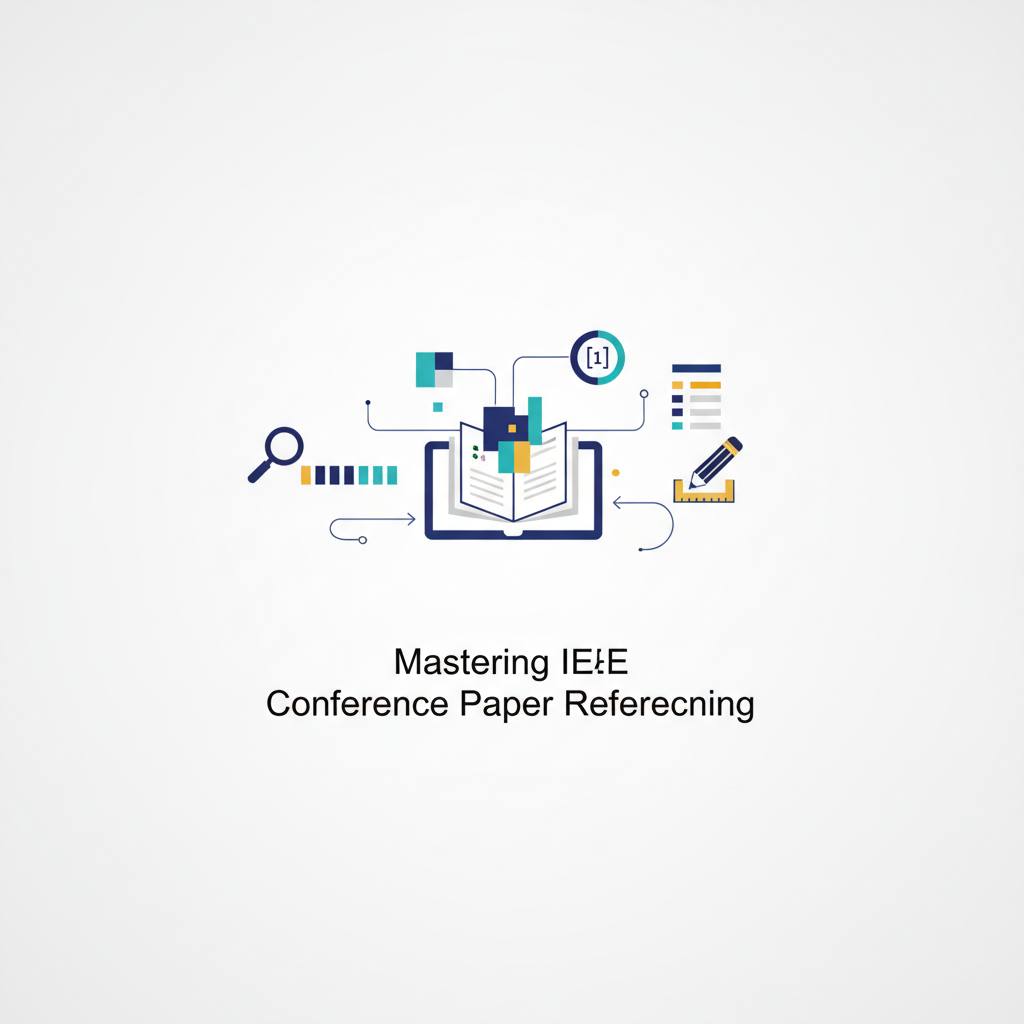
A new, comprehensive guide has been released to help researchers master the correct formatting of IEEE conference paper references, which is crucial for academic credibility. This guide will help avoid common errors and unnecessary paper rejections.
Finally, there's a comprehensive guide to help researchers and scholars correctly format their IEEE conference paper references. This means that you, as a PhD scholar, researcher, or professor, can now save valuable time and avoid errors that could jeopardize your hard work.
We all know how vital the references section is in academic papers, especially in fields like computer science and engineering. Properly formatted references aren't just a formality; they're a mark of professional rigor and academic credibility. Incorrect references can lead to immediate desk rejection, damage your reputation, or even raise questions about academic integrity.
Despite the clear guidelines provided by the Institute of Electrical and Electronics Engineers (IEEE), many researchers frequently struggle with applying them. The rules are complex and vary for different source types—whether they are journal articles, conference papers, books, or websites. For instance, authors' names must be abbreviated, titles need specific capitalization, and volume, issue, and page numbers must follow precise patterns.
Many graduate students, especially those new to academic publishing, face the challenge of wasting valuable time manually adjusting references, only to find errors during the review process. This not only delays manuscript submission but also adds unnecessary stress to an already demanding workload. Furthermore, with the rise of digital resources and online databases, managing a growing bibliography becomes increasingly complex. It's very easy to overlook small details like italics, periods, or commas, which are critical for correct formatting.
This new guide offers practical solutions. It will walk you step-by-step through the intricacies of writing IEEE conference paper references, providing clear examples and tips to avoid common pitfalls. Whether you're submitting your first conference paper or polishing your hundredth manuscript, mastering this skill is non-negotiable for a successful academic career. Let your work shine with the professionalism it deserves.
We all know how vital the references section is in academic papers, especially in fields like computer science and engineering. Properly formatted references aren't just a formality; they're a mark of professional rigor and academic credibility. Incorrect references can lead to immediate desk rejection, damage your reputation, or even raise questions about academic integrity.
Despite the clear guidelines provided by the Institute of Electrical and Electronics Engineers (IEEE), many researchers frequently struggle with applying them. The rules are complex and vary for different source types—whether they are journal articles, conference papers, books, or websites. For instance, authors' names must be abbreviated, titles need specific capitalization, and volume, issue, and page numbers must follow precise patterns.
Many graduate students, especially those new to academic publishing, face the challenge of wasting valuable time manually adjusting references, only to find errors during the review process. This not only delays manuscript submission but also adds unnecessary stress to an already demanding workload. Furthermore, with the rise of digital resources and online databases, managing a growing bibliography becomes increasingly complex. It's very easy to overlook small details like italics, periods, or commas, which are critical for correct formatting.
This new guide offers practical solutions. It will walk you step-by-step through the intricacies of writing IEEE conference paper references, providing clear examples and tips to avoid common pitfalls. Whether you're submitting your first conference paper or polishing your hundredth manuscript, mastering this skill is non-negotiable for a successful academic career. Let your work shine with the professionalism it deserves.