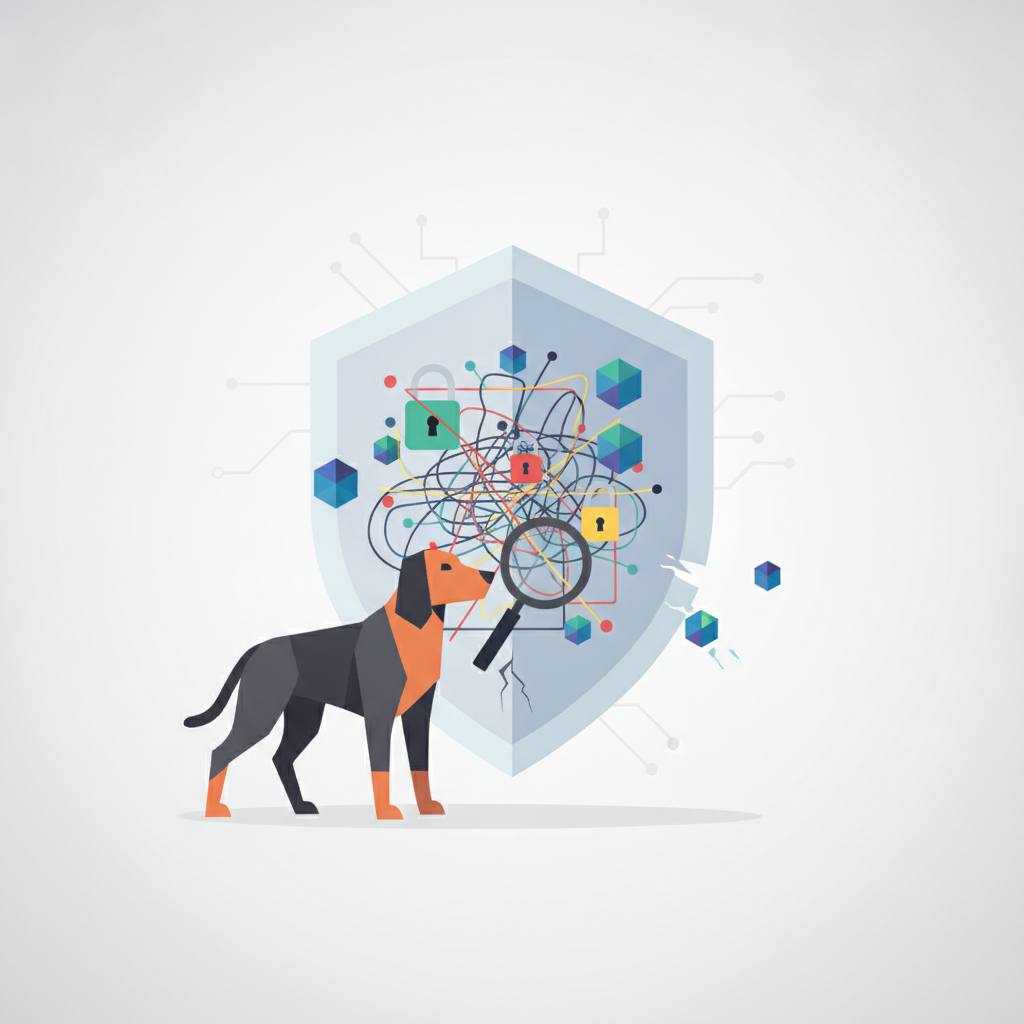
AI agent infrastructure has grown incredibly complex, leading to the development of tools like AgentHound to expose security weaknesses. This means securing these systems is no longer simple and requires specialized approaches to identify hidden attack paths.
AI agent security now demands new tools, and here's what the emergence of AgentHound means for you. Agentic AI infrastructure has developed at breakneck speed over the last eighteen months, making it almost impossible to manually track security vulnerabilities. Think of it like a new highway system, built fast and connecting everything, but now it's time to actually check the safety.
Remember how BloodHound changed how security experts thought about Active Directory? It didn't find new vulnerabilities, but rather made existing attack paths visible and repeatable. It turned what was 'theoretically exploitable' into 'here's the exact chain, go pull the trigger.' It became indispensable because AD's complexity outran what a human could track in their head. Now, AgentHound is doing the same move, but for agentic AI infrastructure.
We're talking about MCP servers, A2A protocols, gateways, agent clients – all the plumbing that's been bolted together at record speed. This infrastructure is now ripe for reconnaissance, credential harvesting, model inversion, and tool or instruction poisoning attacks. These aren't just theoretical concepts in a research paper; this is a tool built to automate finding these problems.
The pattern is familiar: build fast, connect everything, then worry about the security 'later'. Active Directory went through this. Cloud Identity and Access Management (IAM) went through this too. Now it's agent infrastructure's turn, and the 'later' has arrived faster than usual because agent stacks are being wired directly into production data and action-taking systems from day one.
It's important to understand that this isn't 'AI security' like it's some exotic new discipline requiring you to throw out everything you know. No, credential harvesting is still credential harvesting. Tool poisoning is just supply chain and input validation problems wearing a new hat. The MCP and A2A layers are new protocols, sure, but the underlying failure modes—like trust boundaries, over-permissioned service accounts, and unvalidated inputs treated as trusted instructions—are the same ones we've been fighting for a long time. This means your old security knowledge is still valuable, but you'll need tools like AgentHound to apply it effectively in this new, complex world.
Remember how BloodHound changed how security experts thought about Active Directory? It didn't find new vulnerabilities, but rather made existing attack paths visible and repeatable. It turned what was 'theoretically exploitable' into 'here's the exact chain, go pull the trigger.' It became indispensable because AD's complexity outran what a human could track in their head. Now, AgentHound is doing the same move, but for agentic AI infrastructure.
We're talking about MCP servers, A2A protocols, gateways, agent clients – all the plumbing that's been bolted together at record speed. This infrastructure is now ripe for reconnaissance, credential harvesting, model inversion, and tool or instruction poisoning attacks. These aren't just theoretical concepts in a research paper; this is a tool built to automate finding these problems.
The pattern is familiar: build fast, connect everything, then worry about the security 'later'. Active Directory went through this. Cloud Identity and Access Management (IAM) went through this too. Now it's agent infrastructure's turn, and the 'later' has arrived faster than usual because agent stacks are being wired directly into production data and action-taking systems from day one.
It's important to understand that this isn't 'AI security' like it's some exotic new discipline requiring you to throw out everything you know. No, credential harvesting is still credential harvesting. Tool poisoning is just supply chain and input validation problems wearing a new hat. The MCP and A2A layers are new protocols, sure, but the underlying failure modes—like trust boundaries, over-permissioned service accounts, and unvalidated inputs treated as trusted instructions—are the same ones we've been fighting for a long time. This means your old security knowledge is still valuable, but you'll need tools like AgentHound to apply it effectively in this new, complex world.