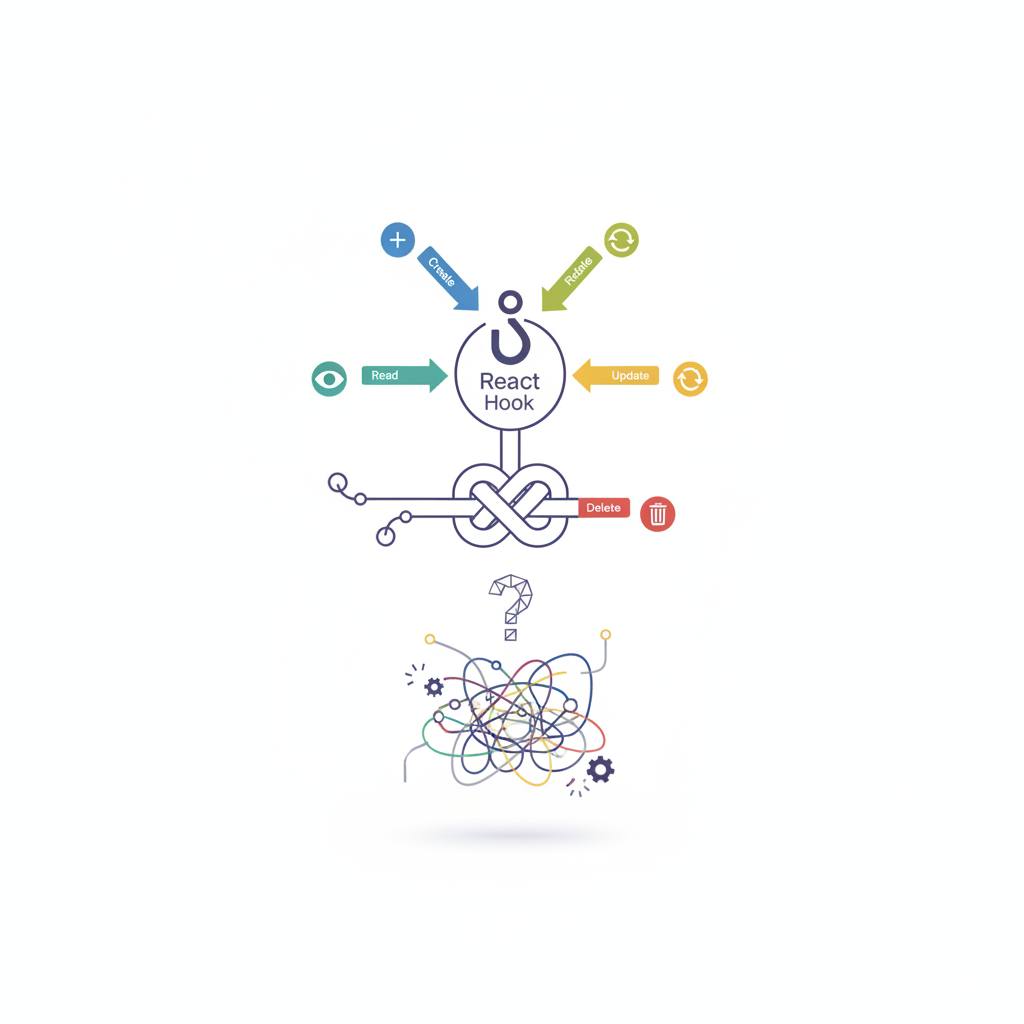
A developer tried to combine all Create, Read, Update, Delete (CRUD) actions into a single React hook for efficiency, but quickly found it led to more complexity and UI issues. This story shows that sometimes, simpler isn't always better when it comes to managing different data operations.
Ever thought about putting all your database actions – creating, reading, updating, and deleting (CRUD) – into just one 'React hook'? One developer did, hoping to make things super efficient for a simple admin panel, and learned a valuable lesson. What this means for you: while it might seem clean and convenient at first, packing too much functionality into a single 'hook' can lead to unexpected headaches down the road.
Our fellow programmer started with a classic problem: building an admin panel with basic 'CRUD' features. Faced with lots of files and boilerplate code, they decided to consolidate everything into a single 'useItems' hook. This hook handled fetching lists of items, getting details for a single item, and all the mutations for creating, updating, and deleting. Using tools like 'React Query', it initially looked like a smart move – everything in one place, easy to manage.
The setup seemed elegant. The 'useItems' hook took an 'id' and 'filters', and internally managed separate queries for lists and individual items, plus distinct mutations for each 'CRUD' operation. It returned all the necessary data and loading states. On the surface, it offered a clean API for components to interact with.
However, the developer soon realized this approach had a downside. While the different queries and mutations were technically under one roof, they had completely different lifecycles and needs. The 'list' part needed filters, the 'detail' part needed an 'id', and the 'write' actions were separate events. Trying to force these three distinct jobs through one hook caused problems. Managing cache keys became fuzzy, and ensuring data invalidation correctly across all these operations turned into a nightmare. What looked like reuse was actually a «monolith with dimmer switches», where different parts were fighting each other. The ultimate sign it wasn't working? The user interface itself started to argue, indicating a deeper architectural issue.
The takeaway is clear: even with good intentions and powerful libraries like 'React Query', trying to over-simplify by combining unrelated concerns can backfire. It's often better to keep your 'hooks' focused on single responsibilities, even if it means a few more files. This helps maintain clarity, manage different states effectively, and avoid situations where your UI feels like it's battling your code.
Our fellow programmer started with a classic problem: building an admin panel with basic 'CRUD' features. Faced with lots of files and boilerplate code, they decided to consolidate everything into a single 'useItems' hook. This hook handled fetching lists of items, getting details for a single item, and all the mutations for creating, updating, and deleting. Using tools like 'React Query', it initially looked like a smart move – everything in one place, easy to manage.
The setup seemed elegant. The 'useItems' hook took an 'id' and 'filters', and internally managed separate queries for lists and individual items, plus distinct mutations for each 'CRUD' operation. It returned all the necessary data and loading states. On the surface, it offered a clean API for components to interact with.
However, the developer soon realized this approach had a downside. While the different queries and mutations were technically under one roof, they had completely different lifecycles and needs. The 'list' part needed filters, the 'detail' part needed an 'id', and the 'write' actions were separate events. Trying to force these three distinct jobs through one hook caused problems. Managing cache keys became fuzzy, and ensuring data invalidation correctly across all these operations turned into a nightmare. What looked like reuse was actually a «monolith with dimmer switches», where different parts were fighting each other. The ultimate sign it wasn't working? The user interface itself started to argue, indicating a deeper architectural issue.
The takeaway is clear: even with good intentions and powerful libraries like 'React Query', trying to over-simplify by combining unrelated concerns can backfire. It's often better to keep your 'hooks' focused on single responsibilities, even if it means a few more files. This helps maintain clarity, manage different states effectively, and avoid situations where your UI feels like it's battling your code.