Even small database changes can cause big problems. New tools offer a 'rehearsal' for Postgres migrations, letting developers test updates safely before going live.
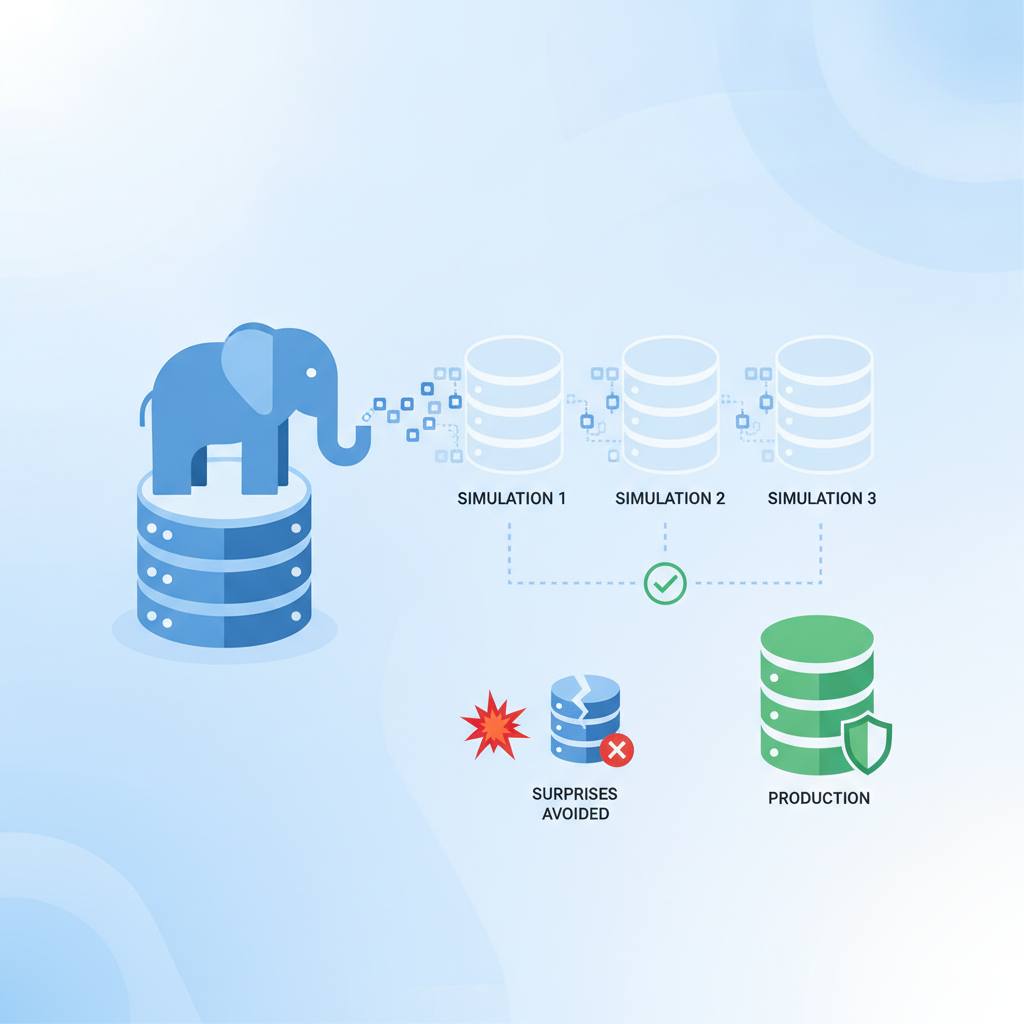
Have you ever made a small change to your Postgres database, only to find it caused major downtime or issues later? It's a common problem, but now there's a better way to handle it. What this means for you is that you no longer have to worry about seemingly tiny database changes wreaking havoc on your busy application. A column change, an index, or a constraint can easily lead to waiting writes or a blocked deployment, forcing quick decisions with very little evidence. Tech teams often rely on review checklists and lint rules, but these don't answer the most practical question: what will this exact sequence do while the application is busy? This very question has gained significant attention recently, with a discussion around a Postgres survival guide ranking high on Hacker News in July. The reason for this spotlight is the clear gap between theoretical advice and practical reality. Static guidance can flag dangerous patterns, but it cannot show you a plausible blocking chain or a safe point to stop in real-world scenarios. This is where new solutions come in, offering a specialized and effective product. A backend lead uploads the migration script, the current schema, and anonymized table-level facts (like row counts, indexes, and access volume). The service then creates a completely isolated Postgres environment. In this environment, placeholder data is generated, and the migration is run under controlled concurrent reads and writes. During this process, data locks ('pg_locks') and system activity ('pg_stat_activity') are captured. The resulting report doesn't claim that the production deployment will be entirely safe; instead, it clearly states the assumptions behind the rehearsal. It shows you that this is a test built from partial inputs, not a perfect replica of all your query shapes, hot keys, hardware, background tasks, or long-running transactions. Rather than just a simple red or green light, the report provides more actionable information such as: lock modes, a blocking timeline, risky statements, and a comparison of alternative execution orders. This approach builds on existing Postgres features, rather than inventing a new database engine, making database updates less stressful and much safer.