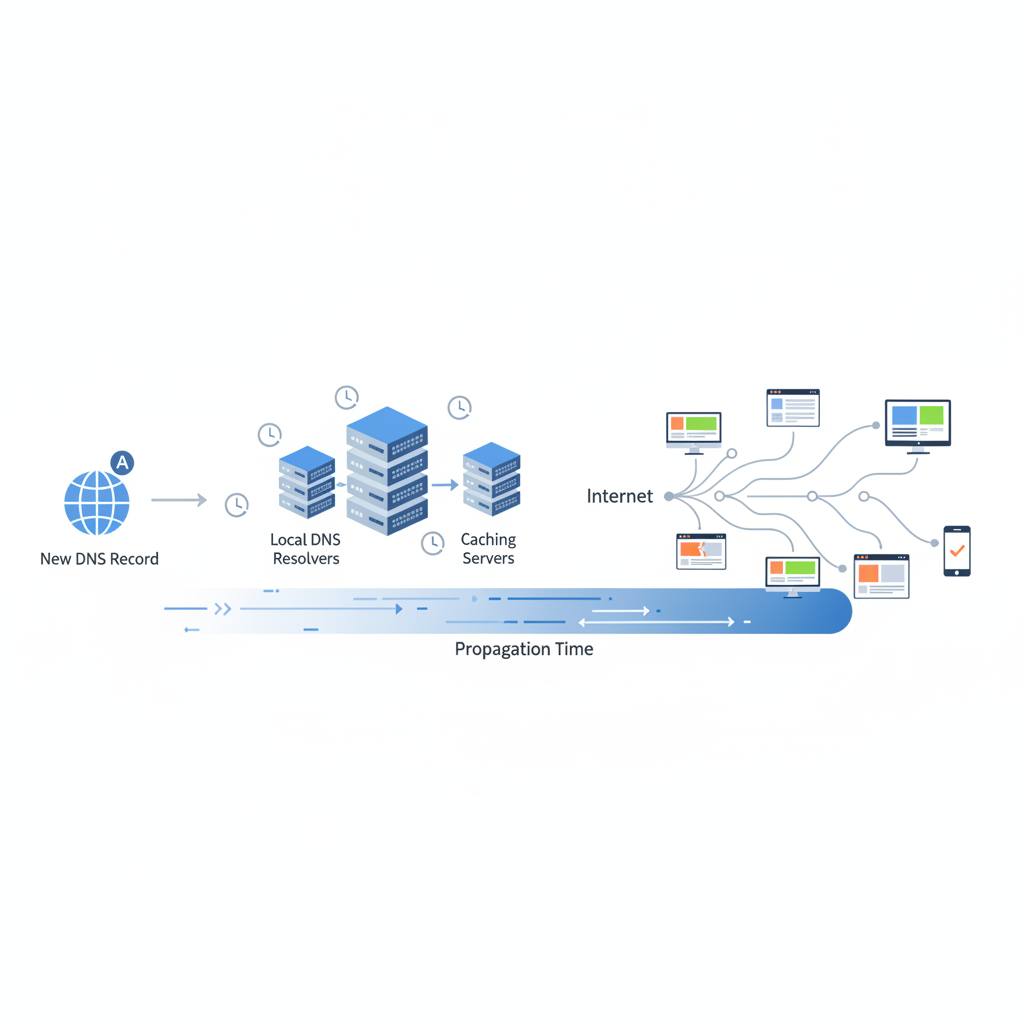
Ever wondered why some people see an updated website instantly while others still see the old version? It's all about 'DNS propagation' and how the internet gradually updates its information about websites.
Have you ever had a friend update their website, tell you about it, but when you visited, you still saw the old version, while they saw the new one? This is exactly what today's news highlights about DNS propagation. When you change your website's 'IP address' – which is like its phone number on the internet – you'd expect everyone to see that change instantly. But the reality is a little different. Think of the internet as a vast network of phone books. Every website has a name (like example.com) and a number (its IP address). When you type a website name into your browser, your computer looks up that name in a special directory called a 'DNS resolver,' and this directory tells it the correct IP address for the website. The catch is that there are thousands of these directories all over the world, and each one keeps a copy of the information to speed things up. When you update your website's IP address, you're updating the 'master directory.' However, the local directories around the world don't know about the change immediately. They hold onto their old copy for a specific period, which is called the 'Time To Live' (TTL). For example, the TTL might be 60 seconds for some directories or 24 hours for others. This means some DNS servers will pick up the change quickly, while others will continue to serve the old information until their cached copy expires. These DNS resolvers don't get 'notified' of the change; they only 'pull' the new information once their old cached version expires. So, users in different geographic regions or those using different internet service providers (and thus different DNS servers) will see the change at varying times. This is precisely 'DNS propagation': the time it takes for a change to become visible to everyone around the world. It's not an instant 'on/off' switch, but a gradual process determined by each DNS server's caching policies.