Getting your engineering team structure right, like using Squads, Tribes, and Guilds, is crucial for tech company success, impacting efficiency and communication. Learn how models like Spotify's work and why adapting them is key.
Big news for tech companies and engineering teams: how you organize your teams can make or break your company's success. What does this mean for you? It means that getting your engineering team structure right isn't just a choice; it's a strategic move that impacts everything from project delivery speed to internal communication quality.
When teams are well-organized, they work independently, communication stays clear and efficient, and ownership for each product part is well-defined. But if the structure is wrong, you'll pay a heavy coordination tax: every small feature will require multiple teams, every decision will need endless meetings, and eventually, no one will know who owns fixing a problem in the final product.
Remember «Conway's Law» from 1967, which states that «Organizations design systems that mirror their own communication structures.» Simply put, the architecture of the software you build often reflects your team's structure. For instance, if you have separate backend and frontend departments, you'll likely see strict boundaries between them in your system's design. To overcome this, the «Inverse Conway Maneuver» suggests designing your teams to fit the architectural structure you want your software to follow, allowing the software to evolve naturally.
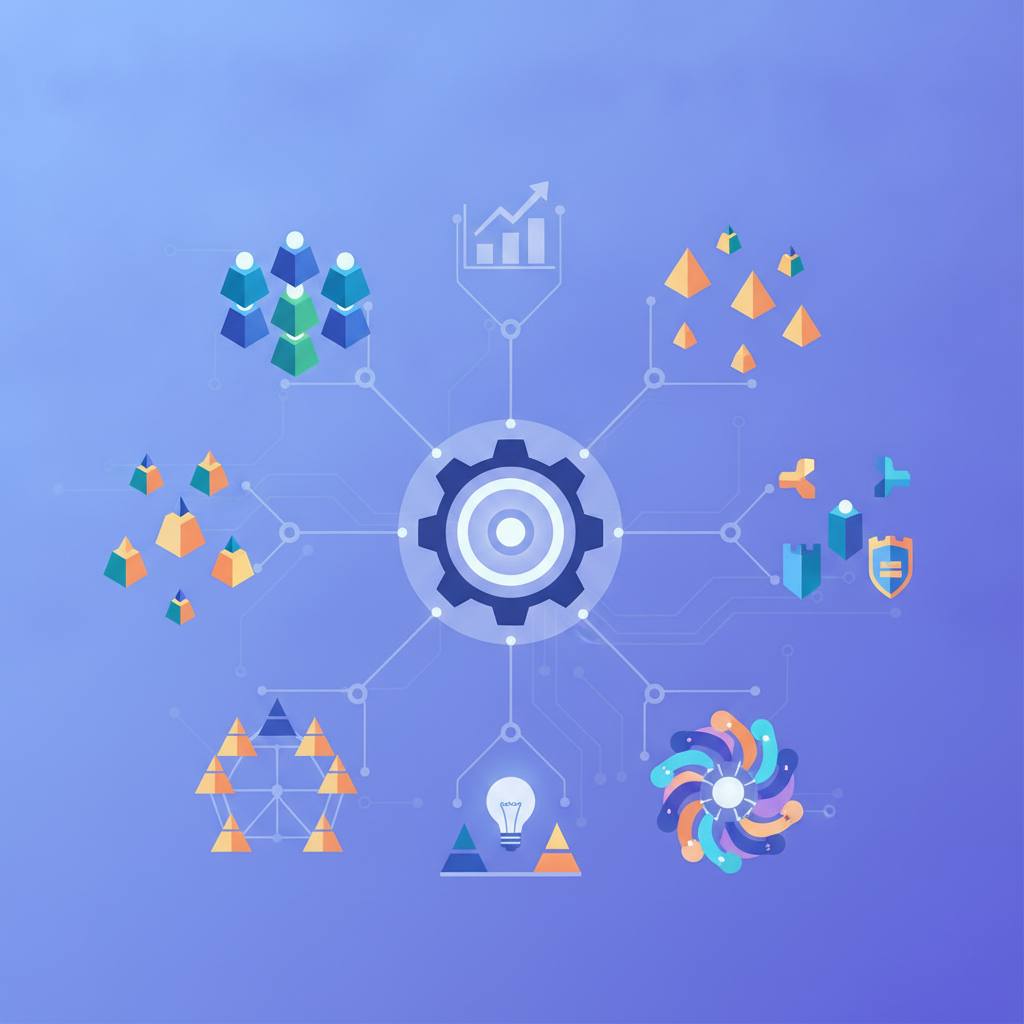
One famous model you might have heard of is the «Spotify model,» described in 2012. This model suggests four main organizational units:
1. **Squads:** These are the core units. Made up of 5 to 10 people, these teams are cross-functional and autonomous, with end-to-end ownership of a specific product area, from idea to launch. The goal is to deliver features without needing to depend on other teams.
2. **Tribes:** These gather several squads (40-150 people) working on a broader product area.
3. **Chapters:** These bring together engineers of the same discipline (e.g., frontend engineers) within a tribe to align technical practices and foster career growth.
4. **Guilds:** These are company-wide communities for people who share similar interests or technologies, aiming to share knowledge and experiences.
But it's important to know that the 2012 description of the Spotify model was just a snapshot of how they worked at the time, not a ready-made blueprint for every company. In reality, squads rarely achieved complete autonomy as initially envisioned. Also, Chapter Leads often faced challenges balancing people management with technical leadership, leading to some role ambiguity. The Spotify model itself has evolved significantly since then. The bottom line is, there's no one-size-fits-all solution, but understanding these models can help you make better decisions for your company.
When teams are well-organized, they work independently, communication stays clear and efficient, and ownership for each product part is well-defined. But if the structure is wrong, you'll pay a heavy coordination tax: every small feature will require multiple teams, every decision will need endless meetings, and eventually, no one will know who owns fixing a problem in the final product.
Remember «Conway's Law» from 1967, which states that «Organizations design systems that mirror their own communication structures.» Simply put, the architecture of the software you build often reflects your team's structure. For instance, if you have separate backend and frontend departments, you'll likely see strict boundaries between them in your system's design. To overcome this, the «Inverse Conway Maneuver» suggests designing your teams to fit the architectural structure you want your software to follow, allowing the software to evolve naturally.
One famous model you might have heard of is the «Spotify model,» described in 2012. This model suggests four main organizational units:
1. **Squads:** These are the core units. Made up of 5 to 10 people, these teams are cross-functional and autonomous, with end-to-end ownership of a specific product area, from idea to launch. The goal is to deliver features without needing to depend on other teams.
2. **Tribes:** These gather several squads (40-150 people) working on a broader product area.
3. **Chapters:** These bring together engineers of the same discipline (e.g., frontend engineers) within a tribe to align technical practices and foster career growth.
4. **Guilds:** These are company-wide communities for people who share similar interests or technologies, aiming to share knowledge and experiences.
But it's important to know that the 2012 description of the Spotify model was just a snapshot of how they worked at the time, not a ready-made blueprint for every company. In reality, squads rarely achieved complete autonomy as initially envisioned. Also, Chapter Leads often faced challenges balancing people management with technical leadership, leading to some role ambiguity. The Spotify model itself has evolved significantly since then. The bottom line is, there's no one-size-fits-all solution, but understanding these models can help you make better decisions for your company.