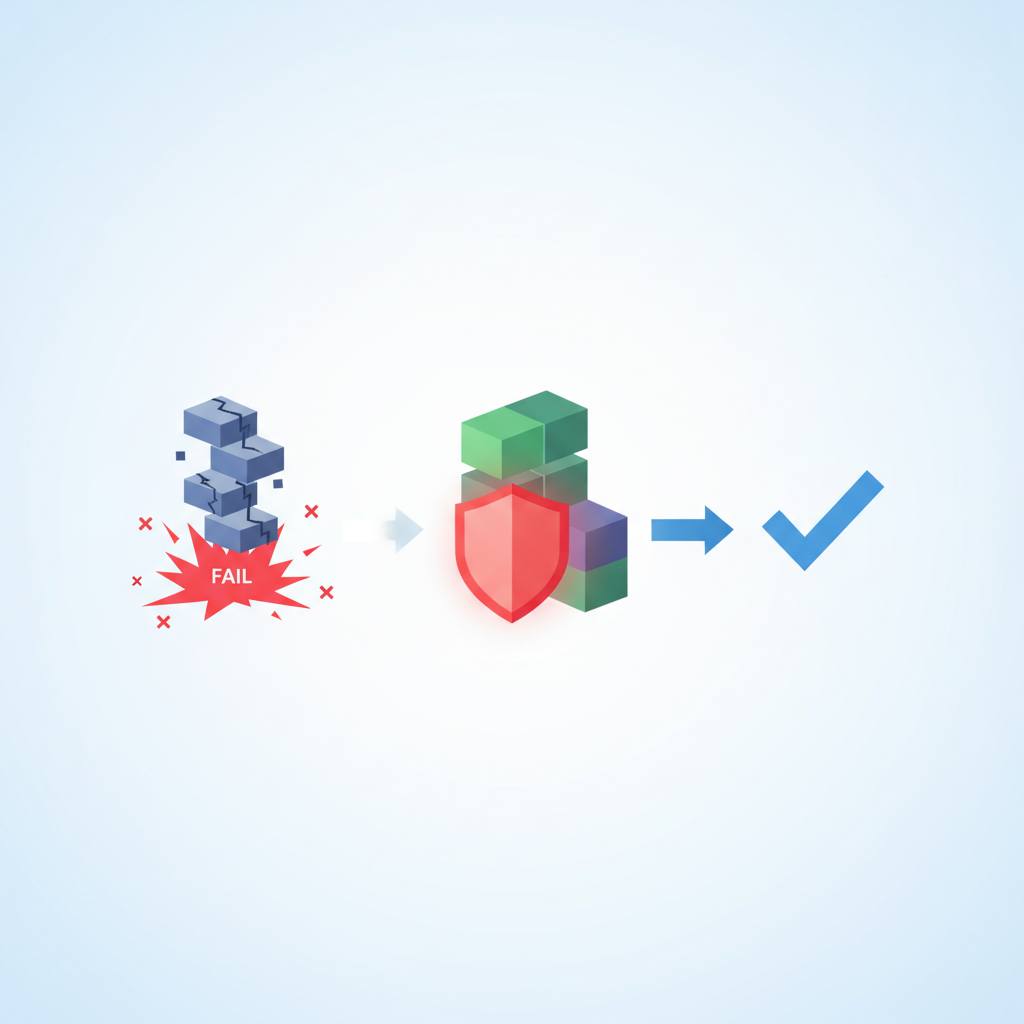
Forget conflicting reports from AI code reviewers; a new multi-agent system called ShiftLeft Society allows AI agents to negotiate and resolve disagreements, leading to much more accurate code analysis. This means developers will experience fewer false positives and more reliable feedback.
AI code review is getting smarter, especially when different AI tools disagree on an issue, meaning you’ll soon get much more reliable feedback on your code. We’ve all seen how AI is great at spotting potential issues in code. But what happens when one AI flags a security risk and another says it’s fine, or they just can’t agree on how serious a problem is? That's been a big headache for developers, who end up having to sort out the AI’s disagreements themselves.
This is exactly the problem that ShiftLeft Society, a new system developed for the Qwen Cloud Global AI Hackathon 2026, aims to solve. Instead of having separate AI agents simply divide tasks like security, linting, and testing, this system makes them actually negotiate with each other when they find a discrepancy. Imagine two AI reviewers discussing a piece of code, each defending their stance until they reach a consensus. This isn't just about making AIs talk; it's about making their judgments more accountable.
The key innovation here is a clever cost structure. Unlike previous methods where AIs might just 'guess' a confidence level, ShiftLeft Society uses a deterministic approach. Each AI agent starts with a budget of 100 points. When they disagree, they can choose to 'DEFEND' their position, 'PARTIAL' (compromise), or 'CONCEDE' (yield). Defending a position costs points based on how far apart their initial opinions were — for example, if one AI thinks a bug is critical and another thinks it's medium, defending a 'critical' stance costs points. Compromising costs less, and yielding costs nothing. This makes the whole process auditable and prevents the AI from simply making uncalibrated decisions.
The results are impressive. In a benchmark test involving 40 cases, ShiftLeft Society scored 95% accuracy. This is a significant jump from the 82.5% scored by traditional single-agent AI tools. The biggest improvement came from drastically reducing false positives on safe code. This means less time wasted chasing down non-existent problems and more time focusing on actual issues. For you, the developer, this means AI code reviews will become a trusted partner, providing clear, actionable insights without the confusing contradictions of the past. It's a real step forward in making AI tools work better together for us.
This is exactly the problem that ShiftLeft Society, a new system developed for the Qwen Cloud Global AI Hackathon 2026, aims to solve. Instead of having separate AI agents simply divide tasks like security, linting, and testing, this system makes them actually negotiate with each other when they find a discrepancy. Imagine two AI reviewers discussing a piece of code, each defending their stance until they reach a consensus. This isn't just about making AIs talk; it's about making their judgments more accountable.
The key innovation here is a clever cost structure. Unlike previous methods where AIs might just 'guess' a confidence level, ShiftLeft Society uses a deterministic approach. Each AI agent starts with a budget of 100 points. When they disagree, they can choose to 'DEFEND' their position, 'PARTIAL' (compromise), or 'CONCEDE' (yield). Defending a position costs points based on how far apart their initial opinions were — for example, if one AI thinks a bug is critical and another thinks it's medium, defending a 'critical' stance costs points. Compromising costs less, and yielding costs nothing. This makes the whole process auditable and prevents the AI from simply making uncalibrated decisions.
The results are impressive. In a benchmark test involving 40 cases, ShiftLeft Society scored 95% accuracy. This is a significant jump from the 82.5% scored by traditional single-agent AI tools. The biggest improvement came from drastically reducing false positives on safe code. This means less time wasted chasing down non-existent problems and more time focusing on actual issues. For you, the developer, this means AI code reviews will become a trusted partner, providing clear, actionable insights without the confusing contradictions of the past. It's a real step forward in making AI tools work better together for us.