«Many believe Artificial Intelligence is extremely complex, but it actually starts with simple steps known as Machine Learning. This post explains how computers can learn from data to perform useful tasks, like recognizing flower types or predicting prices, just as you would in beginner Python projects.»
«Have you seen the news about simple Python projects for beginners in AI? It talks about fun ways to start, like classifying flowers or detecting spam emails. This is all thanks to something called Machine Learning.
Imagine you want to teach a child to recognize different types of animals. You show them many pictures of cats, dogs, and birds, pointing out their features. After seeing enough examples, the child learns to identify new animals on their own. Machine Learning works in a very similar way for computers.
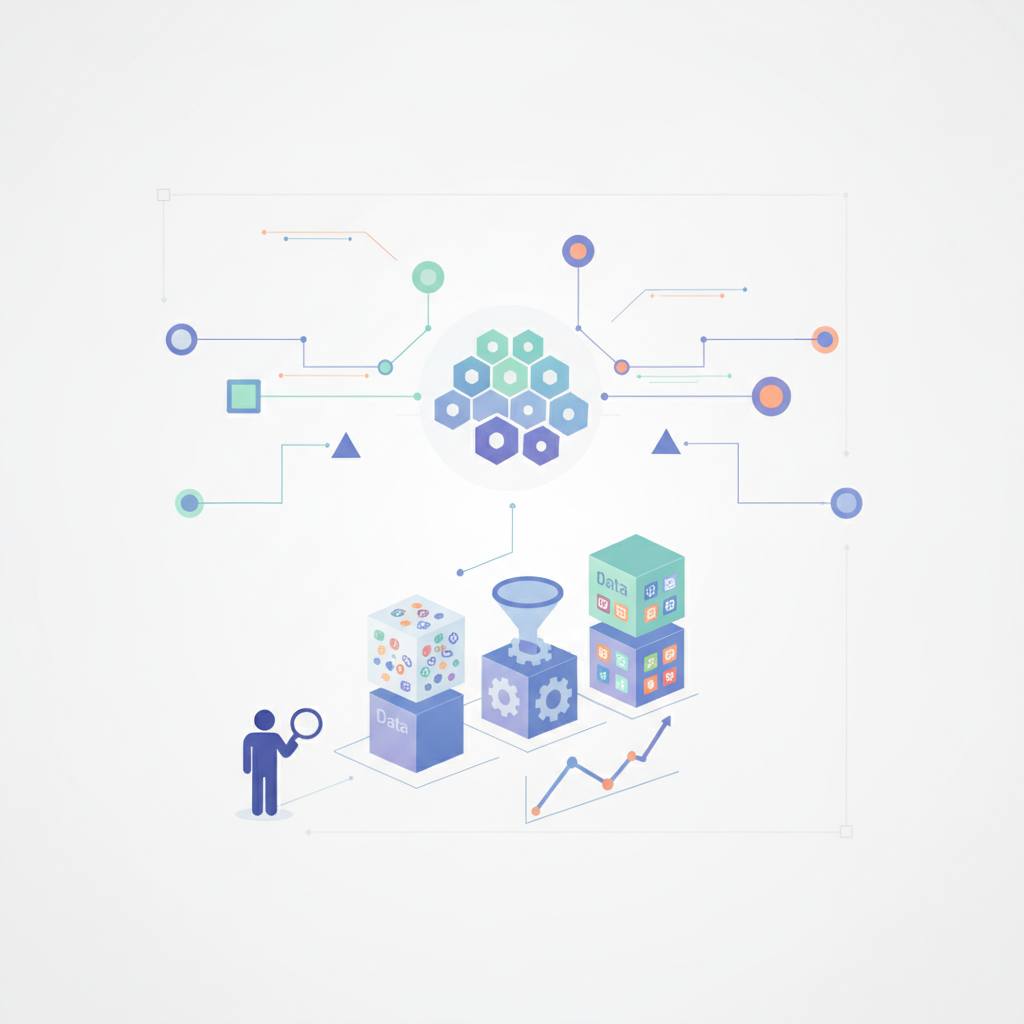
Instead of a child, we have a computer program. Instead of animal pictures, we give it 'data' – which can be numbers, text, or images. This data often includes 'answers' or 'labels'. For example, if we're teaching it to classify flowers, we give it measurements (like petal length) along with the correct flower species for each measurement. The computer then 'learns' patterns from this data. Think of the computer as finding a set of rules or a formula that connects the input data (flower measurements) to the output (flower species). It practices with a part of the data, and then we test it with new, unseen data to see how well it performs. This is called 'training' and 'testing'.
From the examples mentioned in the news:
* **Classifying flowers:** This is a 'classification' task. The computer learns to put items into categories.
* **Detecting spam:** Another classification task, but with text. The computer learns what features in an email typically mean 'spam' or 'not spam'.
* **Predicting prices:** This is a 'regression' task. Instead of categories, the computer predicts a number, like the price of a house based on its size and location.
* **Classifying reviews:** This is 'sentiment analysis', a type of classification where the computer judges if text is positive, negative, or neutral.
Machine Learning helps computers do tasks that are too complex for simple, fixed rules. It allows them to adapt and make predictions or decisions based on new information, making many everyday technologies smarter, from recommendations on streaming services to self-driving cars.
The great news is that you don't need to be a math genius to start. Tools like Python and libraries such as 'scikit-learn' make it much easier. You can begin with simple projects, using readily available datasets, and gradually build your skills, just like the news article suggests. It's an exciting field to explore!»
Imagine you want to teach a child to recognize different types of animals. You show them many pictures of cats, dogs, and birds, pointing out their features. After seeing enough examples, the child learns to identify new animals on their own. Machine Learning works in a very similar way for computers.
Instead of a child, we have a computer program. Instead of animal pictures, we give it 'data' – which can be numbers, text, or images. This data often includes 'answers' or 'labels'. For example, if we're teaching it to classify flowers, we give it measurements (like petal length) along with the correct flower species for each measurement. The computer then 'learns' patterns from this data. Think of the computer as finding a set of rules or a formula that connects the input data (flower measurements) to the output (flower species). It practices with a part of the data, and then we test it with new, unseen data to see how well it performs. This is called 'training' and 'testing'.
From the examples mentioned in the news:
* **Classifying flowers:** This is a 'classification' task. The computer learns to put items into categories.
* **Detecting spam:** Another classification task, but with text. The computer learns what features in an email typically mean 'spam' or 'not spam'.
* **Predicting prices:** This is a 'regression' task. Instead of categories, the computer predicts a number, like the price of a house based on its size and location.
* **Classifying reviews:** This is 'sentiment analysis', a type of classification where the computer judges if text is positive, negative, or neutral.
Machine Learning helps computers do tasks that are too complex for simple, fixed rules. It allows them to adapt and make predictions or decisions based on new information, making many everyday technologies smarter, from recommendations on streaming services to self-driving cars.
The great news is that you don't need to be a math genius to start. Tools like Python and libraries such as 'scikit-learn' make it much easier. You can begin with simple projects, using readily available datasets, and gradually build your skills, just like the news article suggests. It's an exciting field to explore!»