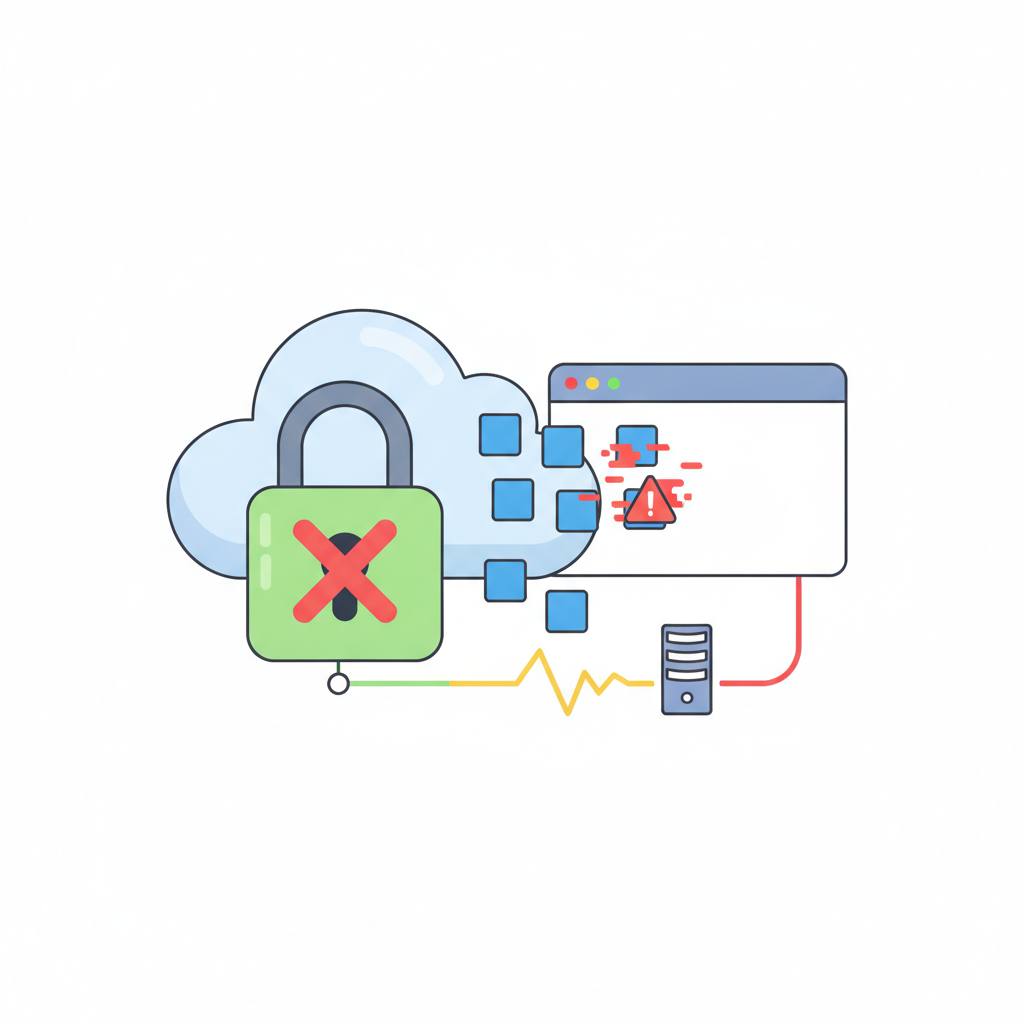
Many websites using Cloudflare's Flexible SSL mode appear secure with a padlock, but a critical part of their connection remains unencrypted. This leaves your data vulnerable on its journey between Cloudflare and your server, despite what the browser shows.
Heads up, website owners using Cloudflare: that shiny padlock in your browser might not mean your site is fully secure. If you're using Cloudflare's 'Flexible' SSL setting, a crucial part of your website's data transfer could be wide open to snoopers, even though your visitors see a secure connection. Here's what's happening: when a visitor comes to your site, their browser connects securely to Cloudflare using HTTPS, which is great. That's why they see the padlock. However, with 'Flexible' SSL, Cloudflare then connects to your actual website server using plain, unencrypted HTTP. Think of it like this: you've secured the front door, but the back door to your warehouse is left open. You might be thinking, 'So what? That's just between Cloudflare and my server.' But that connection isn't private. The path from Cloudflare to your server often crosses the public internet. This means any network in between – a transit provider, your hosting company, or even a router error – could potentially read sensitive data. We're talking session cookies, login details, form submissions, and anything else not separately encrypted by your application. All that budget spent on Cloudflare to secure your site, and half the journey is still vulnerable. Cloudflare offers different SSL modes, and it's easy to misunderstand them. * 'Off' means no HTTPS at all. * 'Flexible' gives you the padlock from the visitor to Cloudflare but keeps the connection to your server unencrypted. This is the danger zone. * 'Full' encrypts both ways but doesn't check if your server's certificate is from a trusted source. * 'Full (strict)' is the one you want. It encrypts the entire path, from visitor to Cloudflare and then securely to your server, *and* verifies that your server has a legitimate SSL certificate. The fix is straightforward once you know. To get true end-to-end security, you need to switch to 'Full (strict)' mode on Cloudflare. But before you do that, you must install a valid SSL certificate directly on your origin server. If you manage your server, tools like Let's Encrypt with Certbot offer free, automated certificates that are easy to set up. It usually takes just a few minutes. Don't let a misleading padlock give you a false sense of security; make sure your site is truly protected from end to end.